

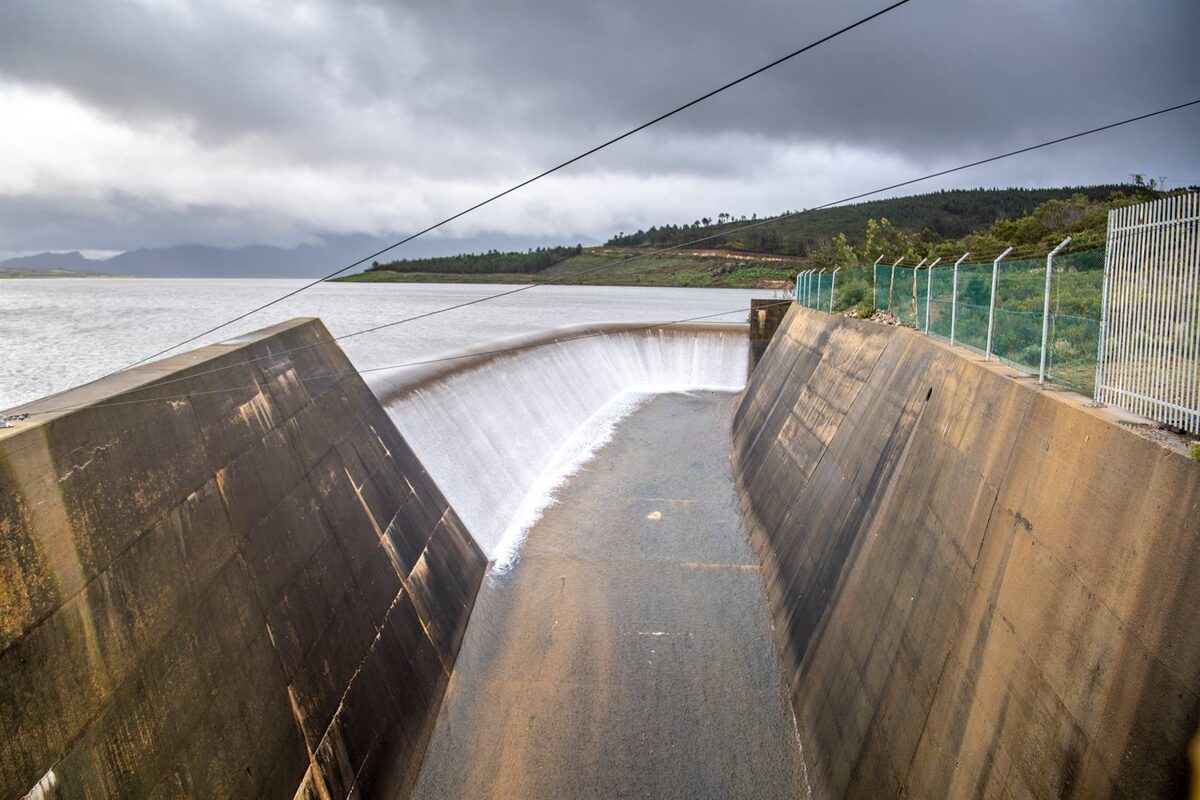
Although some parts of South Africa are battling floods and higher-than-usual rainfall, the Western Cape still awaits its rainy season to fill its dams.
According to the Department of Water and Sanitation information released on 22 April indicates that the Western Cape Water Supply System (WCWSS) dams are currently at 61,08%, 55% less than the same time last year. These dams serve more than 3 million people and provide water to the communities of greater Cape Town and certain Overberg, Boland, West Coast and Swartland towns. They also support agricultural activities along the Berg, Eerste and Riviersonderend rivers.
The Gouritz River Catchment is at 74,01% weighted average, a notable decline compared to 86,71 % the same time last year. This area comprises two distinct areas, a large dry area comprising mainly the Central and the Little Karoo and the smaller humid strip along the coastal belt.

The Olifants Doorn River Catchment on the West Coast is currently at 31,54% weighted average, with the Clanwilliam Dam hovering below 30%, consistent with the last five years. The department is raising the Clanwilliam Dam wall to ensure an additional yield of water.
Theewaterskloof Dam, the largest dam in the province accounting for 54% of the WCWSS, is sitting at 61,62 %, which is a healthy yield compared to 55,46% a decade ago.
According to the department other dam levels are as follows: Brandvlei Dam (45,11%), Gamka Dam (47,87%), Bulshoek Dam (72,16%) and Berg River Dam (61,15%).
Although the Western Cape experienced two good rainy seasons, there is no guarantee of above normal rainfall due to the effects of climate change, said Ntombizanele Bila-Mupariwa, provincial head of the Department of Water and Sanitation. “As seen in the past, climate change at times can lead to dry seasons,” she said. South Africa remains a water-scarce country and the DWS requests everyone, especially high-end water users, to use water sparingly.


You must be logged in to post a comment.