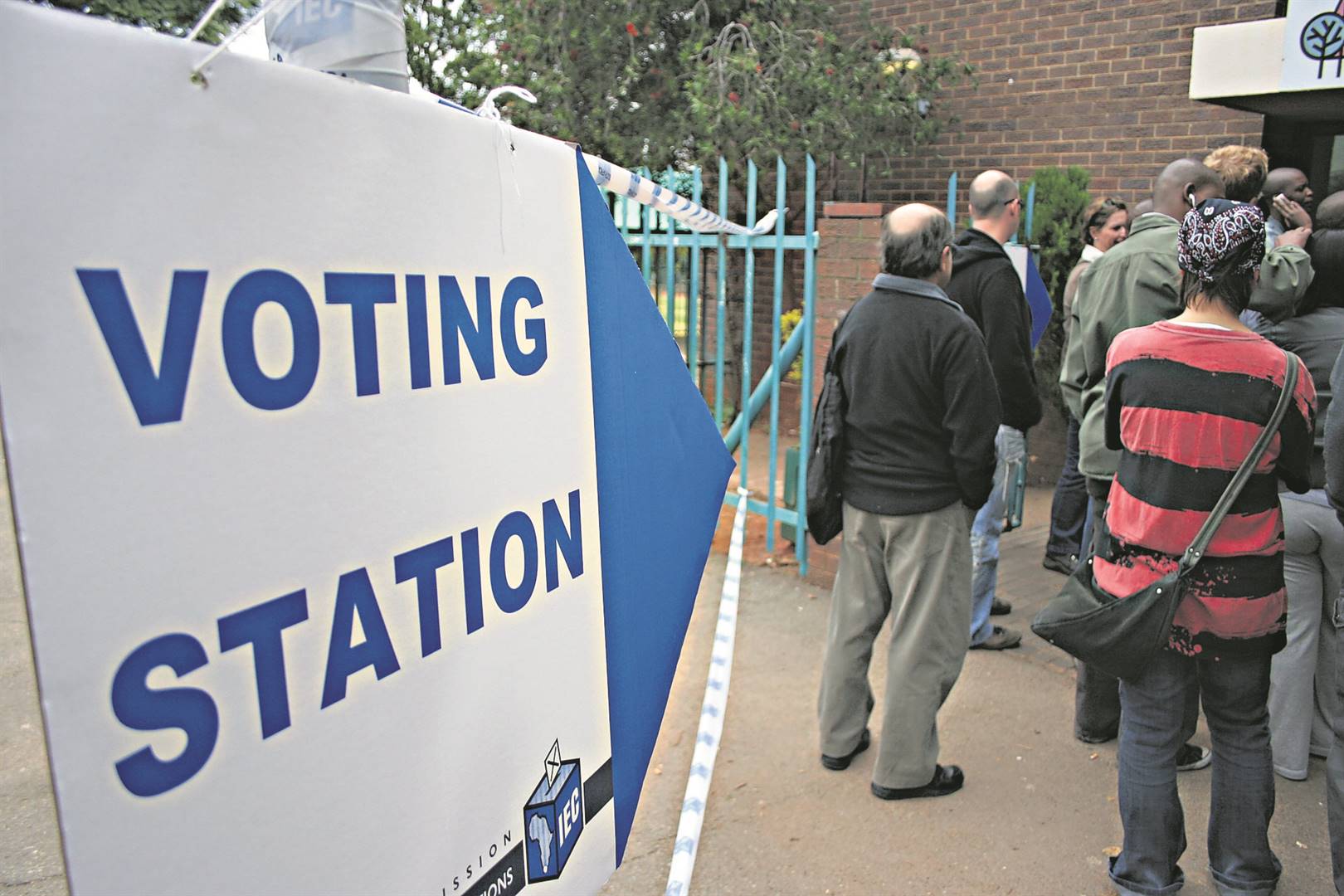
Today (25 April) marks 35 days until South Africa’s seventh democratic election since Apartheid came to an end in 1994.
The election day is on 29 May, which will also be a public holiday to grant South Africans time to vote.
Within the Drakenstein Municipality a total of 138 200 people were registered by 14 March, according to a document released by the Independent Electoral Commission (IEC).
This includes:. 2 197 people 18 to 19 years;. 18 029 people 20 to 29 years;. 28 828 people 30 to 39 years;. 30 199 people 40 to 49 years;. 29 298 people 50 to 59 years;. 18 539 people 60 to 69 years;. 80 162 people 70 to 79; and . 2 967 people 80 and above.
On the three ballot papers in the Western Cape, there are:. 29 parties contesting the Provincial Legislature;. 34 parties and one independent contesting the Regional ballot; . 52 parties contesting the National ballot for a seat in Parliament.. 24 parties are contesting on all three ballots.
For the first time in the country’s history there will also be three ballot papers at voting stations, one more than South Africans are used to crossing in previous elections.
But, what does each ballot paper mean?
In previous elections, there were only two ballots, a national ballot for the national assembly, or Parliament, which equips voters to choose who they want to govern on national level.
Currently the African National Congress (ANC) has the majority seats, with 230 or 57,50%, while the Democratic Alliance (DA) is in second place with 84 seats or 20,77% and the Economic Freedom Fighters (EFF) with 44 seats or 10,79%.
The second ballot paper is a provincial ballot where voters choose the party to govern within the province they live in. Only parties can be chosen and no independent candidates.
None of these votes will earn seats in Parliament as it is a vote on a provincial scale.
Now, for the first time, a third ballot paper will be introduced
The regional ballot paper will equip voters to choose the party or independent candidate to represent their region in the national assembly.
This party or independent will also contest for seats within Parliament, according to Sindile Gravel, a Pan-Africanist Congress of Azania (PAC) councillor within Mbekweni.
In total, Parliament has 400 seats of which 200 is allocated towards the regional ballot vote and the other 200 to the national vote, according to Johan Liebenber, a DA ward councillor in Paarl.
“The share of the Western Cape in the 200 regional seats in Parliament is 24 seats,” Gravel explained, “the rest is shared by other provinces.
So, in the Western Cape, parties will fight to win the majority of the 24 seats which will give them more power, regionally.
This ballot paper will differ in each province, with only the candidates registered in the region displayed on the ballot paper.
“The regional ballot candidate [or party] who wins the elections [in each province] will go straight to Parliament representing their region, that is [the] Western Cape,” Gravel explained.
“The importance of the regional [ballot] vote ensures that in Parliament all provinces are represented,” he said.
“That regional ballot [vote] will give you [a South African] an opportunity to decide who must represent the Western Cape in Parliament.”
Special votes
If a potential voter did not get the chance to register to vote or has to re-register, the IEC encourages South Africans to make use of the special vote option.
This is according to press release by the IEC on 22 April.
Special votes will take place on 27 or 28 May between 09:00 to 17:00.
A voter can apply for special vote by 3 May when the process closes by:. Registering oline at www.elections.org.za;. or by sending an SMS to 32249 with your identification number;. by visiting your local IEC office during office hours;. or have the completed application form delivered there.
The voter will receive an SMS informing them whether the special vote application has been approved or not.