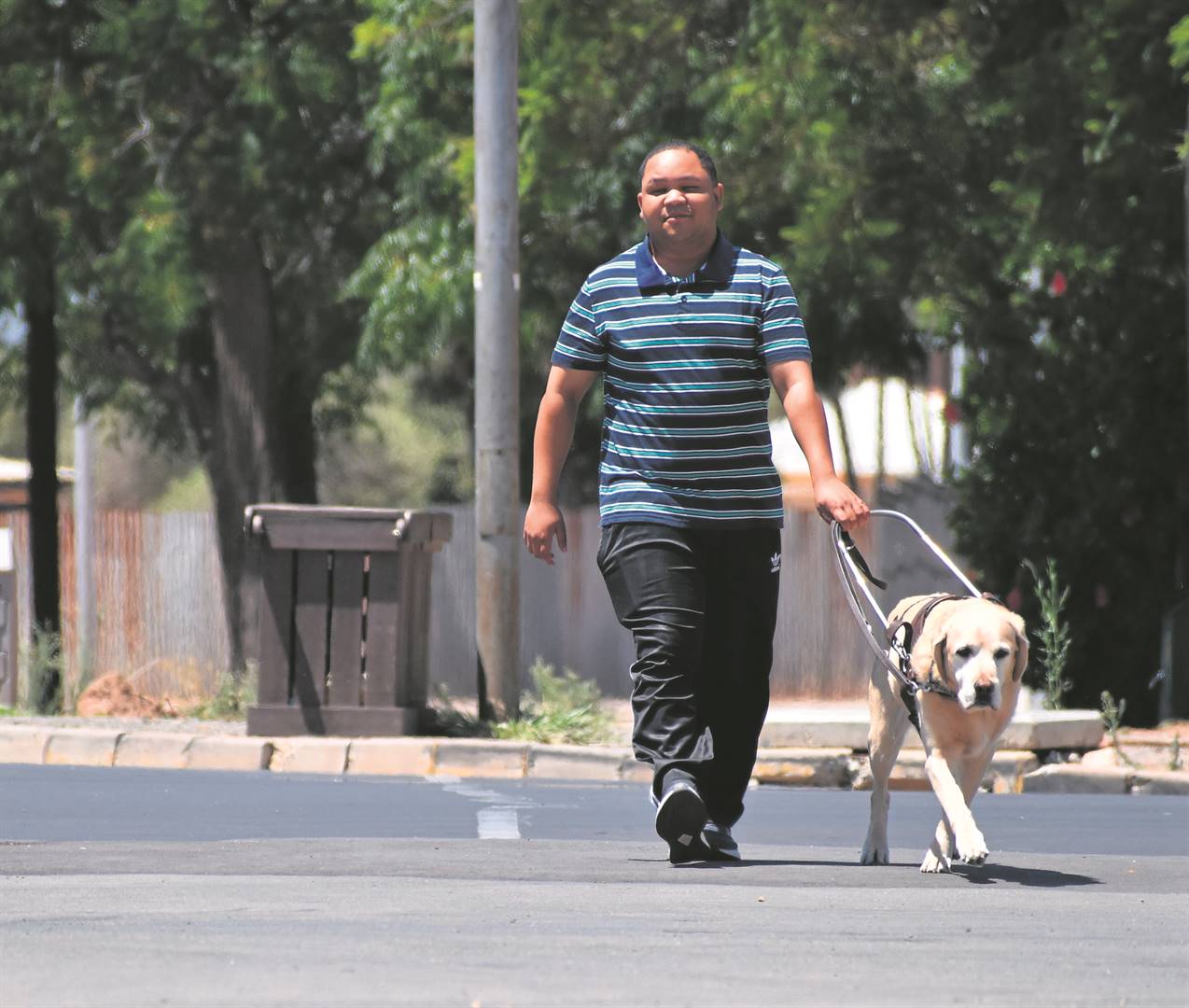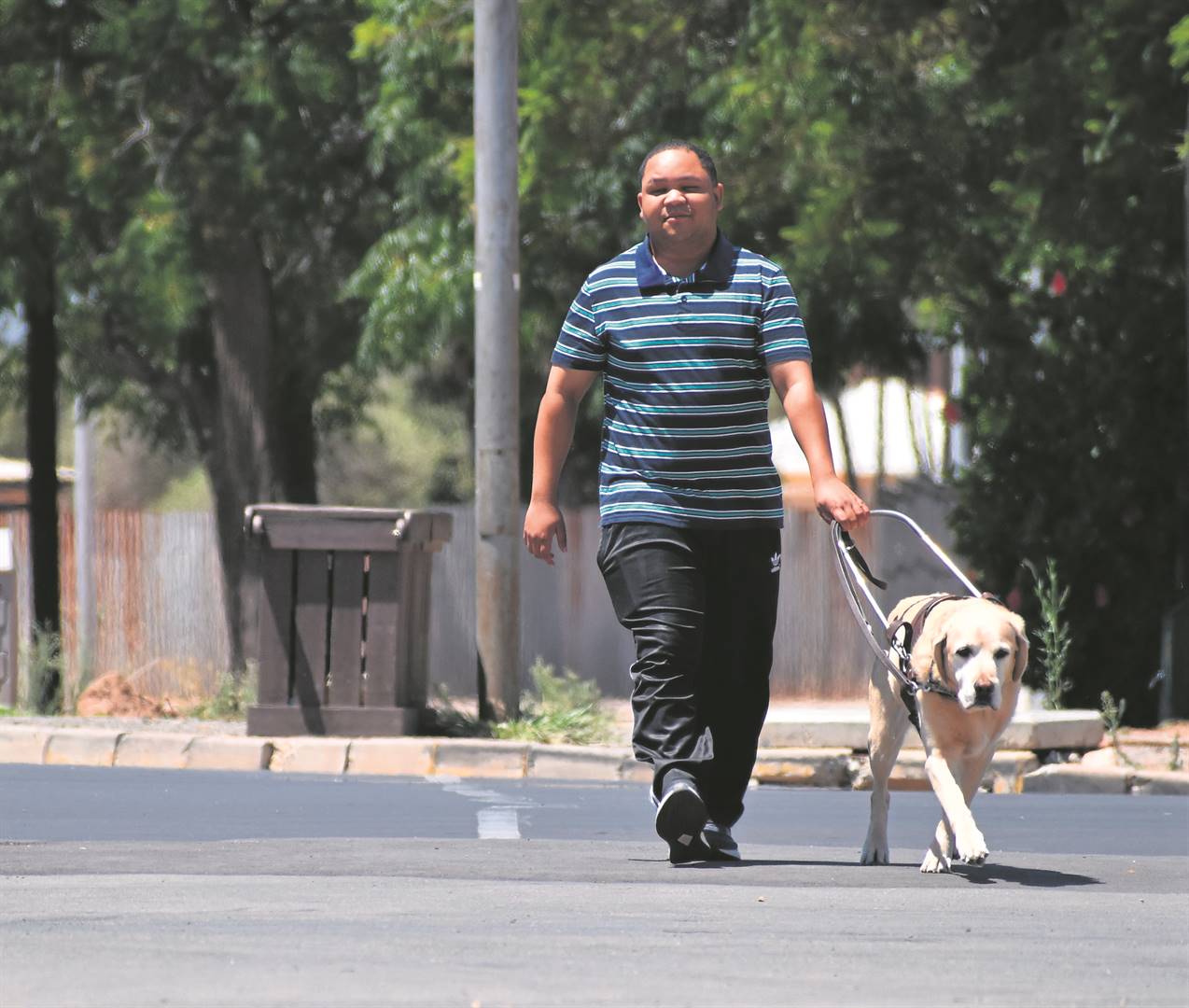
The South African Guide Dog Association (Sagda) breeds and trains many trusty guide- service-, and autism-support dogs each year. It is an operation that is highly costly, but remains mostly free for people with visual impairments, the elderly or children with autism.
Worcester, especially, has a large blind community, and many residents are often greeted by guide dogs on a daily basis, but how exactly does the breeding and training of these dogs take place?
Breeding
According to Cheryl Robertson of the Cape Town branch of Sagda, which relies very strongly on donations, this non-profit breeds and trains all its guide dogs to the age of 2 before selling them to a suitable candidate, who also has to receive training on how to give the right cues and care for the dog.
Sagda breeds its own dogs at its Johannesburg branch by using local and international sperm from guide-dog schools overseas to “diversify and improve our breeding lines”.
Robertson explained that guide dogs undergo rigorous health checks through eye examinations, as well as x-rays of their hips and elbows which ensures they are medically fit to guide the visually impaired.
Besides being medically fit, the guide dogs should also possess the correct temperament to be a working dog which includes intelligence, obedience, and friendliness.
Occasionally Sagda purchases dogs from private breeders, so the same tests apply to them, Robertson said.
Training
“When the dogs are eight weeks old they go to puppy raisers, volunteer families looking after our puppies, and raise them in their houses until they are old enough to start their training at about 14 months,” according to Robertson.
The raising of the puppies include socialisation, de-sensitising and basic obedience through taking them for walks, and drives into public places where they can enjoy interaction with other people.
Once the puppies return to the different Sagda branches they are trained between four to six months before being available for purchase.
“Once a dogs start training they usually have about two walks a day, which varies from half an hour to an hour and a half, depending on their stage of training and what tasks they are learning,” Robertson explained in an email to Worcester Standard.
Sagda kicks training off by starting with basic commands such as “sit, down, stand and stay” as well as directional cues such as “forward, left, right and back”.
The dogs, which mostly are labradors, golden retrievers and a few German shepherds, are also taught to stop at “kerb edges, avoid obstacles, locate targets like bus stop poles and traffic light buzzers.”
Very importantly, future guide dogs are also taught to avoid distractions such as food, people and other animals.
The dogs will first receive their training at different Sagda branches, where they will be taken into the streets of quiet areas and lastly in the city centre, where many distractions and obstacles loom.
“When we [Sagda] start their training they are worked with just a lead,” Robertson said, “and once they understand the exercises they wear the leather part of the harness, and when they are used to that then they wear the full harness with the handle, and by this stage they will be working like a real guide dog.”
Sometimes it happens that a dog cannot do what is expected of them in the training phase.
Sagda trains roughly 40 to 50 dogs per year, with eight to 10 of these completed in Cape Town, at one of the association’s satellite centres, the other being in Durban.
“Dogs can be withdrawn for health reasons and temperament reasons, as they could be scared of things, do not have concentration, and can be too distracted or not even wanting to work,” Robertson elaborated.
These dogs will then return to the puppy raisers who have already formed a significant bond with them, or be put up for adoption by choosing a suitable candidate on the public waiting list.
Very importantly, Robertson said that it is best not to distract the guide dog by petting, feeding, talking to them or letting their pet dogs run up to the guide dogs.
“We [Sagda] ask the public not to interfere with the dog when they are working, that they do not distract the dog and put the life of person [they are guiding] at risk.”
Admiring guide dogs from afar is best practice, Robertson pointed out.
Applying
Applying for a guide dog is also a rigorous process, as Sagda needs to ensure the dogs will be taken good care of and the R100 000 spent on their training goes to good use.
An application form needs to be filled out by contacting Sagda on www.guidedog.org.za, info@guidedog.org.za, 021 674 7395, or 011 705 3512.
If the person’s application is successful they sit through a three-hour-long interview, where information is given on caring for the guide dogs, and questions are posed to ensure a successful match.
“A person has to be able to afford a dog, be able to control a dog and a route to be able to work a dog,” Robertson said. “There are a lot of things we assess, but the main things will be the person’s speed, strength, where they are going to take the dog, how independent they are, what the family and work situation is like, whether they take public transport and what they want to do with the dog.”
After the interview, training with the applicant with the guide dog will follow, after which R205 is paid as an adoption fee, rather than an ownership fee where a contract is attached which protects the welfare of the dog.
The waiting list is long, and patience should be practiced throughout this process.
Retiring
Retiring a guide dog occurs around the age of 10 due to ageing factors such as arthritis, or declining eyesight.
However, the road between human and his best friend does not need to stop here.
“Guide dogs provide companionship, independence and mobility to their owners,” Robertson said. “They develop such close bonds with each other, that most people are closer to their dogs than their family.
“We [Sagda] do not have that many that need adopting as most of their owners will keep them. It is very difficult to give the dogs up as they have such a special bond and have been together for about eight years, so it is not a decision that is made easily.”