


CAPE TOWN – In a groundbreaking conservation initiative near Cape Town, specially trained border collies are proving to be game-changers in the fight to save South Africa’s most endangered reptile species. These remarkable conservation dogs are revolutionizing how researchers track and protect the critically endangered geometric tortoise.
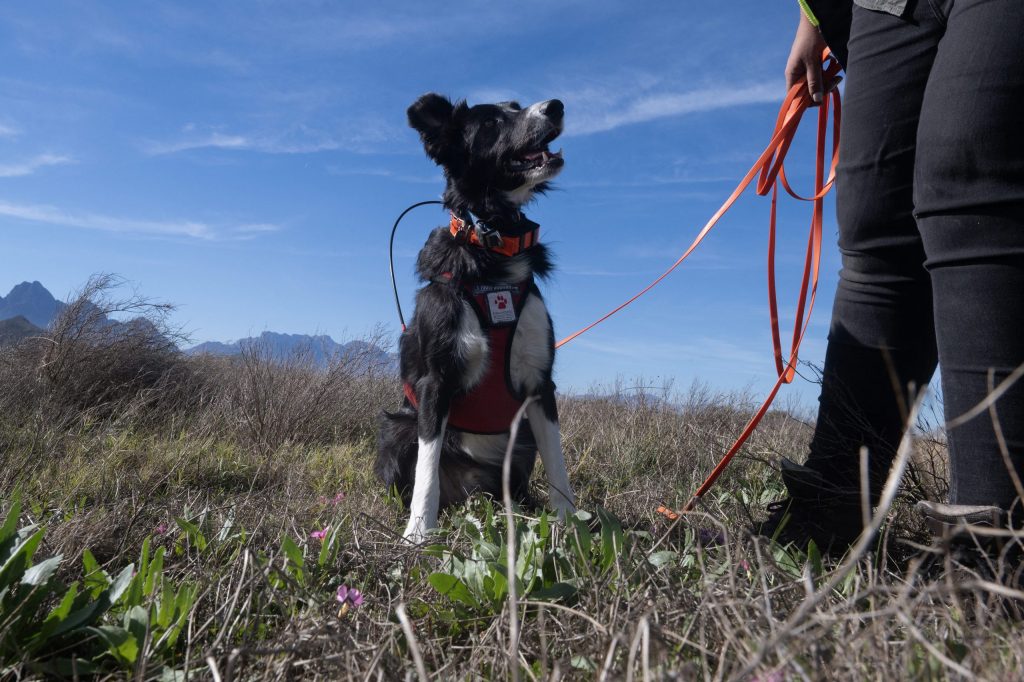
With her snout pressed firmly to the ground, Delta the border collie zigzags methodically through the shrubs of a private nature reserve near Cape Town. Her mission is to locate the elusive geometric tortoises that call this region home.
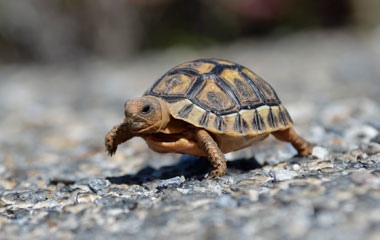
When Delta suddenly stops and lies down in front of a small bush, her handler knows she’s made a discovery. Hidden in the tall grass lies a tiny reptile, its distinctive shell adorned with yellow star-like patterns – the unmistakable signature of a geometric tortoise, a species found exclusively at the southern tip of Africa.
“It’s an adult female, you can tell by its flat belly,” explains Esther Matthew, Delta’s handler and a conservation officer for South Africa’s Endangered Wildlife Trust.
Conservation dogs outperform human trackers by five to one
The Endangered Wildlife Trust has discovered that training canines to detect endangered species yields remarkable results. By “building positive associations with the tortoises’ odour,” these wildlife tracking dogs have revolutionized conservation efforts.
These specially trained dogs prove to be five times more effective than human searchers, with enhanced detection capabilities that allow them to find smaller tortoises often missed by humans. The canines show particular success in locating hatchlings and juveniles, leading to a dramatic increase in total discoveries per search mission.
“We’ve seen a dramatic increase in the number of finds with the dogs,” Matthew confirms, rewarding Delta with a foam frisbee after each successful detection.
The geometric tortoise: A species on the brink of extinction
The geometric tortoise conservation situation has reached crisis levels. According to biologist Andrew Turner from conservation authority Cape Nature, the species’ population has plummeted dramatically since the early 1990s when approximately 1 500 individuals remained in the wild.
Current estimates suggest only several hundred animals survive today, confined exclusively to South Africa’s Western Cape province. The species now faces “declines across the entire remaining range,” earning it critically endangered status.
During field surveys, Delta and her team systematically document each discovery, recording complete tortoise measurements and weight data, mapping habitat locations, tracking population demographics, and conducting health status assessments.
Habitat fragmentation threatens species survival
The geometric tortoise habitat faces unprecedented pressure from agricultural expansion that reduces natural vegetation, urban development that fragments remaining habitats, and infrastructure projects that create barriers between populations. Climate change intensifies these challenges by increasing drought frequency and wildfire activity.
“There are very few places left in the Western Cape that still support these tortoises,” Turner explains. “It’s really just a couple of nature reserves and pieces of good habitat left on people’s private property.”
The remaining tortoise habitat patches have become increasingly isolated, with farmlands, roads, and towns creating impassable barriers between populations. This isolation limits the tortoises’ dispersal ability, prevents population mixing, and reduces genetic diversity, threatening their long-term survival.
Environmental pressures compound these challenges through increased drought frequency due to climate change, intensified wildfire activity that destroys habitat, predation pressure on vulnerable populations, and poaching threats targeting both tortoises and their food sources.
“They are down to such small levels that they actually need as much assistance as they can get,” Turner emphasizes, highlighting the critical nature of current conservation efforts.
Creating wildlife corridors through community partnership
The Endangered Wildlife Trust has developed innovative strategies focusing on collaboration with landowners to protect private habitat areas, community engagement programs in tortoise habitats, corridor creation to connect fragmented populations, and advocacy for sustainable land use practices.
“The biggest thing is creating corridors where species can work through,” explains Zanne Brink, who leads the organization’s dry lands conservation programme.
The organization’s primary challenge involves gathering sufficient information to prevent critical biodiversity areas from being lost to unsustainable land use practices. This data-driven approach guides conservation strategies and helps identify priority areas for protection.
Hope for endangered species
The success of conservation dogs like Delta represents a beacon of hope for the geometric tortoise’s survival. As these remarkable animals continue to demonstrate their superior tracking abilities, researchers gain invaluable insights into tortoise populations, behavior, and habitat requirements.
This innovative approach to wildlife conservation in South Africa showcases how combining traditional conservation methods with cutting-edge techniques can make a significant difference in saving critically endangered species. The geometric tortoise may be on the brink of extinction, but thanks to the dedication of conservationists and their four-legged partners, there remains hope for this unique South African species.



You must be logged in to post a comment.