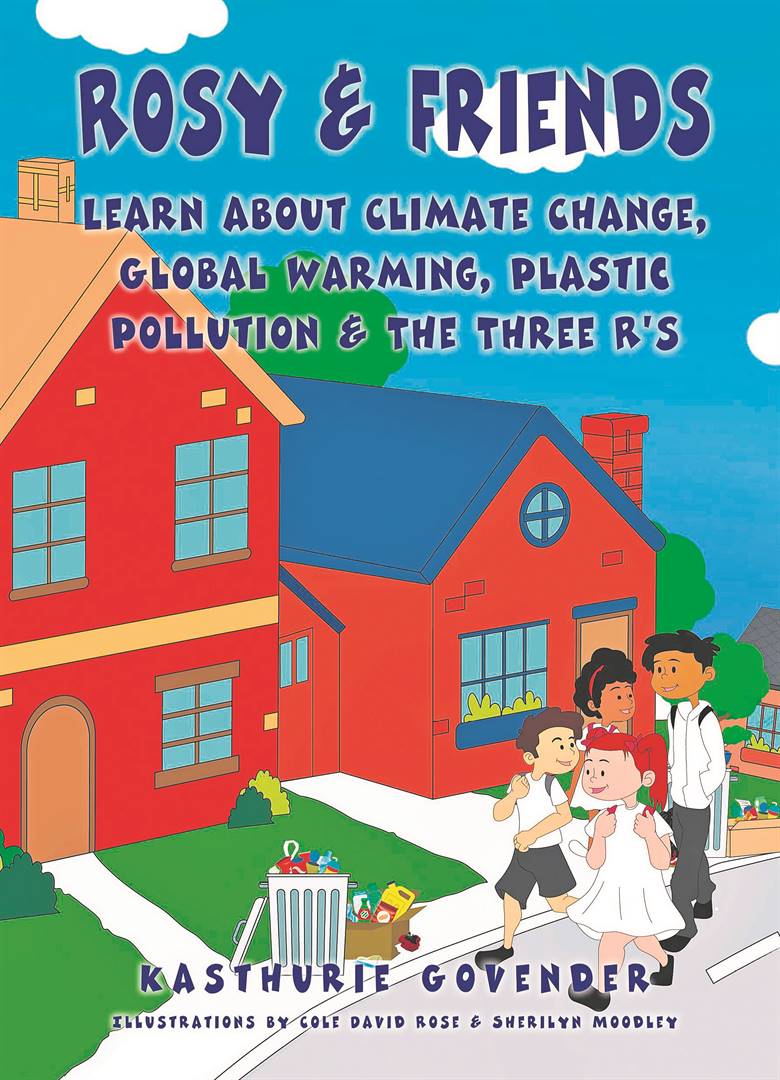
While youth are “ready, willing and able” to be trained across all environmental areas of need, an inherent protective instinct towards nature often starts at a much younger age, and can be nurtured, says the author of a little “eco” book for children, titled Rosy & Friends.
Setting an example to children everywhere, Rosy and her friends learn about climate change, global warming, plastic pollution and the three Rs – how to recycle, reduce and reuse.
But what is climate change? Rosy asks her friend Ele the elephant this because he is known to be the wisest member of the animal kingdom.
The four schoolfriends, Rosy, Lindiwe, Liam and Akshay, had been on their way home from school when they noticed a group of people with placards shouting, “Say no to plastic; stop plastic pollution”.
A bit confused by what was going on, they decided to visit their wise elephant friend at the park to get some understanding of why those people were saying that. As they had hoped, Ele answered all their questions and gave them some good advice about the environment, plastic pollution, climate change and how they could personally help the planet.
Said Ele: “Planet Earth is our home in this great big universe. It is a really wonderful and beautiful planet. It looks after us and takes care of our every need, just like our mothers do.
“We get water from the dams, our food comes from the earth, our homes are built from wood from trees, and the sand and stone that comes from the earth”.
Explaining further: “You see children, the Earth is surrounded by a layer of gases called the atmosphere.
“These gasses keep the Earth at a good temperature by allowing just enough energy from the sun to enter into the Earth’s atmosphere, so that we can all live comfortably, and this is called the Greenhouse effect.
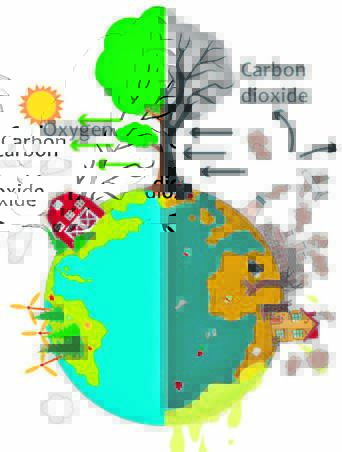
“Trees are very important for the entire planet because they absorb a gas called carbon dioxide, which is the stale air we breathe out and it is also the stale air or fumes from cars, industries, and our homes.
“Trees take in all the stale air to give us clean air which is called oxygen. Oxygen is air that we breathe and is in the water that we drink. We need oxygen to live. Therefore it is very important that we plant more trees and try very hard not to chop them down.
“But the big problem in the world now”, explained Ele, is that as the population is growing larger, more trees are being chopped down to make way for more houses to be built and for more farms to grow food.
“There is so much pollution coming from factories, cars and people. Factories are always burning coal, oil and natural gases which are called fossil fuels, and other toxic chemicals, and this is making the planet sick. All of this is changing the balance of the gases in the earth’s atmosphere.
“As a result more heat from the sun is being trapped in the atmosphere than before which is making the planet warmer. This is known as global warming.”
And sadly, as we are seeing, in the last few years there has been a noticeable change in our weather patterns all over the world with floods, drought and crop damage becoming increasingly common in South Africa too.
Young and old can help heal our planet
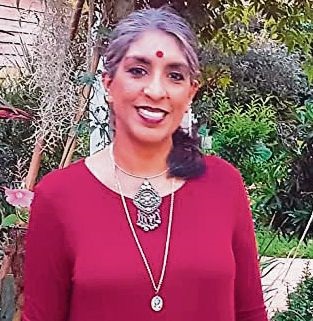
The book’s author, young grandmother Kasthurie Govender, believes that there is a way we can help, and that each one of us, no matter our age, can make a contribution to ensuring our next generation of planetary caretakers have a country left to enjoy.
A realisation that motivated her to write this little educational book for children in a story form that would appeal to them, knowing that their understanding is key to our future if we want our next generation to have a clean and healthy planet.
In her book for children she tells about Rosy and her young school friends from across our cultural spectrum who are so caring about nature and keen to protect their environment that they call on their friend Ele – real or imaginary, we leave that to you to decide – to ask him some important questions about how to take care of some of the issues in their neighbourhood that are worrying them.
Says Kasthurie: “With their natural curiosity, our children are often innately more attuned to nature than adults, and their awareness and spontaneous caring for animal and plant life can be encouraged from an early age. Believes Kasthurie, children are instinctively aware of how by collectively helping with some of the smaller things that need doing, we can make a difference for the future – whether its planting, cleaning-up, becoming aware of the importance of recycling, or using less plastic.
But while the book is purportedly written for children, its one we can all be inspired by towards opening our busy adult hearts to the more subtle issues in life, she says. And will motivate us to encourage children from an early age to be our planetary caretakers of tomorrow.
Passionate about the future of Mother Nature, Kasthurie Govender is a young grandmother who, as the family’s loving babysitter while her grown-up children are at work, writes while balancing her 6-month-old granddaughter on one arm.
The author of Rosy & Friends also liaises live-stream broadcasts to other countries in Africa, with a view to bringing about a greater personal and collective awareness which, in turn, helps restore the balance of nature and planetary healing.
Explained Govender to Standard: “The aim of the book is to help children become more aware of the current environmental issues we are facing globally, so it has been written in a story format rather than a text book style to make it easy to understand.”
Rosy & Friends is her second book and is aimed at children of all nationalities between age 4 and 13 years old and for the interest of their families, who are encouraged to read it to their youngest!
“We can learn a lot from the smallest ones in the family, who feel the wonder, curiosity and spontaneous joy at everything nature offers them and are often inherently Mother Nature’s best friends and guardians.
“Caring for our neighbourhood and planet starts young, especially if little ones are encouraged. Young readers will learn and understand about climate change, and global warming. And about how plastic pollution affects wildlife and their habitats on land and sea, and humans.
“Climate change is real and is affecting us in many ways that we can see and feel – in heat waves, droughts, flooding, storms, decrease in crop yields, rising sea levels… But we are not only in a climate crisis, we also have to deal with pollution difficulties. Plastic pollutes the environment, and destroy wildlife and significant eco-systems.
“And every year millions of tons of plastic are dumped in our oceans annually. Killing more than 100 000 creatures.”
As a solution to help alleviate these global environment issues, children can learn the 3 R’s – to recycle, reduce, and re-use – from an early age. “So,” says Govender, “it is vital that we start teaching and guiding them as early as possible, as they are the future. And hopefully, if our younger generations protest against the use of plastic and all forms of environment pollution there may be hope in saving parts of this most beautiful Mother Earth.”
Her book is self-published, out of her love for the planet and not for commercial gain. Anyone wishing to buy a copy for their children can contact her at rosylearnsaboutclimatechange@gmail.com.