

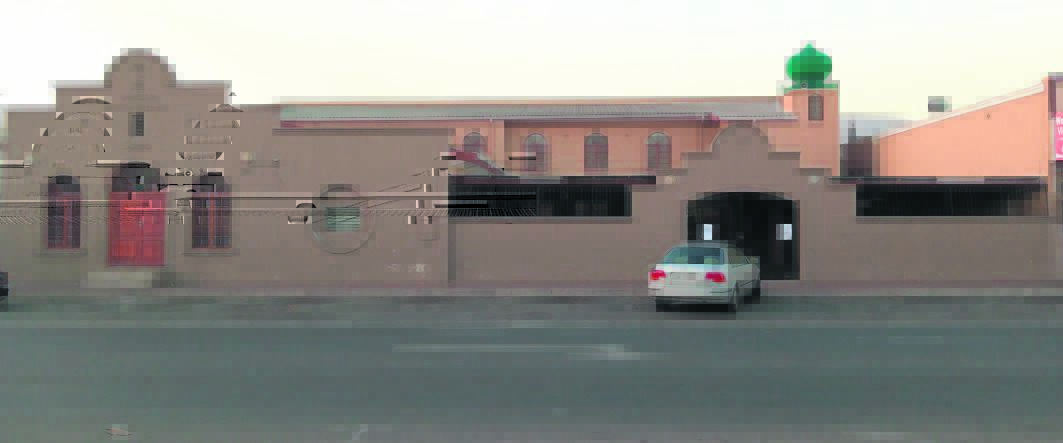
The Worcester Muslim community came together on Sunday 21 May to celebrate the 145th birthday of the local masjid and the more than 200 years of Islamic history of the town.
Anver Sedan, chairperson of the Worcester Muslim Jamaa and leader in the community, writes about the 200-year history of this establishment.
Many Capetonians visit the Worcester’s masjid for Jumuah (Friday prayers) while at Goudini Spa, but not many are aware that Islam’s official presence in the area dates as far back as 1818, two years before the town was established.
The masjid, situated in Durban Street was the first masjid of the town. The trades among the early Muslims in Worcester were masonry, cooping (vat makers) and tailoring, among others. The town had a thriving population by 1841.
In subsequent visits, Muslims from Worcester invited Imam Sadan Sulaiman, who officiated in other parts of the Western Cape, to move to their town to assume duties as their imam and spiritual leader, a step he took in 1859 after the demise of his father, Shaikh Sulaiman Abdurragman in Bains Kloof.
The Muslims, under the leadership of Imam Sadan, performed Jumuah in a room at 2 Rainier Street, then known as the Crown Grounds, currently Victoria Park, in the absence of a masjid.
The first application to build a masjid was made on 22 December 1859. The application was accepted on 15 April 1861. Approval was granted on 9 May 1878.
The first masjid, registered as the Moslem Shaffite Church of Worcester, officially opened its doors in 1881, with Imam Sadan Sulaiman as spiritual leader.
Oral history has it that the mosque was already in use by 1878.
The trustees were Saido Sadan Solaiman, Abdol Bazier, Oowam (progenitor of the Karriem family), Abdol Lefleur (progenitor of the Salie family), Mogamat Saman, Soleiman Jonie and Talabodien, also known as Imam Talap, from Bo-Kaap.
The name of the mosque was changed to the Worcester Moslem Jamaa more than 100 years later, in 1985.
The erf on which the original mosque, registered in the name of Imam Sadan’s wife, Lylla, and their daughter Maimoena, its purpose for prayer and Islamic missionary work, covered an area between Porter and Durban streets as well as Russell up to Adderley Street. The property of one Mr Japie Lyners was situated on the erf.
The Muslims lost most of the erf area during a dispute with the government.
The masjid was also burnt to the ground by British soldiers in 1901, during the Anglo-Boer War.
But Queen Victoria committed herself to rebuilding the mosque, one that she kept.
Imam Sadan Sulaiman led the congregation until 1880. He died in 1888 on a steamer en route to East London and is reportedly buried in Uitenhage, where his daughter Gayratie Kafaar had lived with her husband Abdul Al.
The masjid has undergone several expansions since 1901.
A second masjid, the Worcester Islamic Society, was built in 2003 in Allister Street, Hex Park. Its jamaah is led by Moulana Mogamad Stephanus.


