


As millions of South Africans prepare to head to the voting booths on Wednesday 4 November, the Electoral Commission of South Africa (IEC) has issued comprehensive guidance to ensure the voting process remains smooth, transparent, and secure.
Whether you are casting your ballot in a local council election or participating in a national poll, understanding the official ground rules – and knowing your rights at the voting station – is essential to making your voice heard.
What Happens at the Voting Station
Voting stations across South Africa will open their doors strictly at 07:00 and close at 21:00. Anyone joined in the queue before the 21:00 cutoff time is legally entitled to cast their vote.
Upon arrival, voters go through a standardized step-by-step verification process:
- Identity Verification: Door controllers scan your identity document and confirm your registration status.
- Voters’ Roll Check: Officials cross your name off the voter roll segment for that specific district.
- Indelible Ink: An official marks your left thumb with indelible ink across the nail and cuticle to signify participation.
- Ballot Stamping: Officials hand over your paper ballot(s), stamping the back of each paper before handing them to you.
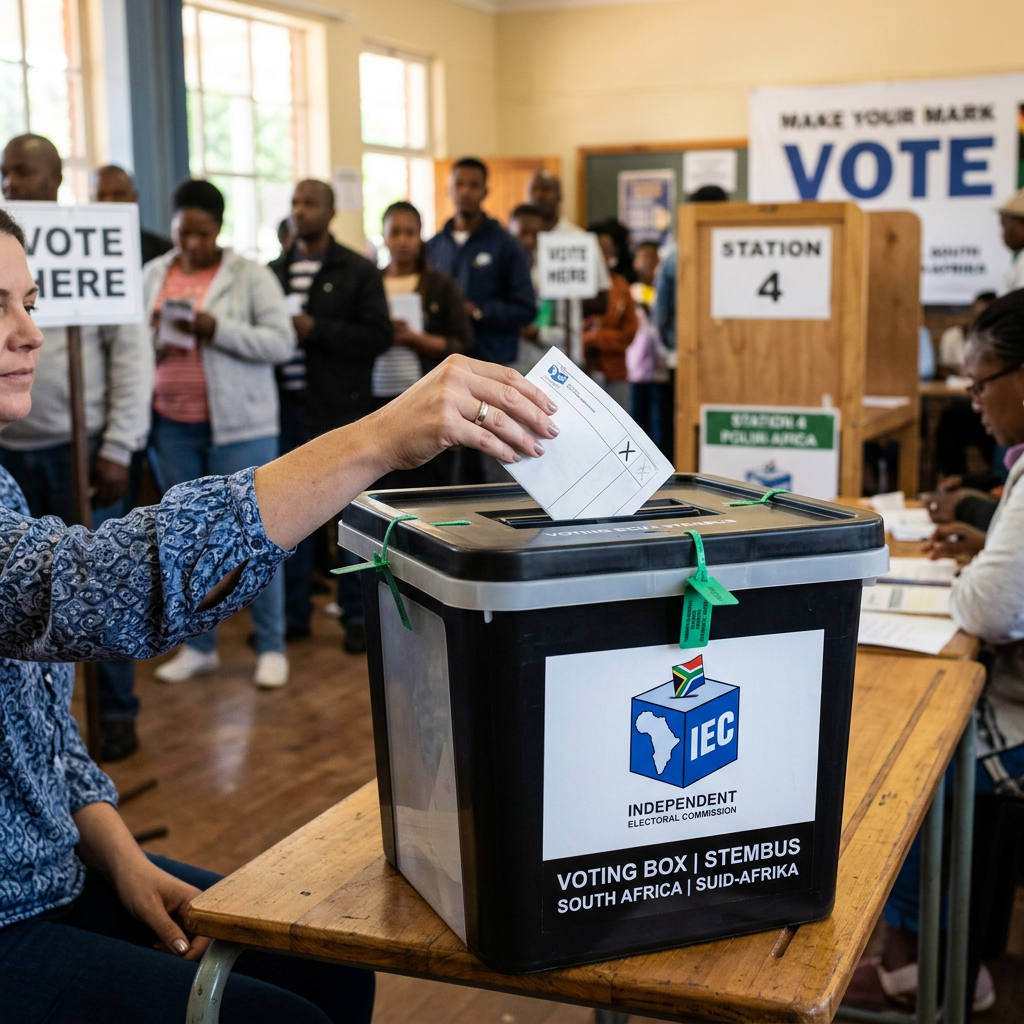
- The Booth & Box: You proceed to a private booth, mark your selection with a clear cross (X), fold the ballot, and insert it into the designated sealed ballot box.
THE DO’S: Official IEC Guidelines
Bring Approved Identification: You must present an original South African Smart ID Card, green barcoded ID book, or a valid Temporary Identification Certificate (TIC).
Vote at Your Assigned Station: In local elections, you must vote at the exact voting station where you are registered.
Inspect the Back of Your Ballot: Verify that the official IEC ink stamp has been stamped on the reverse side of each ballot paper before stepping into the booth. Unstamped ballots are declared invalid during counting.
Request a Replacement if You Make a Mistake: If you make an error on your ballot, fold it and hand it back to the Presiding Officer. They will mark it as “cancelled/spoilt” and issue a fresh ballot paper. Once a ballot is dropped into the box, however, it cannot be retrieved.
THE DON’TS: Strict Prohibitions
NO Driver’s Licenses or Passports: Driver’s licenses, passports, and digital copies or photos of IDs are not accepted as valid forms of identification.
NO Photos in the Booth (“No Ballot Selfies”): Taking photos or videos of your marked ballot paper inside the voting booth is strictly illegal to protect the secrecy of the vote.
NO Political Campaigning inside Station Boundaries: Active campaigning, chanting, or wearing political party regalia to influence voters is strictly prohibited within the voting station boundary.
NO Extra Markings on Ballots: Do not sign, write your name, or add additional notes to your ballot paper. Unnecessary markings invalidate the vote.
NO Weapons or Intimidation: Weapons are barred from voting venues, and any voter or party officer attempting to intimidate voters or staff faces immediate arrest and prosecution under the Electoral Act.
Special Votes
Approved special votes take place ahead of Election Day on 2 and 3 November between 08:00 and 17:00. Special voting applies to home visits for infirm or bedridden electors and registered voters who applied to vote early at their station. Special ballots are handled using a double-envelope system—the marked ballot is placed into an unmarked inner envelope for secrecy, which is then sealed inside a named outer envelope to verify voter identity prior to counting.
Universal Access & Disability Support
Voters with visual impairments, physical disabilities, or low literacy can request assistance in the booth from a trusted friend/family member or the Presiding Officer (in the presence of multi-party observers). The IEC also supplies a tactile Universal Ballot Template (UBT) at all stations, allowing visually impaired voters to vote independently using Braille and raised print indicators.


You must be logged in to post a comment.