

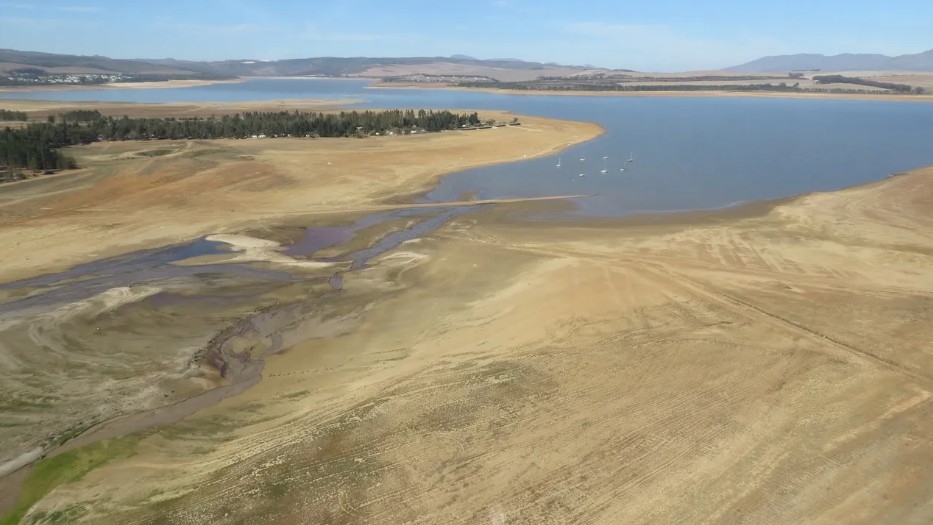
The Western Cape is grappling with a deepening water crisis as dam levels continue to drop to concerning lows, just as the province experiences its busiest tourist season of the year. The latest weekly dam level report shows a dramatic decline, with various municipalities already having implemented water restrictions.
According to the latest dam level report, overall Western Cape dam levels have dropped to just 62.8% capacity – a staggering 22 percentage point decline from the 84.8% recorded at the same time last year. The situation has deteriorated rapidly, with dam levels falling by almost 2 percentage points each week.
The province’s total water storage now stands at 1,174.8 million cubic metres out of a total capacity of 1,871.1 million cubic metres, leaving authorities deeply concerned about the months ahead.
The Theewaterskloof dam, the largest in the Western Cape, currently stands at 67.% capacity – a significant decline compared to it’s 90% level last year.
Garden Route towns hit hardest
The Garden Route region, encompassing popular holiday destinations Knysna and George, is bearing the brunt of the crisis. The Gouritz River Catchment, has plummeted to just 31.7% capacity – down from 86.2% at the same time last year.
Knysna has implemented Level 4 water restrictions, the most severe category, as local dam levels have dropped to a critical 25% capacity. The municipality’s Akkerkloof Dam is providing only approximately 17 days of storage, prompting urgent appeals for residents to drastically reduce water consumption.
“We are urging all residents and visitors to treat this as an emergency situation,” said a Knysna Municipality spokesperson. “Every drop counts at this stage.”
George Municipality, while in a slightly better position, has maintained Level 2B water restrictions with the Garden Route Dam at 46% capacity, while it’s level stood at 95% in the same period last year.
Perfect storm: Tourism meets crisis
The timing of the water crisis could not be worse. The Western Cape is experiencing what industry experts are calling a “bumper” summer tourism season, with record-breaking visitor numbers putting additional strain on already depleted water resources.
Cape Town International Airport has recorded an 11% growth in international passengers and a 7% increase in domestic travellers year-to-date. Nearly 200,000 cruise passengers are also expected to visit ports in Cape Town and Mossel Bay.
Scorching temperatures compound crisis
Extreme weather conditions are exacerbating the situation. The Western Cape has been experiencing intense heat, with heatwave conditions reported across parts of the province. December temperatures have consistently reached highs of over 32°C, well above historical averages.
The combination of high temperatures, minimal rainfall, and increased evaporation rates has created a perfect storm for water depletion. Weather services have warned that the hot conditions are expected to continue throughout the remainder of the festive season.
Provincial authorities have expressed grave concerns about the trajectory of dam levels as the region approaches the peak summer period, when water consumption typically increases and natural inflows are at their lowest.
Water experts warn that without significant rainfall in the coming months, the situation could rapidly deteriorate to crisis levels reminiscent of the 2017-2018 Cape Town water crisis.
What residents and visitors can do:
- Limit showers to two minutes or less
- Use grey water for gardens
- Report any water leaks immediately
- Avoid filling swimming pools
- Use water-wise appliances
- Collect rainwater where possible
- Follow all municipal water restrictions strictly
The situation remains critical, with authorities emphasising that every citizen has a role to play in preventing a complete water catastrophe in one of South Africa’s most important economic regions.




You must be logged in to post a comment.