


The Western Cape’s water security continues to face mounting challenges as the latest dam level report reveals concerning trends across the province. Current analysis shows the overall provincial dam level has reached 73.3%, marking a further decline from previous weeks and maintaining a troubling downward trajectory from the 2024 highs.
The Western Cape State of Dams currently stands at 73.3% – classified as “Fair” but requiring careful monitoring. This represents a continued decline from the robust levels experienced in November 2024, when provincial storage exceeded 93%.
Major water systems current levels:
- Cape Town Metro supply: 80.9% (96.90% 2024)
- Berg River catchment: 87.2% (96.90%)
- Breede River catchment: 74.3% (90.20%)
- Gouritz River catchment: 42.2% (93.10%)
- Olifants/Doorn River catchment: 83.2% (97.30
Cape Town water supply status
The key dams supplying Cape Town Metro show generally healthy levels, providing reassurance for urban water security:
- Voëlvlei Dam: 90.3% (99.50%)
- Berg River Dam: 88.1% (98.05%
- Steenbras Upper Dam: 98.1% (96.60%)
- Steenbras Lower Dam: 80.3%(89.80%)
- Wemmershoek Dam: 79.9% (95.65%)
- Theewaterskloof Dam: 75.5% (97.05%)
The Western Cape’s water security is facing a concerning challenge as the latest dam level report reveals a dramatic decline across the province’s major water storage facilities. Comparing November 2025 levels to the same period in 2024 shows a troubling trend that warrants immediate attention from water management authorities and the public.
The Western Cape’s overall state of dams has experienced a significant drop from 93.6% in November 2024 to 75.6% in November 2025 – representing a decline of 18.1 percentage points. This substantial decrease signals a concerning shift from the relatively healthy water storage levels recorded just one year earlier.
This decline affects virtually every major water supply system across the province, with 40 out of 44 individual dams showing reduced levels compared to their 2024 positions. Only three dams managed to improve their levels over the same period.
The Cape Town System Dams, which serve the metropolitan area and surrounding municipalities, have seen their combined levels drop from 98.0% in November 2024 to 82.9% in November 2025. This 15.2 percentage point decline is particularly significant given that these dams were near full capacity just a year ago.
The Cape Town system includes critical infrastructure such as: – Wemmershoek Dam – Voëlvlei Dam
– Steenbras Upper and Lower Dams – Theewaterskloof Dam – Berg River Dam
While current levels remain above the critical thresholds that triggered severe restrictions during the 2017-2018 drought crisis, the downward trend requires careful monitoring and proactive water management strategies.
Individual dam performance: Critical situations emerging
Several individual dams have experienced catastrophic declines that require urgent attention:
Most Severely Affected Dams:
- Gamkapoort Dam: 99.3% → 19.9% (-79.4 points)
- Prinsrivier Dam: 92.0% → 19.5% (-72.5 points)
- Ernest Robertson Dam: 100.0% → 35.7% (-64.3 points)
- Floriskraal Dam: 95.85% → 36.5% (-59.4 points)
- Calitzdorp Dam: 100.0% → 38.95% (-57.7 points)
These dramatic declines indicate that several smaller regional dams have moved from full or near-full capacity to critically low levels within a single year. Langeberg and Breede River Municipalities have already announced water restrictions.
While the Western Cape faces significant water challenges, the situation varies dramatically across South Africa’s other provinces, with some experiencing abundance while others face their own concerns.
Overall Status: 100.3% capacity (15.7% higher than 2024)
Gauteng:
Gauteng enjoys exceptional water security currently, with all provincial dams in the region of 100% full and the crucial Vaal Dam system operating at or above full capacity:
- Vaal Dam: 102-109%
- Bloemhof Dam: ~99.7%
Multiple sluice gates have been opened at the Vaal Dam to manage excess water.
Free State Province:
The Free State benefits from excellent water storage, particularly in major Orange River system dams:
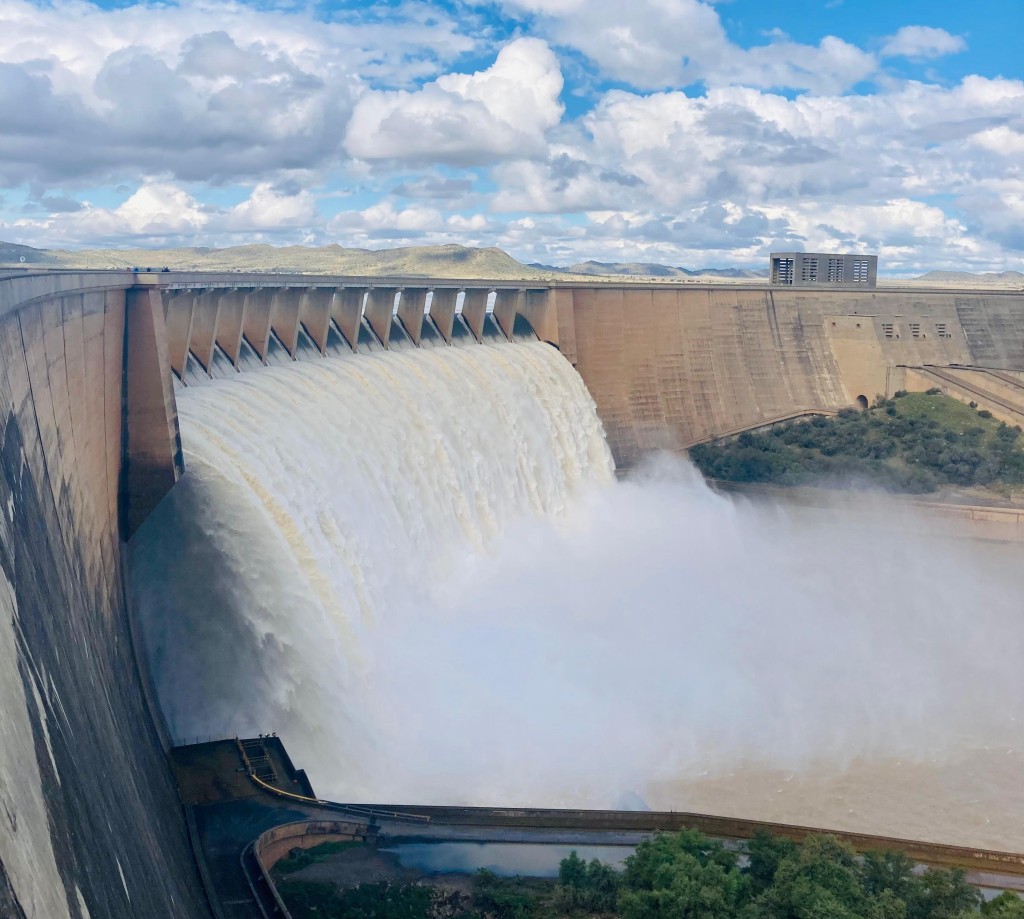
- Gariep Dam: 96.9% (near full capacity)
- Vanderkloof Dam: 108.2% (above full capacity)
Both dams show significantly improved levels compared to 2024, reflecting excellent rainfall and inflows in the Orange River catchment.
Northern Cape:
The Northern Cape shows varied conditions across different water management areas:
Orange River System Dams: – Boegoeberg Dam: 106.5% (above capacity) – Douglas Weir Dam: 113.8% (above capacity, controlled releases ongoing) – Karee Dam: 93.6% – Spitskop Dam: 86.1%
Other Major Dams: – Gariep Dam: 90-95% (stable conditions) – Vanderkloof Dam: 90-95% (stable conditions)
The province benefits from the same Orange River system that supports the Free State, with active water management preventing flooding while maintaining excellent reserves.
KwaZulu-Natal:
Overall Status: 87.7-88.4% full
KwaZulu-Natal demonstrates robust water security across its major systems:
uMngeni System (Durban Area Supply): – Albert Falls Dam: 94.5% – Midmar Dam: 94.1% – Nagle Dam: 94.5% – Driel Barrage Dam: 100.3% – Ntshingwayo Dam: 82.2% – Inanda Dam: 57.8% (lower but stable)
Eastern Cape:
Overall Status: 74.7-75.3%
The Eastern Cape shows mixed conditions with notable regional variations:
Buffalo City (East London area): – Bridle Drift Dam: 88-91% – Nahoon Dam: 80.0%
Nelson Mandela Bay (Gqeberha area): – Kouga Dam: 64.3% (declining concern) – Impofu Dam: 46.7% – Loerie Dam: 79.5% (improved)
Other regional dams: – Laing Dam: ~100% (full capacity) – Macubeni Dam: 92.0% – Waterdown Dam: ~99% – Tsojana Dam: 99.8%
National water security overview:
- Gauteng: 100.3%
- Free State: ~95%+
- KwaZulu-Natal: 87.7%
- Northern Cape: ~85%+
- Eastern Cape: 74.7%
- Western Cape: 73.3%



You must be logged in to post a comment.