

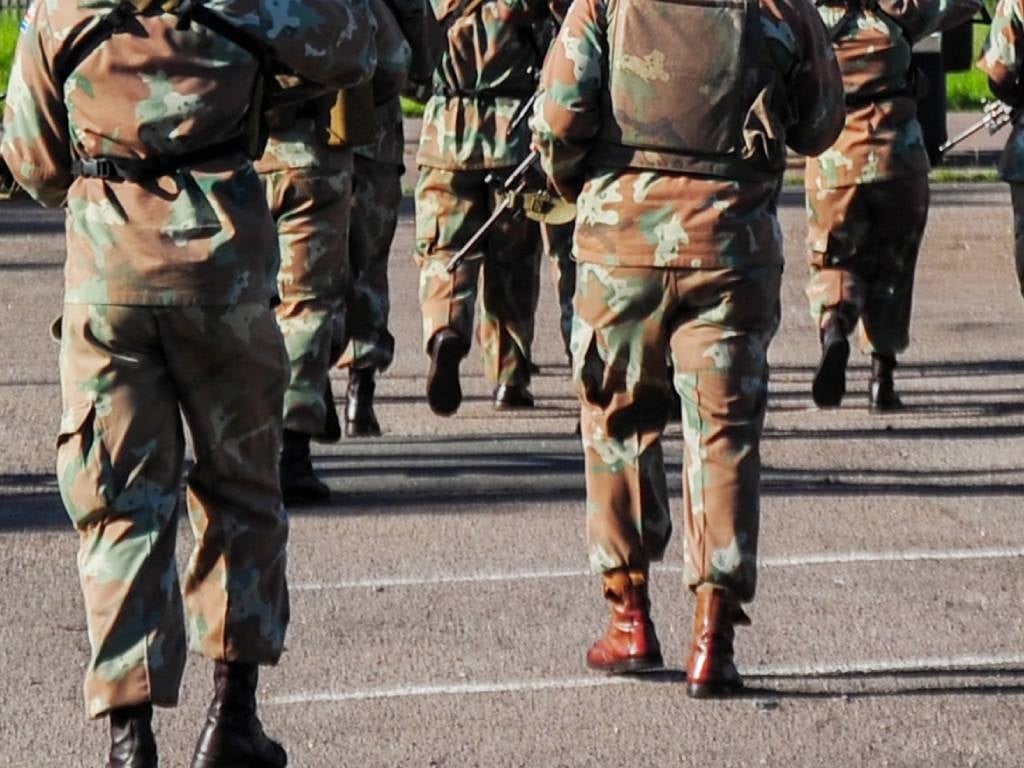
The South African National Defence Force Union (SANDU) has instructed its legal representatives to institute urgent proceedings in the High Court concerning the quarantine conditions of SANDF members who recently returned from deployment in the Democratic Republic of Congo.
The soldiers, who returned as part of the final withdrawal from South Africa’s 27-year deployment to the DRC, have been placed in quarantine at the De Brug Mobilisation Centre near Bloemfontein as a precautionary measure against the potential spread of Ebola.
However, reports indicate that the soldiers are being housed in leaking tents during the winter months, with some describing the conditions as worse than a concentration camp. The soldiers are reportedly sleeping on thin mattresses in sub-zero temperatures.
SANDU formally raised concerns with the Department of Defence regarding both the legal basis for the continued quarantine and the suitability of the facilities. The concerns include insufficient facility infrastructure capacity, inadequate ablution facilities, an inadequate electricity supply, damaged equipment and inadequate food rations in respect of their timely supply, quality and nutritional value.
Despite formally raising these concerns and affording the Department of Defence an opportunity to address them, SANDU said it received no response.
ALSO READ: SA troops withdrawing from DRC expected to be home by end of May
The legal action seeks appropriate judicial oversight of the lawfulness of the continued quarantine and aims to ensure the conditions to which members are subjected is in accordance with the law and with due regard to the constitutional rights and dignity of affected SANDF members.
The defence force concluded its deployment to the UN’s MONUSCO mission in the DRC in early July, following President Cyril Ramaphosa’s authorisation of a final six-month extension from 1 February to 31 July to facilitate an orderly and phased withdrawal of personnel and equipment. The government allocated more than R883 million for this final withdrawal phase.
ALSO READ: Ebola outbreak in DR Congo claims over 400 lives as virus spreads to major city
Historically, the SANDF’s demobilisation programme for returning DRC troops includes health screenings and triage assessments, provision of psychological support including trauma debriefing and therapy, and reintegration support provided by medical officers, nurses, social workers, psychologists and chaplains.
The legal action comes just weeks after SANDU successfully took the SANDF to court over substandard living conditions at Fort iKapa Military Base in Cape Town, where soldiers deployed under Operation Prosper were housed in a leaking hangar with inadequate sanitation. The Pretoria High Court ordered the SANDF to pay SANDU’s legal costs after the military relocated troops just one day before the scheduled hearing on 9 June.
At the time of publication, the Department of Defence had not issued an official statement responding to SANDU’s latest legal action regarding the quarantine conditions at De Brug.
SANDU said it remains concerned for the welfare of its members, stating that soldiers deserve to be treated with dignity, fairness and respect while serving their country.
ALSO READ: DA raises alarm over squalid conditions at Fort Ikapa


