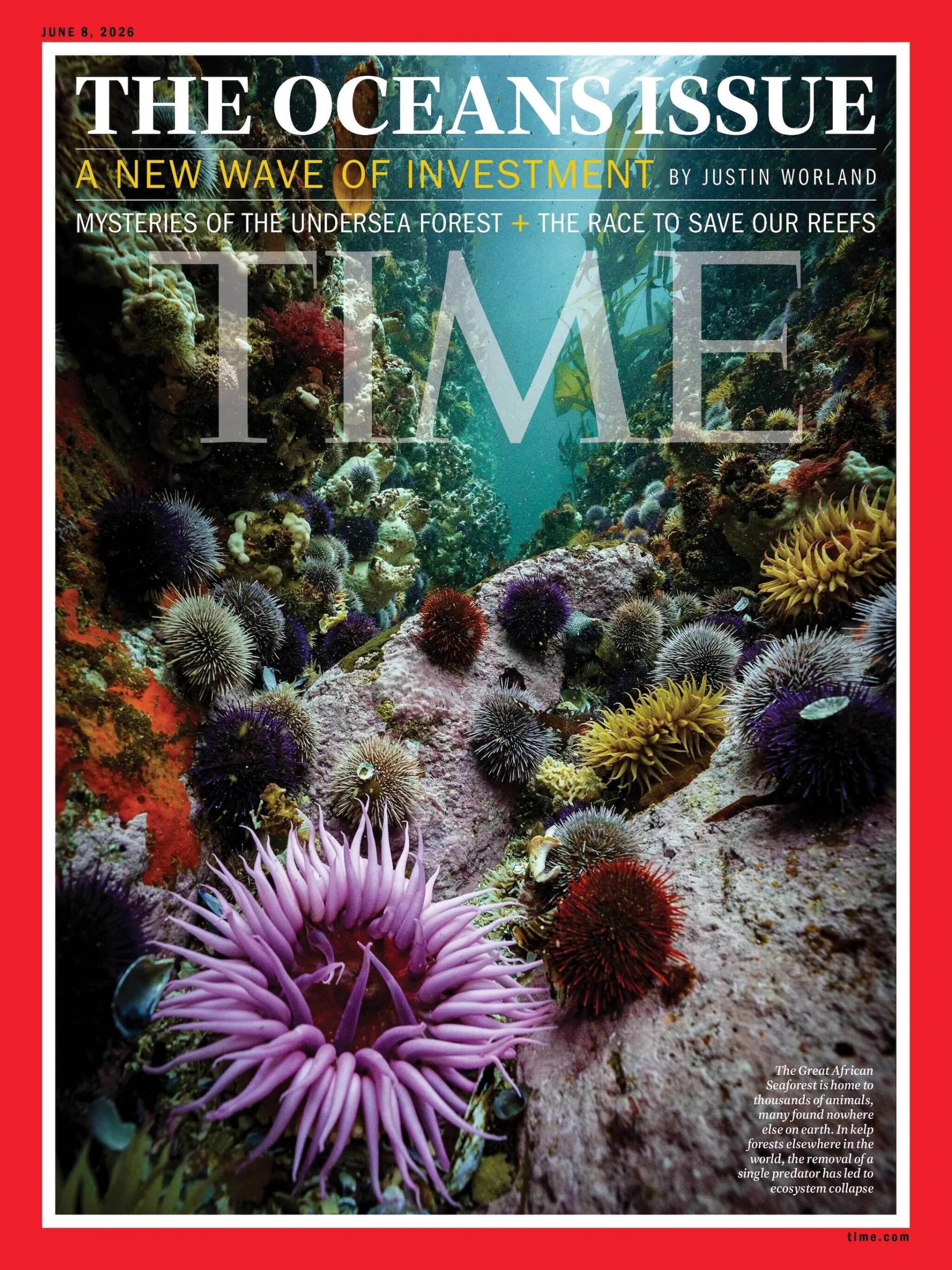
An enchanting underwater photograph of a colourful kelp forest near Simon’s Town has placed the Great African Seaforest on the global stage after gracing the cover of the latest edition of TIME magazine.
The image, captured by Cape Town-based freediver and underwater photographer Helen Walne, showcases the biodiversity of the Great African Seaforest, a vast kelp ecosystem stretching along the Cape coastline.
Famous photograph
Walne took the now-famous photograph at a site called A-Frame, which is close to Boulders Beach outside Simon’s Town.
The Great African Seaforest is the only continuous forest of giant bamboo kelp (Ecklonia maxima) on the planet.
Fringing the shores of Cape Town and stretching over 1000km north into Namibia, this thriving marine ecosystem is home to unique biodiversity, including thousands of species found nowhere else.
The photo appeared in TIME magazine’s feature – ‘The Power Hiding in Underwater Forests’ – which puts a global spotlight on one of South Africa’s most extraordinary natural wonders.
Walne told Time Out Cape Town magazine that she has been visiting the site for the past eight years and was drawn to a striking pink-purple sea anemone featured in the photograph.
“That particular site became almost like family, or a friend,” she said, describing it as one of several special locations she regularly returns to within the sea forest.
Marine life
The Great African Seaforest is recognised as the world’s only giant sea bamboo forest and supports an extraordinary range of marine life, including sharks, seals, octopuses, abalone, rock lobster and countless smaller species.
According to TIME, which drew heavily on the work of Cape Town-based Sea Change Project, Save Our Seas Foundation, and the 1001 Seaforest Species project.
The ecosystem gained international recognition through the Oscar-winning documentary My Octopus Teacher, filmed in the kelp forests around the Cape Peninsula.
TIME’s feature explores the importance of kelp forests in supporting marine biodiversity, protecting coastlines and helping absorb carbon in a warming world.
While many kelp forests globally face threats from climate change and pollution, research suggests the Great African Seaforest has shown encouraging resilience.
Walne believes the cover image was selected because it highlights the rich diversity of life found beneath the surface.
For Simon’s Town, the international recognition is a reminder that one of the world’s most remarkable natural wonders lies just offshore, hidden beneath the waves.
ALSO READ: New access, ongoing works at Muizenberg beach upgrades