

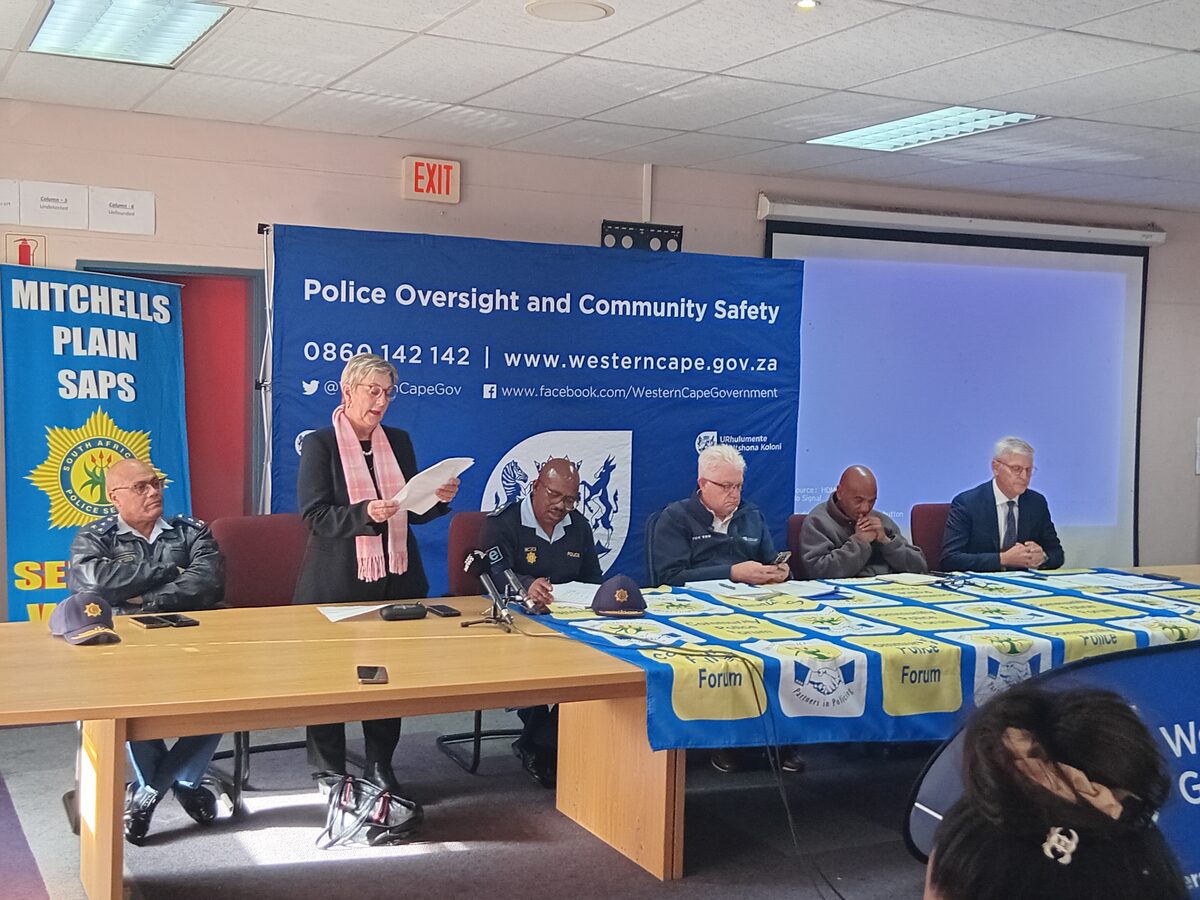
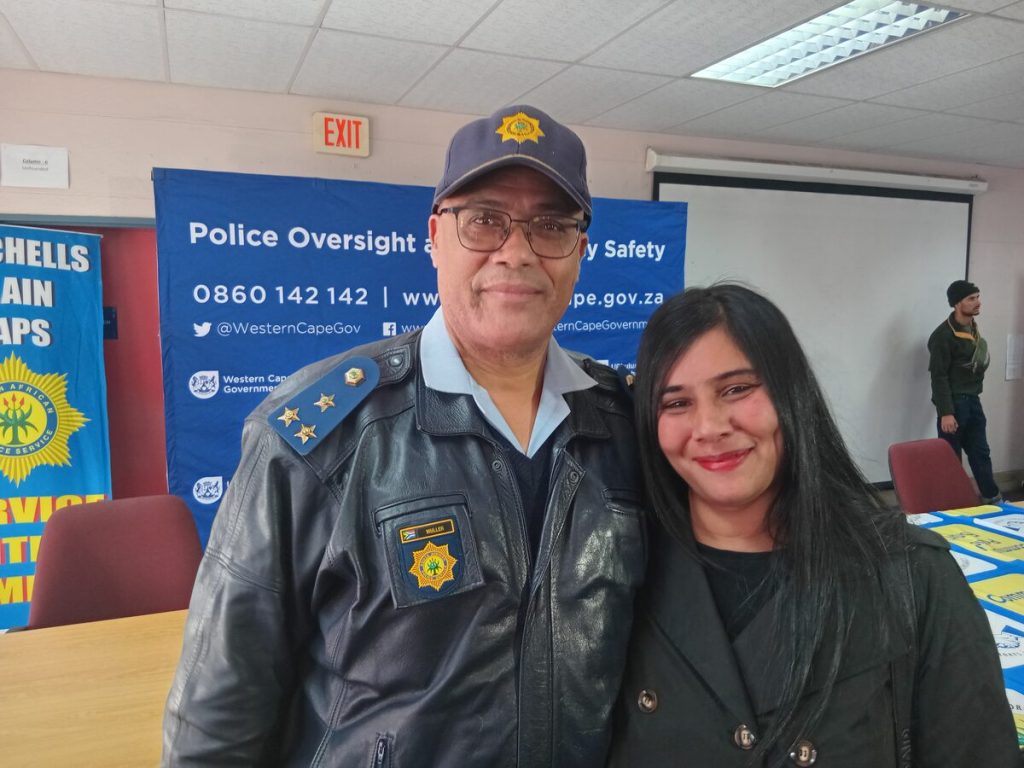
Her work with crime victims on the front line at Mitchells Plain Police Station often drives Malickah Schaffers to tears.
The attorney, who has been working at the station as part of a new project aimed at bridging the gap between police stations and courts, has a passion for the job rooted in more than a decade of legal experience and being a Mitchells Plain resident. “The passion is very important. You have to have it. If you don’t have the passion it’s not going to work. So I know the people. I’ve grown here, I’ve been here and that is the reason why I also understand our people.”
Getting the first step right
Schaffers has more than 16 years’ legal experience. She has experience in legal aid and corporate law, and is now with the Global Initiative Against Transnational Organized Crime (GI-TOC).
Her presence at Mitchells Plain Police Station is part of a project, which was piloted by the GI-TOC at Grassy Park Police Station. Funded by the R9 million the province has given the Mitchells Plain Safety and Development Forum (MPSDF), the project’s goal is to get the first step of the criminal justice system right — the police statement which, when done incorrectly, can cause serious cases to be thrown out of court.
It was launched at Mitchells Plain Police Station on Tuesday 18 August, though it has been running at the station for a month already.
How the project started
Dr Mark Shaw, executive director of GI-TOC, said the pilot at Grassy Park Police Station was funded by the Millennium Foundation, through GI-TOC, which also conducted an independent evaluation.
The evaluation showed good progress in three areas: the quality of statements, engagement with the National Prosecuting Authority (NPA), the body that decides whether cases should go to court, and training for front-end officers, the police officers who first deal with the public, Shaw said. He said the initiative was not the first of its kind, but prior attempts with newly graduated law students had not worked well, so this project employed experienced lawyers instead.
Building trust
Speaking at the launch this morning (18 August), Western Cape Premier Alan Winde said the project is about building trust between communities and the police and improving the conviction rate, which is currently around 5%. He said that the multi-stakeholder, holistic approach the MPSDF is rolling out cannot function properly if trust remains eroded.
Hopes for broader roll out
Shaw said that GI-TOC has a vision of placing 300 lawyers in priority police stations, and that the Cloeteville station was next in line for roll-out. He said GI-TOC runs about 300 projects around the world aimed at building community resilience against organised crime.
He cautioned patience saying that the organisation was moving slowly but deliberately, as expanding too fast could cause the project to fail.
“There is no easy solution,” he said, adding that the system would succeed by building the rule of law. “The majority of cases related to gangs or criminal activity are dealt with at local police station level.”
ALSO READ: Cape Flats army deployment had limited impact, GI-TOC finds


You must be logged in to post a comment.