
A Girl Child Technovation workshop held at the close of Women’s Month in Mitchells Plain has called for greater investment in girls’ education, technology, leadership and protection from gender-based violence.
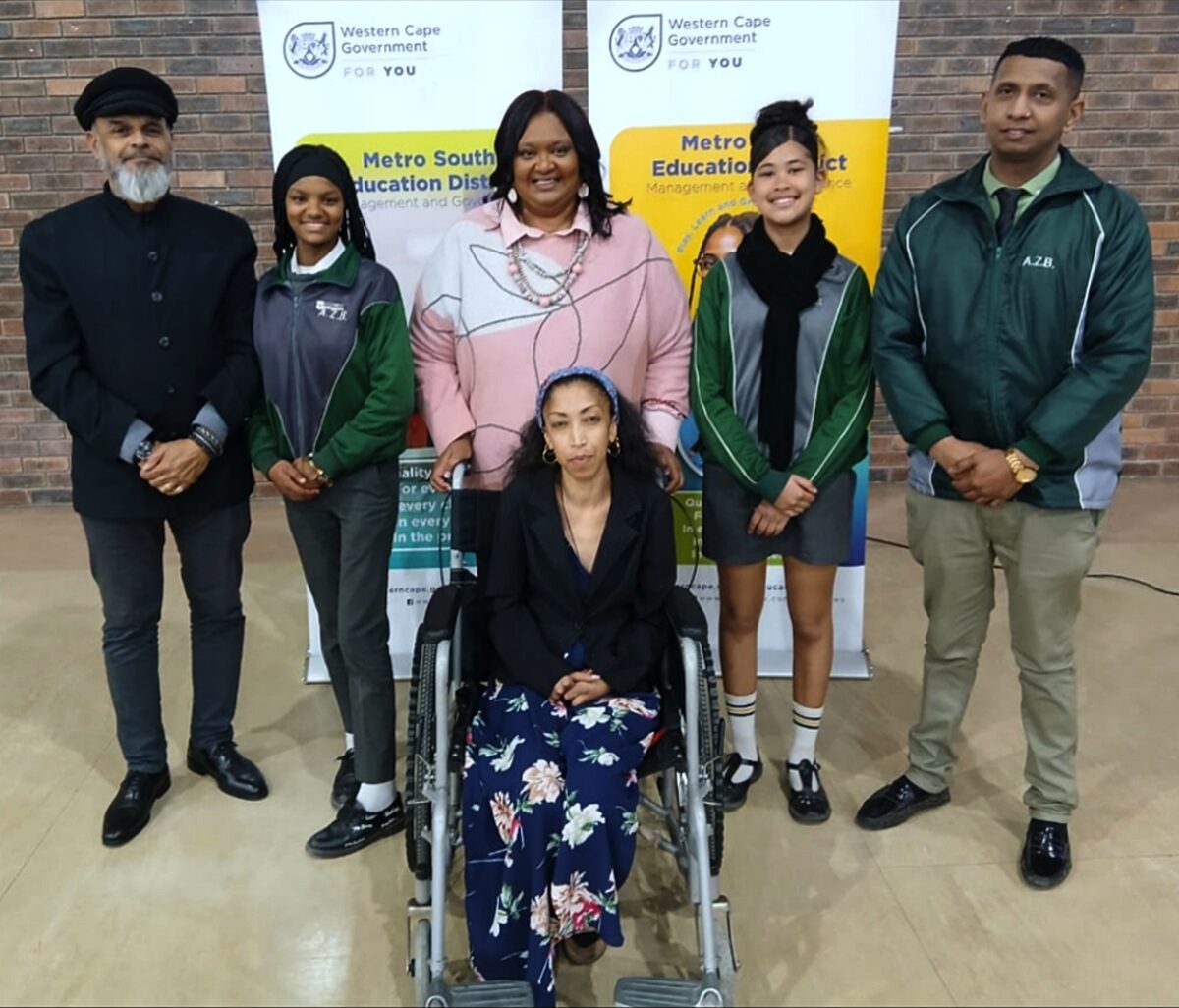
The conference was held at Mondale High School on Saturday 22 August, hosted by Women Techmakers International Women’s Day (IWD) in partnership with the Western Cape Department of Education.
The event took place as South Africa marks the 70th anniversary of the 1956 Women’s March, an opportunity to reflect on the progress made by women and the challenges facing the next generation.
The initiative brought together learners, educators, officials and technology partners to equip girls with technology and problem-solving skills. Participants took part in challenges designed to encourage creative thinking and solutions to community problems, with several learners inspired to develop their own mobile applications.
It was the keynote address by Reverend Doctor Tanelle Welff-Dixon, followed by an unexpected question-and-answer session, that brought a wider social dimension to the event.
The blueprint is already inside you
Delivering her keynote, titled “Unplugged – the blueprint is in your hands”, Welff-Dixon told the young women that the starting point of transformation is not a computer or smartphone. It is an idea.
Her message was one of hope, encouraging young women to believe their circumstances need not determine their futures.
“You don’t need a screen to have a vision. The blueprint is already inside you,” she said.
She challenged education authorities to ensure that a learner’s postal code never determines their potential. “If these girls can design the future of South African technology on a blank sheet of paper today, then we must build the future of our educational system on the belief that excellence can come from anywhere – especially from the Cape Flats,” she said.
Technology training led by an inspiring tech strategist
The training was delivered by technology strategist Lucretia Jardini, whose own journey added another dimension to the programme. Despite living with a disability and facing significant physical challenges, Jardini has developed considerable expertise in the technology field. Her participation showed the learners that physical circumstances do not have to become barriers to success.
The programme demonstrated that girls do not have to remain passive consumers of technology. They can become developers, innovators, entrepreneurs and creators of solutions.
An unexpected conversation about GBV
During a question-and-answer session, several young girls and even educators raised personal questions concerning sexual violence, bullying, gender-based violence (GBV) and violence against women and children.
Welff-Dixon, who is herself a survivor of rape, gender-based violence and domestic violence, responded from personal experience and her work as a GBV specialist.
The seriousness of the questions made it clear that these issues are realities affecting learners, families and communities. Among the concerns raised was an apparent lack of trust in the justice system and whether young women can rely on existing structures to protect them.
The discussion showed that empowering the girl child cannot be limited to technology and academic development. Young women must also feel safe, heard, protected and believed.
Welff-Dixon indicated her willingness to support initiatives that educate young people about GBV, saying schools are an important front line and that confronting these issues through education and community partnerships can create the conditions for a better future.
Recognition for David Marthinus
Special recognition was given to David Marthinus of the Metro South Education District, praised for his leadership in helping bring the initiative to life. Welff-Dixon challenged the Western Cape Department of Education to roll out similar programmes in other districts, ensuring that girls everywhere have access to the same opportunities.
70 years of women’s courage
Welff-Dixon reminded the girls that the women who marched to the Union Buildings in 1956 did not have smartphones or social media. They had courage, community and paper petitions. Yet they changed the course of South African history.
“You are the harvest of the seeds those women planted 70 years ago. You are their wildest dreams come true,” she said.
Mitchells Plain at 50: from margins to possibility
The keynote also connected the initiative to the 50th anniversary of Mitchells Plain. Welff-Dixon drew attention to the history of forced removals and Apartheid spatial planning that shaped the Cape Flats, explaining that deliberately marginalised communities nevertheless built schools, families, businesses and institutions.
“What was meant for isolation has become a monument of triumph,” she said.
The message was also personal. Twenty years ago, she and her husband founded TWMF – Tanelle Welff Ministries and Foundation, beginning two decades of community work focused on supporting women and strengthening communities.
“I know what this soil can produce because I have spent 20 years watering it,” she said.
A tribute to educators
Welff-Dixon paid tribute to educators, describing them as the “quiet heroes” of the education system who continue to identify potential in young people and encourage them to pursue better futures despite the challenges in their communities.
From an unplugged workshop to a province-wide vision
Empowering the girl child requires more than teaching technology – it needs access, confidence, mentorship, safety, leadership, innovation and hope.
Welff-Dixon challenged the Department of Education to take what worked in Mitchells Plain and make it accessible to girls in other districts.
“Your future is completely unplugged from the limitations of your past!” she told the young women. Her final charge was direct: “Go out from this place! Increase! Do not decrease! And change the world!”
Drawing together the words of leaders including Nelson Mandela, Martin Luther King Jr, John F. Kennedy and Barack Obama, as well as President Cyril Ramaphosa’s “Thuma Mina” and the philosophy of “Better Together”, she concluded: “Yes, we can. Do better together, if you send me!”
When young women are given the opportunity to imagine and lead, they can see themselves not simply as beneficiaries of technology, but as future creators of solutions for their communities and the world.
ALSO READ: Teen boys take deep dive into their emotions at conference