

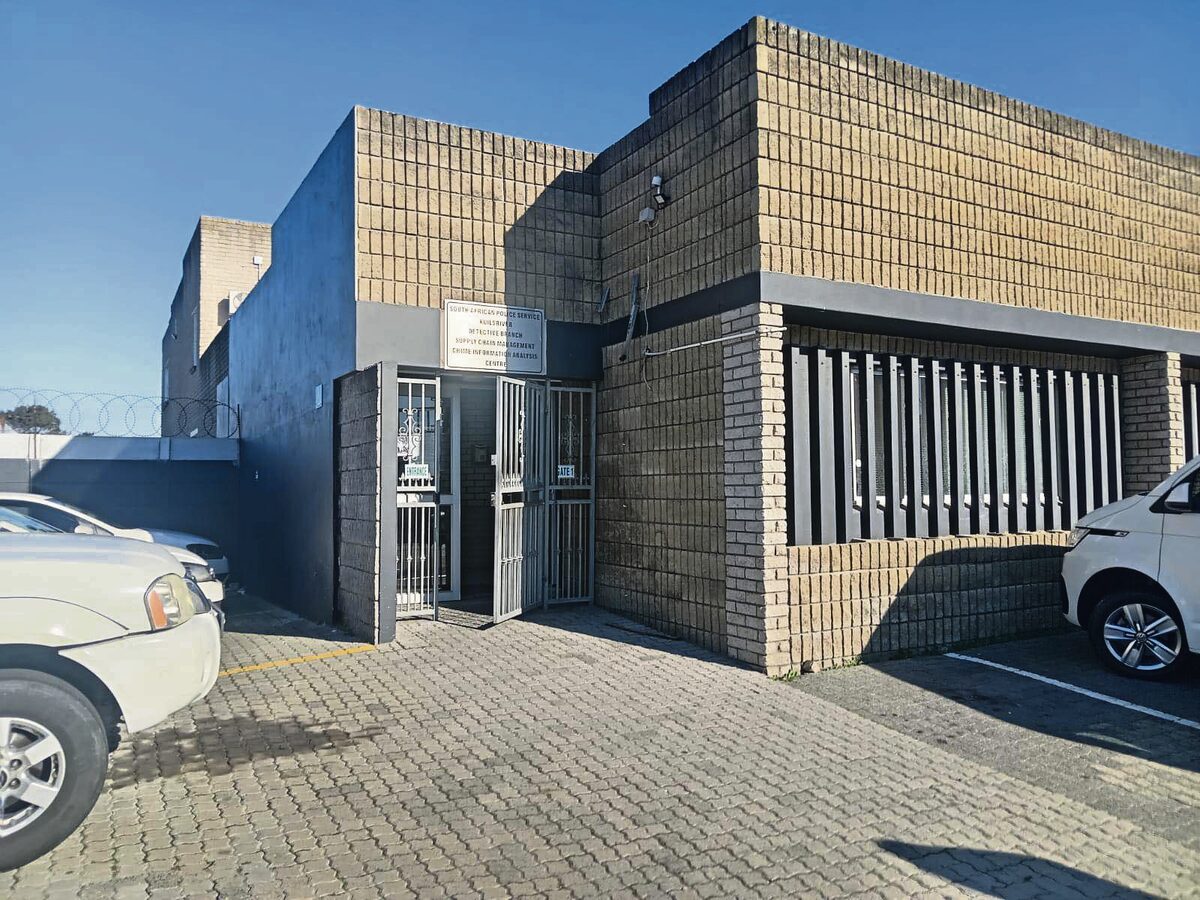
Ian Cameron, chairperson of the National Assembly’s Portfolio Committee on Police, visited the Kuils River Family Violence, Child protection and Sexual offences (FCS) unit earlier this week, highlighting what he describes as serious staffing shortages and inadequate infrastructure at the facility.
What is an FCS unit?
FCS units handle cases including sexual offences, child abuse, gender-based violence (GBV) and other trauma-related investigations. Cameron noted these cases require specialised investigation, forensic follow-up, court preparation, victim support and sustained engagement with survivors and their families.
The Kuils River FCS unit serves the areas of Kuils River, Kleinvlei, Mfuleni and the Mfuleni satellite police unit, serving Wesbank. Cameron noted Mfuleni is a rapidly growing area with increased policing demand.
Staffing levels and caseload
According to Cameron’s findings, the unit currently operates with approximately seven investigators, possibly eight depending on deployment, and one administrative clerk. He stated the unit is short of approximately four investigators and one additional administrative member.
The unit receives roughly 40 new dockets per month. Cameron said while that number may not seem excessive, in FCS work it represents a serious workload, as each docket can involve a traumatised child, a sexual offence survivor, a dangerous suspect, forensic evidence, witness statements, scene attendance, court dates, DNA follow-up and ongoing engagement with victims and families.
When investigators are on leave, in court or attending crime scenes, pressure on the remaining members increases.
“This is how delays build up. This is how morale collapses. This is how victims are failed, not because committed police officers do not care, but because the system has not given them enough people to do the work properly,” Cameron stated.

Vehicle sufficient, but facilities lacking
The unit’s vehicle situation appears better than at some other FCS units Cameron has visited, with three newer vehicles, an older bakkie being maintained, and a seven-seater.
Cameron said the more pressing issue, beyond staffing, is the unit’s physical environment. He described the current office setup as unsuitable for the nature of FCS work.
“Children and sexual offence victims should not have to be dealt with in a cold, ordinary office environment that is not designed for trauma-sensitive engagement. FCS offices must be private, calm, warm and child friendly,” Cameron said.
He also raised concerns about the identification facilities, stating that where vulnerable victims are involved, the process must be properly set up, safe and sensitive.
Forensic kits and basic equipment
Cameron reported that D1 and D7 forensic rape-collection kits are sufficiently stocked at the Kuils River unit at present.
The D1 kit is used for sexual assault victims aged 13 and older, while the D7 is used for younger children. Medical professionals use these kits to collect forensic evidence such as DNA and swabs, which are sealed and sent to a forensic science laboratory.
Cameron stated that stock levels, expiry control and supply-chain management must continue to be monitored across the broader FCS system.
In contrast, Nicholas Gotsell, a DA member of the National Council of Provinces (NCOP) on the security and justice portfolio, reported that the Nyanga FCS unit had no usable rape kits in stock during an oversight visit on 14 May. The only kits on hand had expired. That unit serves Philippi, Philippi East, Nyanga, Gugulethu, Manenberg, Samora Machel, Lansdowne and Athlone.
Cameron also raised concerns about basic computer equipment, saying it is unacceptable for an FCS unit to face delays in obtaining something as essential as a functional laptop, tools he described as critical for case tracking, correspondence, reports and docket follow-up.
Recommendations
Cameron called for more investigators, more administrative support, proper victim-friendly offices, adequate basic equipment and continued forensic kit monitoring at the unit.
“The members are doing difficult, emotionally demanding work under pressure. They deserve better support. More importantly, the victims and children who depend on this unit deserve a system that is properly staffed, properly equipped and properly designed around their needs,” Cameron stated.
He added that parliament’s oversight must focus on what he called practical failures in the system.
“We cannot keep speaking about GBV and child protection while the very units responsible for these cases are left short of people, short of proper offices and dependent on members simply pushing through impossible pressure,” he said.
The Portfolio Committee on Police is responsible for overseeing the agencies managed by the minister of police, including the South African Police Service.
ALSO READ: Wesbank soek ‘n veiligheidsplan ná skietery vier lewens eis




You must be logged in to post a comment.