


South Africans will be treated to a rare celestial spectacle this Sunday, 7 September, as a total lunar eclipse transforms the moon into a dramatic “blood moon” visible across the country.
The National Research Foundation (NRF) reports that the eclipse’s totality phase will run from approximately 19:30 to 20:52, with maximum eclipse occurring around 20:11.
In Cape Town, the partial phase will already be underway when the moon rises at 18:24, whilst Johannesburg residents can expect moonrise at 17:49 with identical eclipse timings.
Prime Viewing Opportunities
The South African Astronomical Observatory (NRF-SAAO) will host a special public viewing event in Cape Town, weather permitting. Visitors will have access to amateur telescopes and guided tours of both the historic main building and the new visitor centre.
This is an excellent opportunity for the public to experience this celestial event with proper equipment and expert guidance, according to the NRF.
Safety Warnings Issued for Popular Viewing Sites
Table Mountain National Park has issued safety advisories as large crowds are expected to gather at prime viewing locations across the mountain range this weekend.
Park spokesperson JP Louw warned that congestion and heavy traffic are anticipated around Lion’s Head, Signal Hill, and Kloof Corner of Table Mountain, where visibility conditions are expected to be optimal.
“We’re urging visitors to observe proper safety measures and plan their journey with extra time for traffic delays,” Louw said.
Complete Viewing Guide for Eclipse Watchers
Best Viewing Conditions:
- Look towards the east/east-northeast from locations with clear, low horizons.
- The moon will be positioned low in the sky as totality begins.
- Unlike solar eclipses, no special eye protection is required.
- Binoculars or small telescopes will significantly enhance the viewing experience.
Photography Tips:
- Stabilise your phone or camera using a tripod or steady surface.
- Use tap-to-focus feature on the moon.
- Reduce exposure settings slightly from automatic.
- Apply short-to-moderate zoom for best results.
What Spectators Can Expect
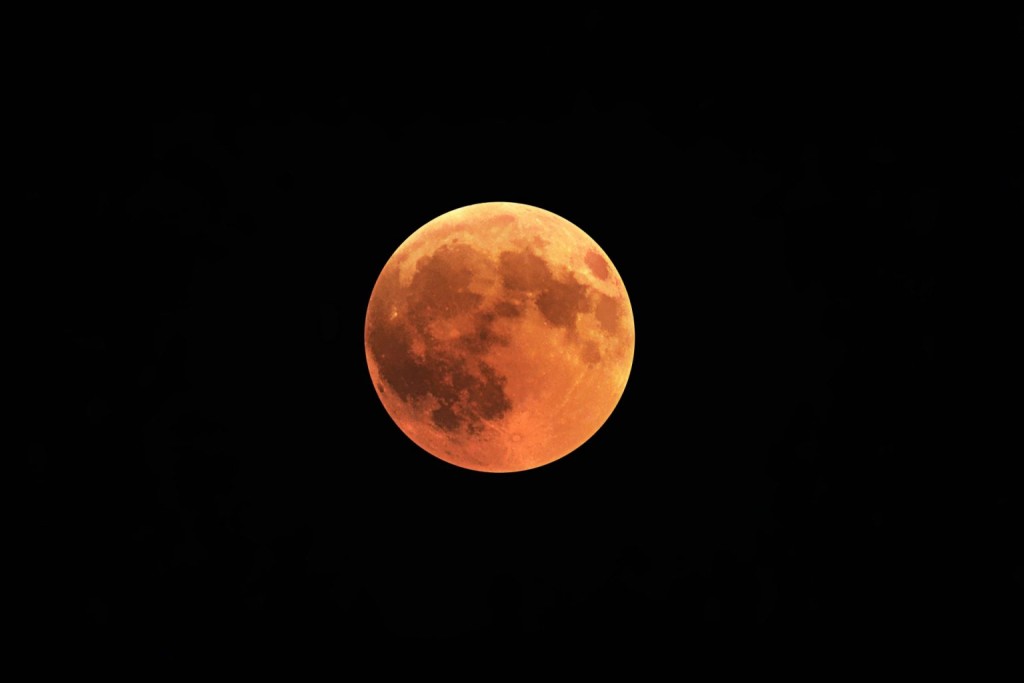
As Earth’s shadow completely engulfs the moon, observers will witness the classic “blood moon” effect, with the lunar surface glowing in deep red hues. This dramatic colouration results from Earth’s atmosphere bending and filtering sunlight, allowing only red wavelengths to reach the moon’s surface.
The most striking red colouration will be visible during the totality phase between 19:30 and 20:52. The red glow will gradually fade as the moon exits totality around 20:52, according to the NRF.
The partial eclipse phase will conclude around 21:56, with subtle penumbral shading continuing until 22:55, marking the complete end of the eclipse event.
Weather conditions across South Africa appear favourable for viewing, though observers are advised to check local forecasts before heading to viewing locations.



You must be logged in to post a comment.