

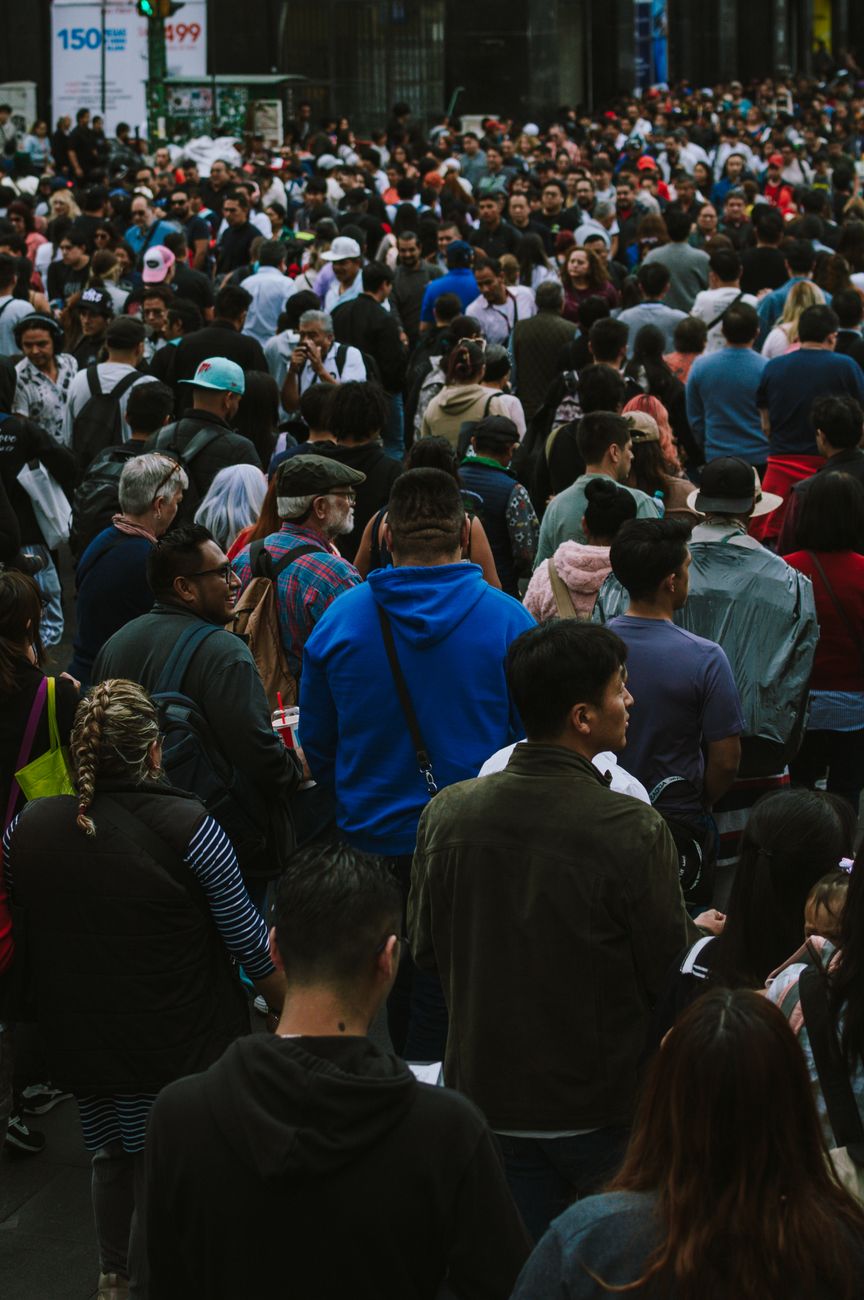
New research shows the country is growing more slowly, ageing faster, and concentrating in fewer urban centres as demographic shifts accelerate.
South Africa’s population reached an estimated 65 098 552 people in mid-2026, according to new figures from the Bureau of Market Research at the University of South Africa.
The figure represents an increase of 722 000 people, or 1.1%, over the previous year. But the growth rate marks the slowest annual increase in recent memory, signalling a fundamental shift in the country’s demographic trajectory.
The report, published on 19 August, identifies five major trends reshaping South Africa’s population: slowing growth, geographic concentration in major metros, sharply divergent provincial growth rates, simultaneous expansion and decline at neighbourhood level, and rapid ageing despite a still-young population.
A decade of declining growth
Ten years ago, the picture looked markedly different. Statistics South Africa placed the population at 55.9 million in 2016, with an annual growth rate of 1.62%.
Over the decade from 2016 to 2026, South Africa added approximately 9.2 million people, a 16.4% increase. Yet the pace has steadily decelerated.
Annual growth averaged 1.6% between 2011 and 2016, rose slightly to 1.7% between 2016 and 2021, then eased to 1.3% between 2021 and 2025. The latest figure of 1.1% represents a drop of roughly a third since the mid-2010s.
Three provinces pull away from the rest
Population growth is increasingly concentrated in Gauteng, KwaZulu-Natal and the Western Cape. Together, these three provinces are home to nearly three out of every five South Africans.
Gauteng alone accounts for 25.8% of the national population, approximately 16.8 million people, and grew by 1.6% in the past year. The Western Cape, home to 11.9% of the population, roughly 7.7 million people, grew by 1.5%.
Together, Gauteng and the Western Cape added close to 385 000 residents in a single year. The Free State, by contrast, grew by just 0.2%, roughly one-eighth of Gauteng’s rate.
Five metropolitan areas now account for more than one-third of the national population. Just 100 sub-places captured approximately one-third of all population growth recorded since 2011.
Dependency ratios, which measure the number of dependents per 100 working-age people, vary widely. Gauteng has approximately 38 dependents per 100 working-age people and the Western Cape 41, compared with 61 in Limpopo and 58 in the Eastern Cape.
Neighbours moving in opposite directions
The most striking findings emerge at neighbourhood level. The report documents places within the same metropolitan economy moving in opposite demographic directions, sometimes only kilometres apart.
In Johannesburg, Bryanston gained approximately 94 000 residents since 2011, while Hillbrow lost approximately 63 000. The two suburbs are about ten kilometres apart.
In Cape Town, five of the country’s 15 largest population declines were recorded on the Cape Flats. Delft, Browns Farms, Tafelsig, Langa and Ikwezi Park each declined by 30 000 residents or more. Philippi, within the same metro, gained approximately 50 000.
ALSO READ: Can rapid developing Drakenstein handle another water crisis?
Young population ageing rapidly
About a quarter of South Africans are under the age of 15, and roughly 68% are of working age. Yet the longer-term trend points decisively towards an older population.
Since 2011, the number of children under 15 has increased by only 2.6%, while the population aged 65 and older has grown by approximately 79%.
Old-age dependency is climbing about 1.5 times as fast as youth dependency is falling. The BMR estimates place South Africa near the peak of its demographic dividend, the period in which the working-age share of the population is at its highest.
However, the report cautions that the country cannot capitalise on this dividend due to very high levels of unemployment, especially youth unemployment.
From about 2027, the dependency burden is expected to begin rising structurally as population ageing continues.
Females make up approximately 51% of the population, and African or Black South Africans constitute 81.6%, figures broadly consistent with a decade ago.
Zuzitzka Janz, senior researcher at the BMR and lead author of the population estimates, said South Africa’s population future cannot be defined by one national average, but by the diverging realities of its places, provinces and people.
“The country is growing and slowing at the same time and urbanising and emptying out at the same time. None of that is visible in the national figure,” she said.
“That is why BMR takes its population estimates down to sub-place level, the level at which the data begins to connect with lived experience and national trends become local realities. Because behind every number is a person. Behind every projection is a heartbeat.”
The BMR estimates extend to more than 22 000 sub-places, with breakdowns by age, sex and population group.
ALSO READ: How homes and cities must adapt for a growing older population


