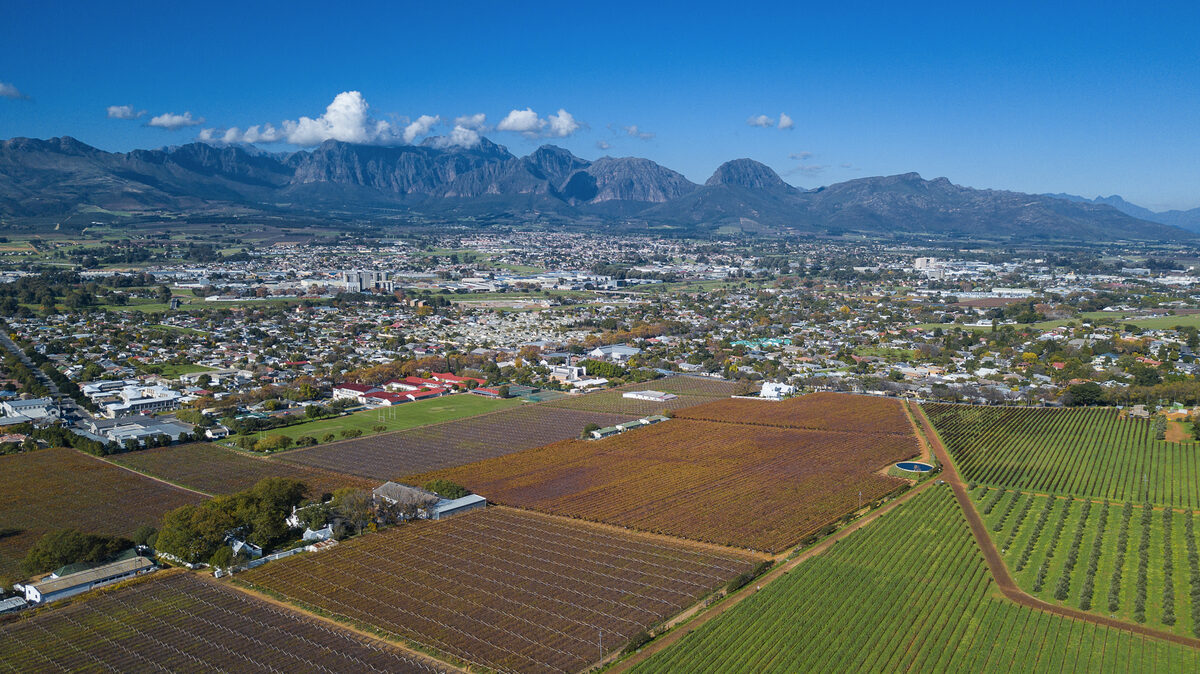
PAARL – The Drakenstein area has emerged as one of the fastest-developing regions in the Western Cape, with new housing developments sprouting all around Paarl and thousands of people flocking to the valley over recent years. But as memories of the devastating 2017-2019 drought remain fresh – when the region nearly faced Day Zero and the Berg River that flows through the town literally ran dry – a critical question emerges: is this booming municipality truly prepared for the water crises that may lie ahead?
With the Western Cape facing renewed concerns about potential drought conditions and many municipalities across the province already having implementing water restrictions due to significantly lower winter rainfall, the pressure is mounting on Drakenstein to prove its water security credentials.
The scars of the 2017-2019 drought run deep in the Western Cape consciousness. Cape Town and Drakenstein came very close to Day Zero – the calculated date when the cities would have completely run out of water. The sight of the Berg River reduced to a trickle served as a serious reminder of nature’s power to disrupt even the most developed areas.
It was this crisis that spurred Drakenstein Municipality into action. Following the drought, the municipality developed a comprehensive Drought and Flood Disaster Management Plan that officials say prepares them for any future water emergencies.
Population boom meets water conservation
Drakenstein’s population has risen from 280,195 in 2016 to 305,281 in 2025 – an increase of over 25,000 people in just eight years. The informal settlement population has also expanded, growing from 14,993 in 2021 to 16,852 in 2025.
Yet despite this significant population influx, the municipality’s current water consumption remains lower than it was in 2010-2011. This achievement stems from a combination of aggressive water conservation measures and fundamental changes in how residents use water.
Joseph Barnard, senior water manager of the Drakenstein municipality said that the municipality has taken a multi-pronged approach to water conservation. New residential developments must now install water-saving taps and showerheads as standard. The municipality enforces stepped water tariffs and imposes fines for those who fail to comply with water-saving measures. During drought periods, higher tariffs kick in to discourage excessive water use.
Furthermore, Barnard states that public awareness campaigns have become a cornerstone of the conservation effort, with municipal teams visiting schools and running community drives to instil water-saving habits across all age groups.
The numbers game: Supply vs demand
According to the Drakenstein Bulk Water Study, the combined water sources serving Paarl and Wellington can provide 37.90 million cubic meters annually, equivalent to 104 million liters per day. Municipal officials assert this supply is sufficient to meet demand even under high-growth scenarios until 2048, extending well beyond the study’s 2041 planning horizon.
“This projection offers reassurance for a region experiencing such rapid development, but it also raises questions about what happens beyond 2048 and whether current growth projections accurately reflect the reality on the ground,” said Barnard.
Recognising that water security extends beyond municipal boundaries, Drakenstein is partnering with the Western Cape Government to implement the province’s Water Resilience Strategy for 2025-2035. This broader strategy emphasises diversifying water sources, building climate-resilient infrastructure, and preparing for extreme weather events.
The strategy acknowledges the province’s vulnerability, particularly in light of events like Day Zero, and focuses on ensuring water security for all users while linking water resilience to economic development and job creation.
The verdict on water security
The evidence suggests that Drakenstein Municipality has learned hard lessons from the 2017-2019 drought. The combination of comprehensive planning, effective conservation measures, and what appears to be adequate supply capacity points to a municipality better prepared for future challenges than it was during the last major drought.
However, the true test will come when the next drought inevitably arrives. With developments continuing to spring up around Paarl and the population showing no signs of slowing its growth, the municipality’s water management systems will face their ultimate examination.