

CAPE TOWN – South African scientists and conservationists have played a growing role in global efforts to protect the oceans beyond national jurisdiction.
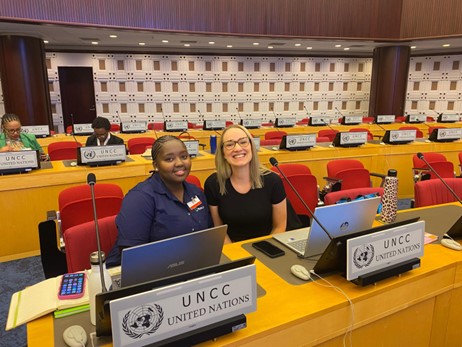
In December 2025, Samkelisiwe Danisa and Lauren van Nijkerk of the South African NGO WILDTRUST attended a regional workshop in Ethiopia on the Biodiversity Beyond National Jurisdiction (BBNJ) Agreement, also known as the High Seas Treaty.
Around 100 representatives from African states, regional bodies, international organisations, and civil society discussed how the treaty can safeguard marine life and ecosystems in international waters, which cover two-thirds of the ocean and are largely unprotected.
The treaty will enter into force on 17 January 2026, after reaching the required ratification threshold of 60 UN Member States.
Recent proposals for a large high seas marine protected area (MPA) in the subantarctic western Indian Ocean aim to connect and protect the unique biodiversity around islands belonging to South Africa, France, and Australia, including the Prince Edward, Crozet, Kerguelen, and Heard and McDonald Islands.
In June 2025, alongside the United Nations Ocean Conference in Nice, a workshop co-hosted by South Africa’s Department of Forestry, Fisheries, and the Environment (DFFE) and the French Office Français de la Biodiversité explored the feasibility of transboundary collaboration for this MPA.
Building on this momentum, more than 70 experts from fields including biology, conservation, fisheries, and ocean modelling gathered in Cape Town in August 2025 for the PHOCIS (Pelagic High Seas Ocean Ecoregionalisation of the Indian Subantarctic) workshop. Led by Professor Philippe Koubbi of Sorbonne University, PHOCIS brings together government agencies, NGOs, and universities to map marine biodiversity, oceanographic features, and governance structures in support of conservation across the subantarctic Indian Ocean.
The Ethiopia workshop highlighted the policy side of implementing BBNJ. Participants discussed environmental impact assessments, capacity building, technology transfer, and financial mechanisms, alongside area-based management tools to conserve biodiversity beyond national waters.
Judge Thembile Joyini of the International Tribunal for the Law of the Sea noted the persistent lack of access to marine genetic resources for many African states and emphasised the importance of ratification to secure African voices in decision-making.
“Several sessions explored practical steps for countries and organisations to implement BBNJ,” said Lauren van Nijkerk. “We also saw opportunities for funding to support ratification and implementation activities, which is encouraging for African stakeholders.”
Science plays a central role in guiding conservation efforts. Dr. Arthur Tuda of the Western Indian Ocean Marine Science Association (WIOMSA) highlighted the growing regional scientific capacity, with 1,200 scientists in the network, 60% of whom are early-career professionals trained and retained within southern Africa.
Programs like Women in Science and Early Career Science form core networks supporting BBNJ’s success.
The workshops emphasised that protecting species and ecosystems in international waters requires strong science-policy links, collaborative governance, and shared responsibility. They also reinforced the need for area-based management tools and marine protected areas to ensure that biodiversity out of sight remains safeguarded.
“We hope South Africa will join the 78 countries that have ratified the BBNJ Agreement, and that the proposed High Seas MPA linking subantarctic islands will become a first-generation High Seas MPA,” said van Nijkerk.
She also acknowledged partners and funders, including Oceans 5, Bloomberg Philanthropies Ocean Initiative, and Pew Bertarelli Ocean Legacy, for helping build momentum for the oceans and the communities that depend on them.

