


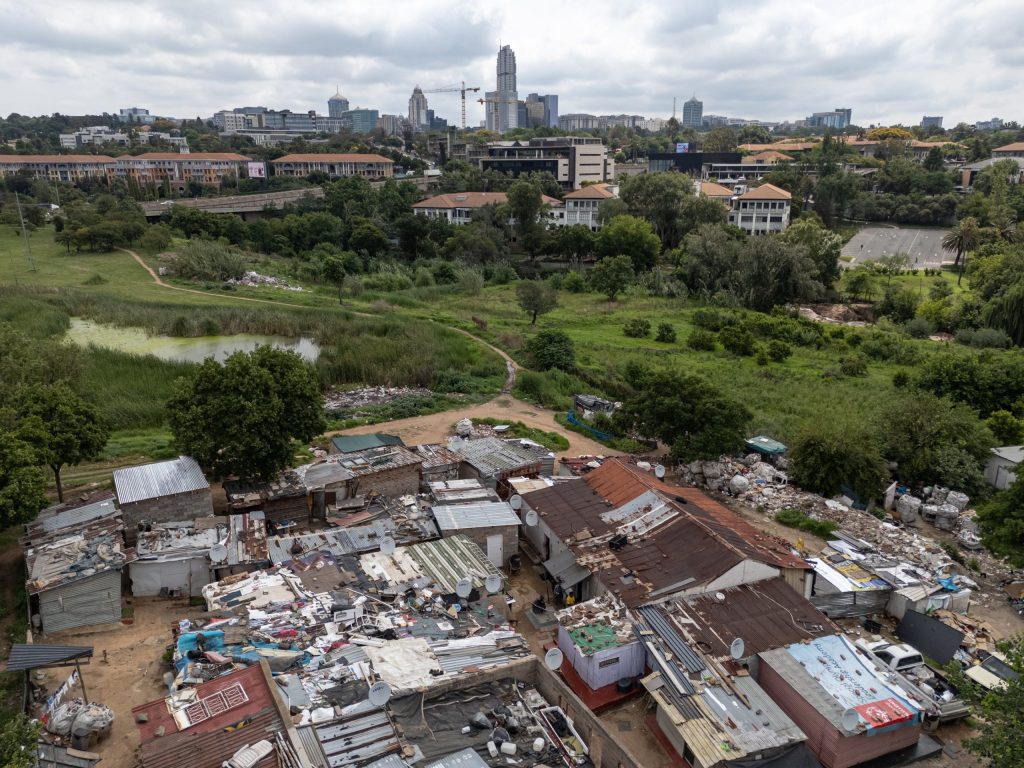
From the cramped metal shacks lining the banks of the Jukskei River, the glittering skyline of Johannesburg’s wealthiest district seems like another world entirely, despite being less than 4 km away.
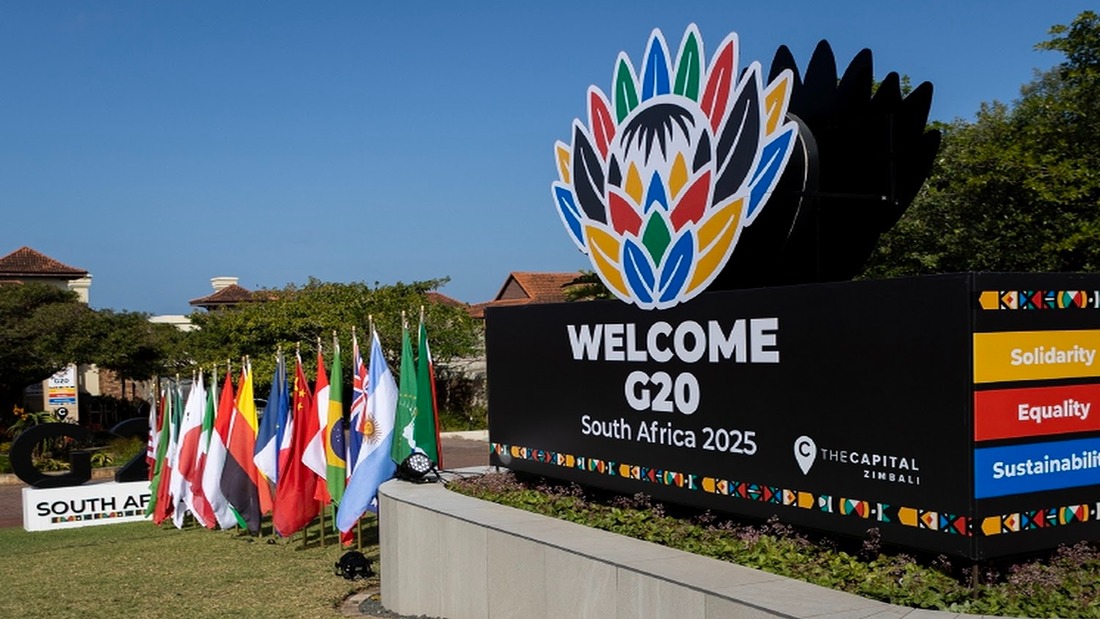
As world leaders gather this weekend for the first African-hosted Group of 20 summit, South Africa’s stark inequality serves as both backdrop and central theme for discussions among the planet’s most powerful economies.
A tale of two worlds
Bryan, a 34-year-old security guard, lives with his wife and nine-year-old son in a rusted shack in an informal settlement at the foot of Sandton’s towering high-rises. A makeshift electrical connection powers a single light at their doorway, while bags of refuse destined for recycling companies line the muddy paths between homes.
“Here in Sandton, there are a lot of people and companies that have money,” said Bryan, who requested only his first name be used for fear of losing his job. “But we don’t have access,” he added with a resigned shrug, cigarette in hand.
The contrast is striking. Just above his settlement, the business district’s crown jewel, The Marc—a grandiose oval tower with a black-and-gold facade—advertises that its generator powers the entire street, ensuring wealthy patrons are “never left in the dark” despite South Africa’s unreliable electricity grid.
Leading by example
President Cyril Ramaphosa has made combating inequality the centerpiece of South Africa’s G20 presidency, positioning it as the summit’s defining “legacy.” The country holds the unwelcome distinction of being ranked by the World Bank as the most unequal nation on Earth.
To underscore this commitment, Ramaphosa appointed an expert task force led by Nobel Prize-winning economist Joseph Stiglitz. The panel’s recommendation to create an international body tackling wealth disparities—modeled after the UN’s climate panel—has gained presidential backing.
“South Africa is owning up to its status as the most unequal country in the world and is keen to use the springboard of the G20 to tackle that,” explained Isobel Frye, G20 senior policy adviser at Oxfam. “The fact that it is something that South Africa owns and claims gives it greater impetus.”
By the numbers
The Stiglitz report reveals staggering global wealth concentration: the richest one percent captured 41 percent of all new wealth between 2000 and 2024, while the poorest 50 percent received just one percent.
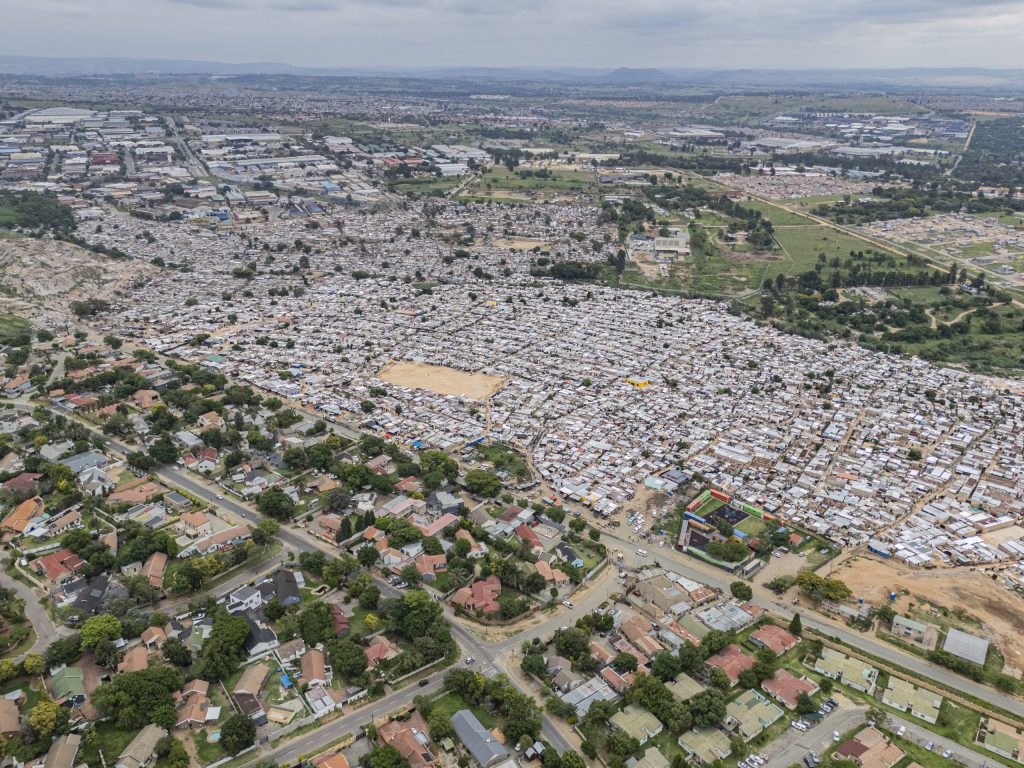
In South Africa, the disparities are even more extreme. According to the University of Witwatersrand, the top 0.1 percent controls over a quarter of national wealth – a legacy of colonialism and apartheid that persists three decades after democracy’s arrival.
Nearly 32 percent unemployment and severe wage inequality drive the crisis deeper. Almost one in four households survive primarily on government grants of R500 monthly.
The education divide tells the story in stark relief: Bryan pays R400 monthly for bus fare to send his son to public school in Alexandra, one of Johannesburg’s most troubled townships. Meanwhile, private school fees in adjacent Sandton exceed R 171,000 annually.
The Democratic deficit
For residents like Bryan, who have pooled money to build shared toilets and handle infrastructure needs themselves, the G20’s promises ring hollow. “The billionaires that are coming here, I don’t think they will do something better for us,” he said.
Frye warns that such inequality threatens democratic foundations. “If the rich are not taxed fairly, they opt out of democracy,” she argued. “We can see that in South Africa: you buy your medical aid, your private education, your security. And so it doesn’t matter to you, because you’re not part of the system.”
As world leaders convene in the shadow of both Sandton’s prosperity and surrounding poverty, South Africa hopes its unflinching acknowledgment of inequality can inspire global action. Whether that translates to meaningful change for residents like Bryan remains to be seen.
ALSO READ: Global inequality creates dangerous ‘pandemic cycle,’ UN report warns


You must be logged in to post a comment.