

South Africa risks thousands of premature deaths if the phase-out of coal plants is delayed due to the government’s updated decommissioning dates, climate rights groups said in a report on Wednesday.
Coal provides 80% of South Africa’s power, according to the OECD, and the country ranks among the world’s largest greenhouse gas emitters. It is also a cornerstone of the country’s economy, employing more than 90 000 people, making decommissioning plans a divisive issue.
Last year, the government approved the extension of operating dates for its 14 coal-fired power plants across the country, with two set to continue operating until 2050.
The new report by Greenpeace, the Centre for Research on Energy and Clean Air and the South Africa-based climate NGO GroundWork said continued delays could cause up to 32 000 preventable deaths between 2026 and 2050.
Gauteng province, home to the capital Pretoria and financial hub Johannesburg and with no state-owned coal plants, is projected to bear the largest burden from the extension, with 15 000 deaths forecast over the same period.
In January, authorities attributed elevated sulphur pollution levels in Gauteng to transboundary pollution from neighbouring Mpumalanga, South Africa’s most polluted industrial zone.
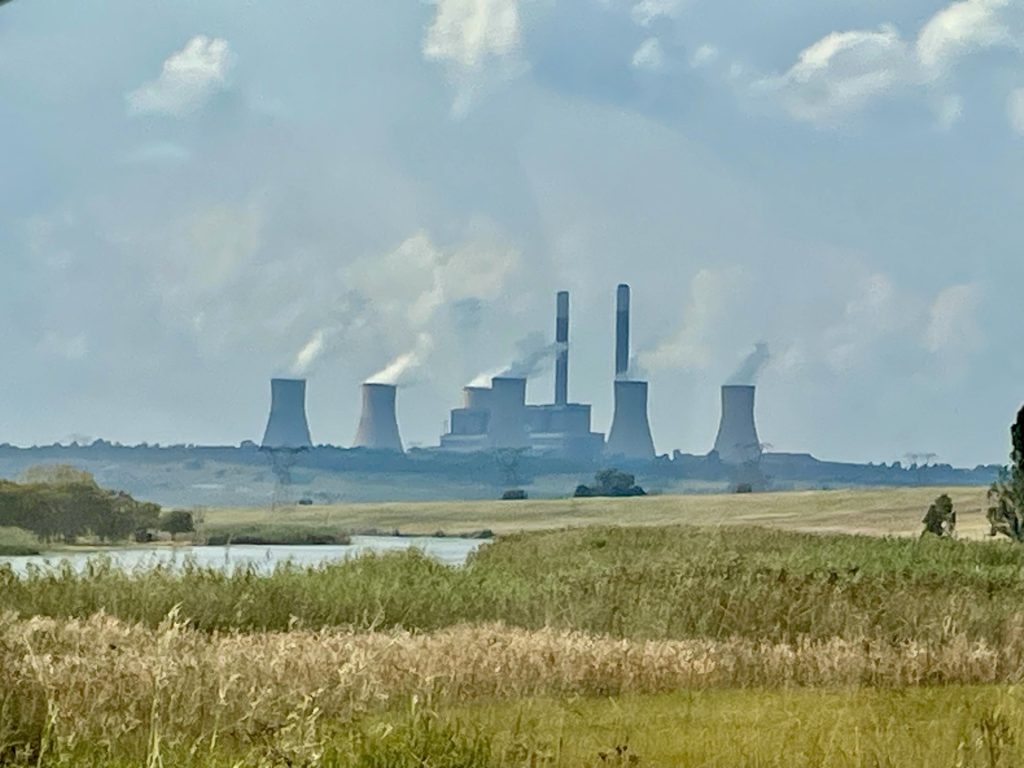
“Pollution does not stay where it is made, it travels,” said Cynthia Moyo, a climate campaigner at Greenpeace.
The delay will also place a heavy burden on children’s health, resulting in 41 000 pre-term births, 17 000 new cases of childhood asthma, and 370 deaths among children under five, the report said.
“Coal’s true cost is being hidden in hospitals and in early graves,” Moyo told AFP in a phone interview, dismissing the government’s argument that the delay is for economic reasons.
‘A pandemic’
Residents of Middelburg, in Mpumalanga, present at the report’s launch, recounted the effects of air pollution they have experienced, including early-onset asthma in children, skin diseases, and other respiratory flare-ups.
“It is a pandemic for us,” said Sharon Mbonani (30), a mother who was forced to separate from her one-year-old son and send him to another province after doctors linked his respiratory problems to environmental factors.
The report estimates the cost of the delay to the South African economy at R721 billion, including lost working days and increased pressure on the public healthcare system.
ALSO READ: South Africa’s informal miners fight for their future in coal’s twilight
Coal-rich but energy-starved South Africa, the continent’s most industrialised nation, became the first country in the world to sign a Just Energy Transition Partnership (JETP) deal with wealthy nations in 2021, worth $8,5 billion, to shift away from coal-fired power generation.
But last year the United States withdrew its multi-million dollar deal with Pretoria as part of the Trump administration’s pullback from global climate commitments.
The transition to green energy has been mired with infighting among the government, which has a long history of support from labour unions representing mine workers.
ALSO READ: Coal mine application near Kruger National Park draws fresh opposition over environmental risks


You must be logged in to post a comment.