

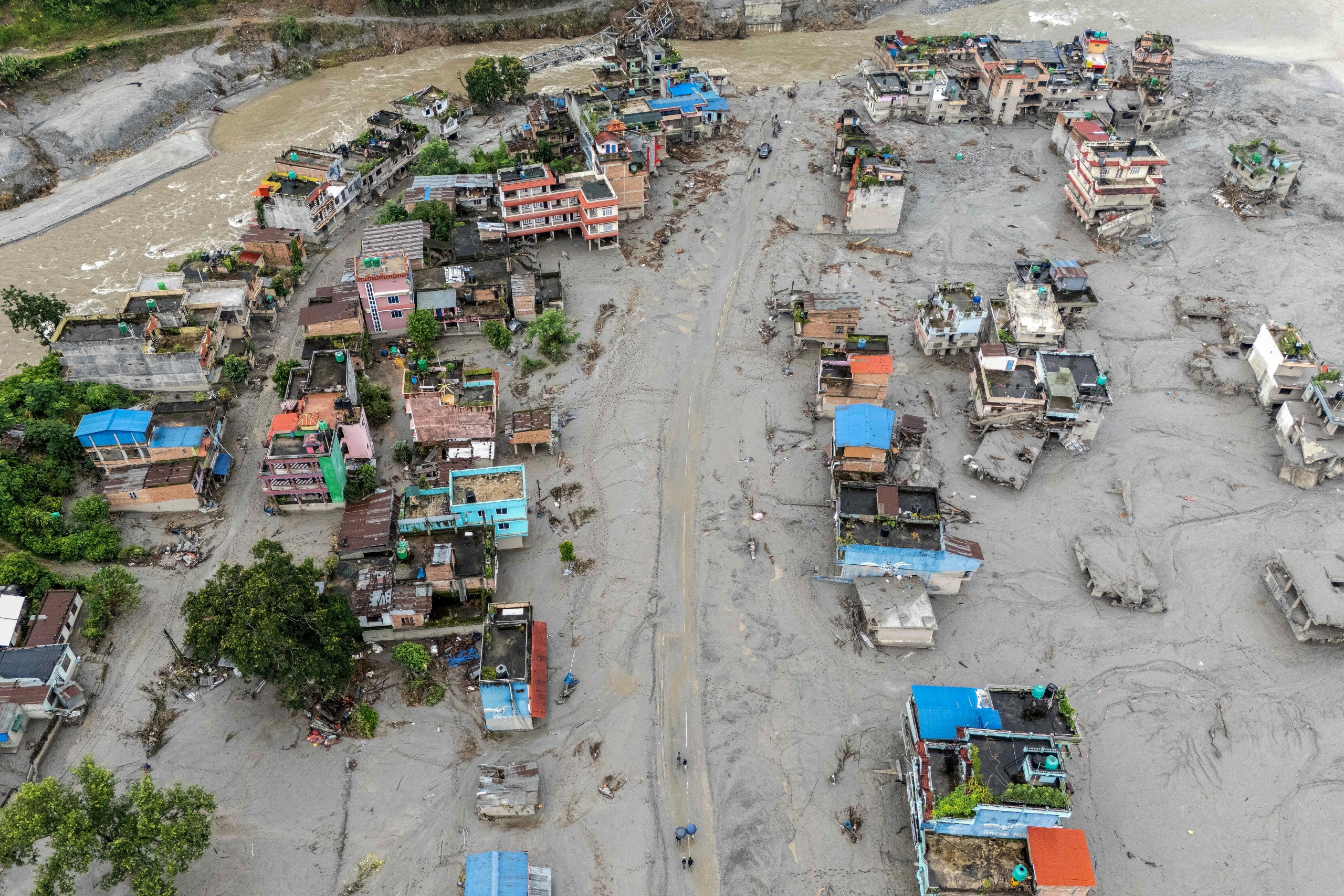
KATHMANDU, Nepal — Six South Africans are among nearly 3 000 people still missing after devastating flash floods and landslides struck the Nepal-Tibet border on Wednesday, according to the Nepal Tourism Board.
The total number of missing now stands at 2 980, with 2 426 unaccounted for on Nepal’s side of the border and 554 in Tibet. At least 633 people have been confirmed dead.
Nepal’s disaster agency on Friday said that 517 foreigners — which could include tourists as well as foreign workers — were still missing.
Among the missing South Africans, according to the Nepal Tourism Board, are Terricia Govender (33) from Isipingo in KwaZulu-Natal, Bavika Ramjee (43) from KuGompo in the Eastern Cape, Vivaganathan Pillay (66) and his wife, Janet Pillay (56), as well as Surendranath Maharaj (74) and his wife, Anitha Devi Maharaj (67), all from Ladysmith in KwaZulu-Natal, reports Die Papier.
Other South Africans in the region have been advised to contact their embassy.

The largest group are 98 people from India, though 85 others were rescued. Ninety US citizens were missing, the State Department said Thursday, adding that three had been rescued.
Sixty-one Ukrainians, 51 Malaysians, 41 Australians and 33 people from the United Kingdom were also among the missing, according to the Nepal Tourism Board figures from Friday.
Race to save trapped workers
Rescue efforts on Saturday were focused on more than 100 workers trapped inside a hydropower tunnel, with Nepali army teams using drilling equipment in an increasingly desperate bid to reach them.
“The government has been continuing efforts… to rescue people trapped inside the tunnel of the Trishuli 3A Hydropower Project in Rasuwa,” Nepal’s prime minister’s office said in a statement.
ALSO READ: Nepal seeks to reach survivors in tunnel as risk of new floods rises
“As part of these efforts, work to clear the tunnel entrance has been intensified since early Saturday morning,” it added.
Photographs shared by the office showed workers wading through churned mud and navigating vast boulders left by the floods.
It said that 82 personnel, including both army and police, were working to “excavate the tunnel entrance”.
But it added that the rescue effort has become “extremely challenging” due to adverse weather conditions.
On Thursday, the office said that the army had already rescued 350 people from the site under “extremely risky” conditions, but that more than 100 remained trapped.
A Nepal Army statement said Saturday that rescuers were “using equipment including drilling machines in an effort to locate the outer section of the tunnel”.
India has sent a specialised tunnel rescue team following a request from Nepal to help, which had reached Trishuli, Nepal’s prime minister’s office added, saying it would first “conduct an initial aerial survey”.
India has extensive experience with difficult Himalayan tunnel rescues, including teams of so-called “rat-hole” miners trained in being able to crawl into narrow spaces.
Those trapped are among the 933 workers on hydropower projects on the rivers where a wall of water powered down on Wednesday morning, according to the National Disaster Risk Reduction and Management Authority.
Glacial collapse triggers disaster
The US Geological Survey said the disaster on Wednesday on the Tibet-Nepal border was caused by a glacial collapse that created a torrent of debris.
While the exact cause of the collapse is unclear, climate change is causing glaciers to melt worldwide, increasing the risks of such disasters.
ALSO READ: Experts: Glacier collapse may have caused Nepal-Tibet flooding
India is stepping up monitoring of its Himalayan regions bordering China and Nepal in response to the floods.
“Since we share a border with Nepal, as a neighbour, and also have a similar geographic situation… we have asked our department to monitor all the glaciers and known glacial lakes in the region,” said Madan Kaushik, state disaster management minister in India’s Himalayan state of Uttarakhand.
Himalayan glaciers, which provide critical water to nearly two billion people, are melting faster than ever before due to climate change, exposing communities to unpredictable and costly disasters, scientists warn.
Widespread devastation
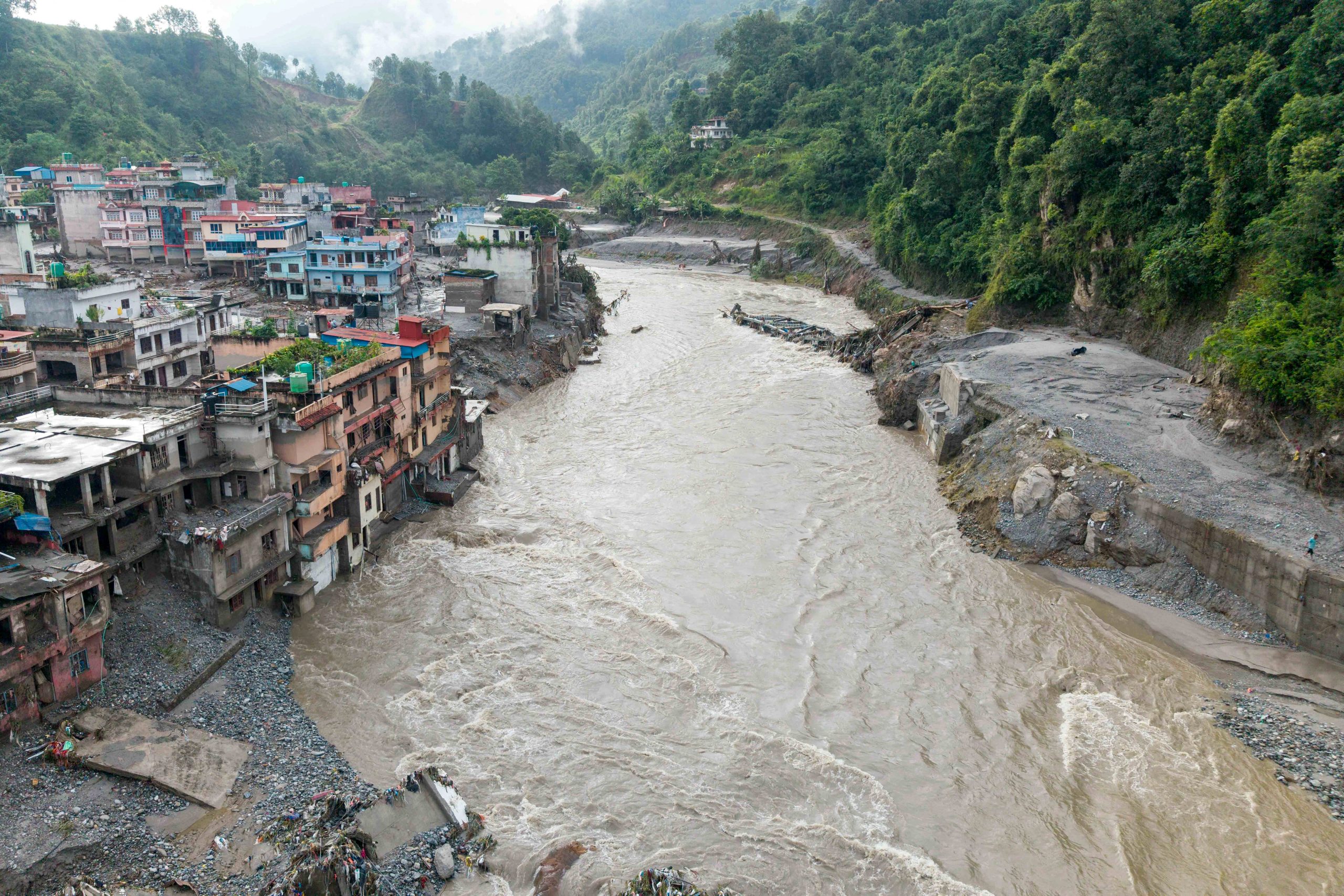
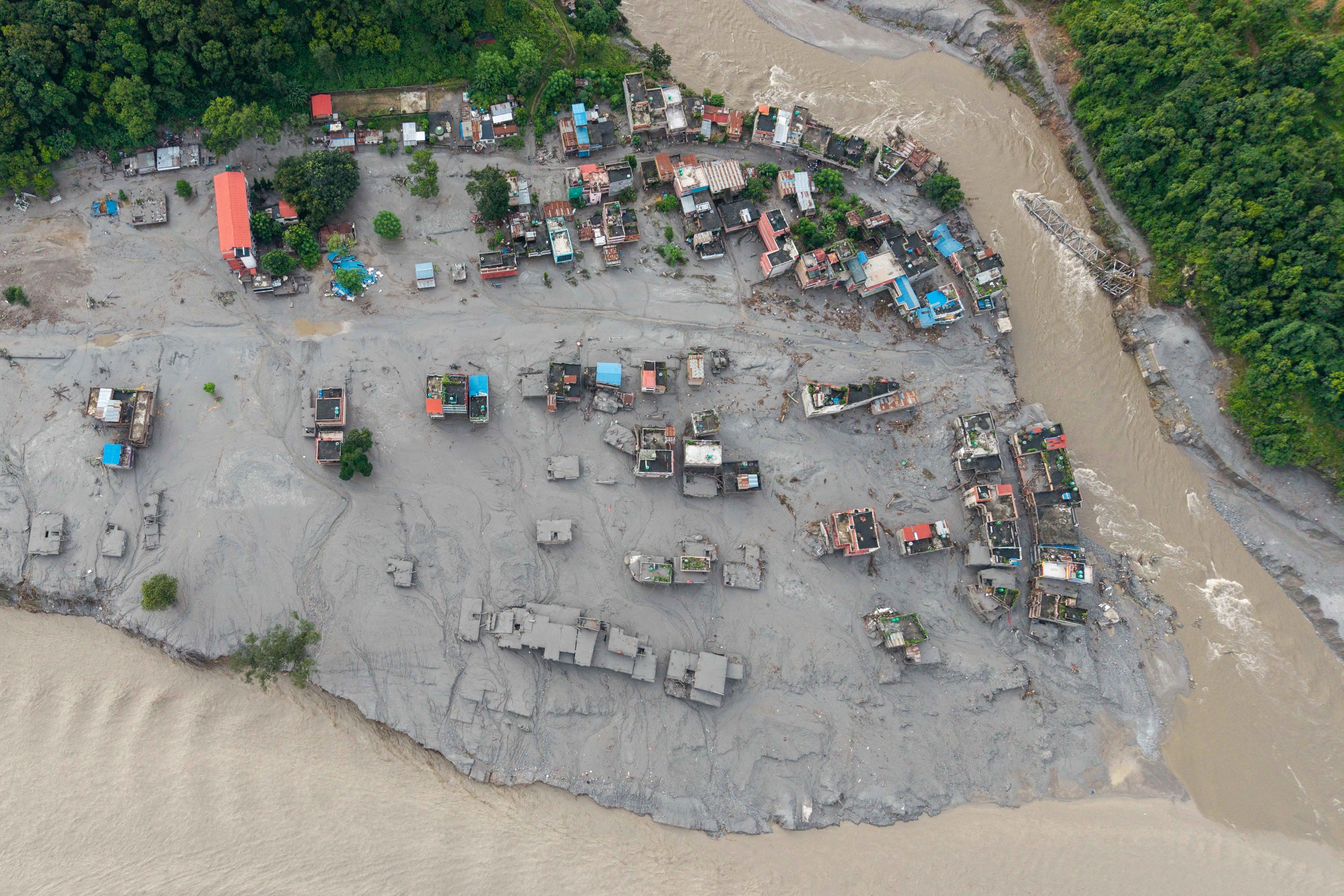
Entire communities have been swept away, leaving families homeless or sheltering in temporary facilities. As many as 93 000 people have potentially been affected in the country of about 30 million, the Red Cross said.
“Multiple bridges have been washed away and major roads disrupted, leaving some of the worst-affected communities extremely difficult to reach,” the Red Cross said.
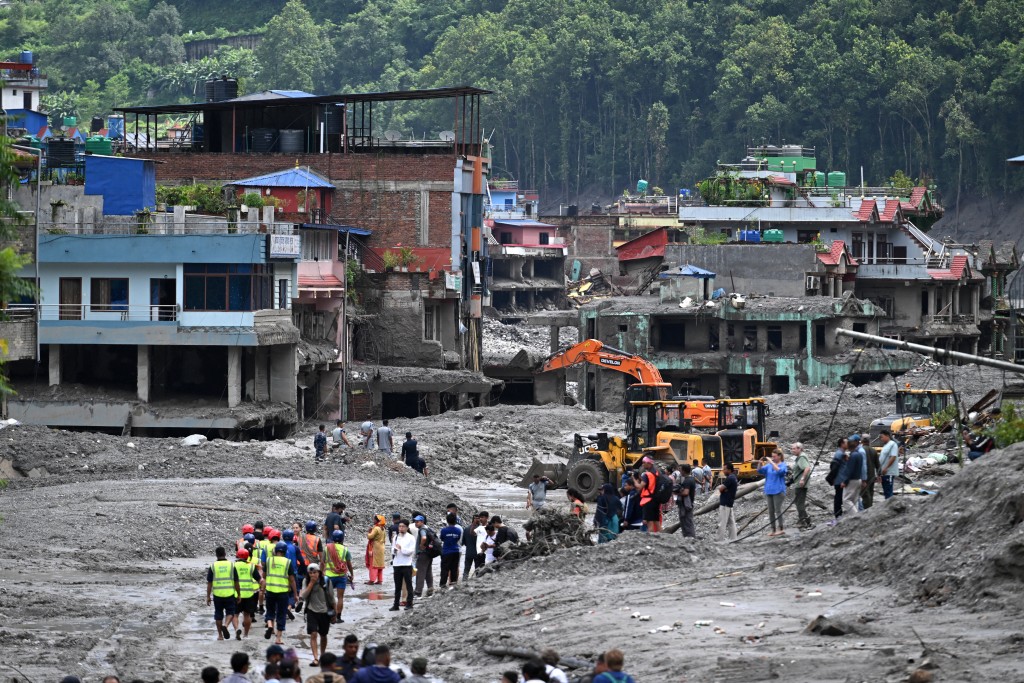
At least 18 schools have been destroyed and another 20 damaged, leaving about 10 000 school-age children affected, according to the UN Children’s Fund.
The Nepal Electricity Authority said 11 hydropower stations and one solar power station had stopped operating, with a combined capacity of 431.1 megawatts. That represents about 10 percent of Nepal’s installed electricity generation capacity.
Another 15 power projects under construction, with a combined planned capacity of 470 megawatts, have also been damaged.
The floods destroyed three health posts and partially damaged a hospital, with access to two other hospitals affected, according to the UN’s World Health Organisation.
“Displacement, overcrowding, damaged water and sanitation systems, and disrupted health services may increase the risk of communicable diseases,” WHO said.
Government appeals for aid
Nepal’s government has appealed for financial help in the daunting task of recovery, reporting a “heavy loss of life and property” as it continues to assess the full scale of the destruction. Risks of further flooding remain.
The disaster comes just ahead of the anniversary of last year’s September 8-9 mass anti-corruption protests that toppled the government.
Nepal is now led by Prime Minister Balendra Shah, a 36-year-old rapper-turned-politician widely known as “Balen”. The former Kathmandu mayor swept March elections on a wave of euphoria calling for political change.
His young government now faces the enormous task of rebuilding communities and critical infrastructure.
Nepal’s economy is already under pressure, with limited resources to respond to a disaster of this scale. The World Bank estimates 82 percent of Nepal’s workforce is in informal employment, with GDP per capita at $1 447 (about R27 000) in 2024.
Tourism contributes about 6.4 percent of Nepal’s GDP and supports around 15 percent of employment, according to the World Bank. The floods could add to the economic fallout by disrupting trekking, pilgrimage and other tourism, particularly in the Himalayan north.


You must be logged in to post a comment.