


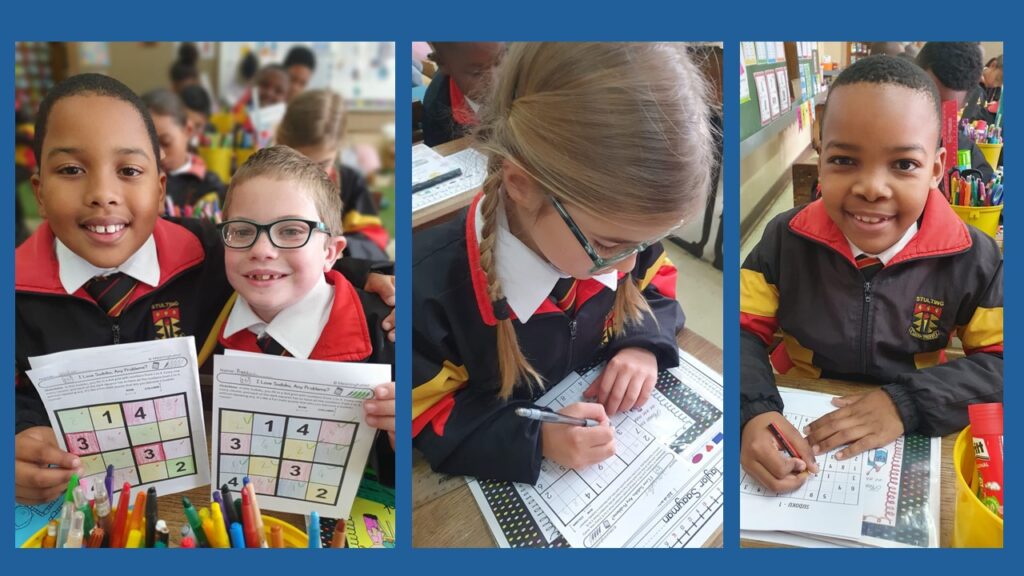
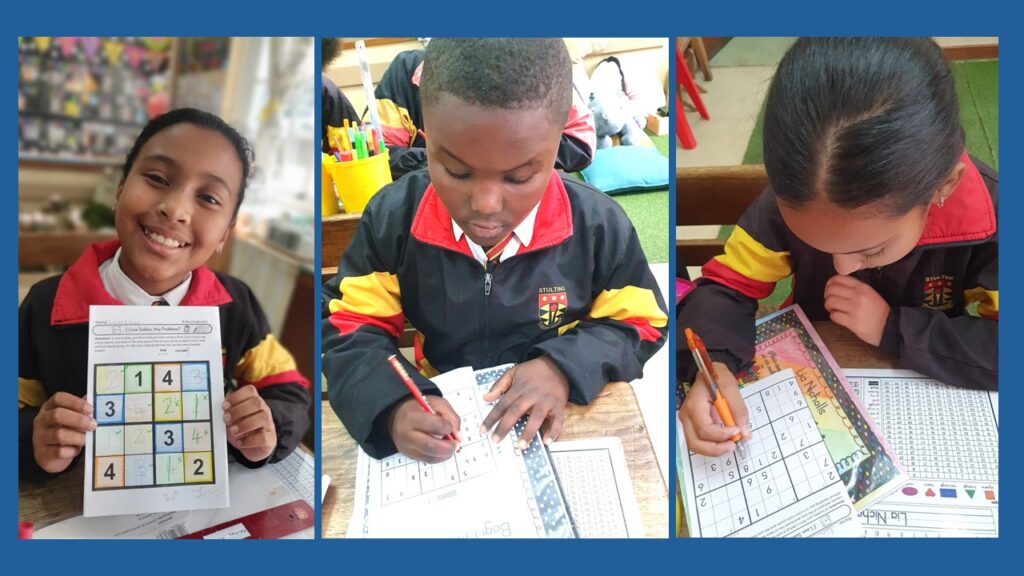
International Sudoku Day. The Grade 3 learners of Stulting Primary School, jumped into the excitement of International Sudoku Day. They started with a smaller 4×4 grid, moving to a 6×6 and then challenging themselves with the bigger 9×9 grid – all in one day! Just like the day’s date, 9/9, the 9×9 grid is extra special. It is giving their brains an amazing workout especially after our assessments, when their brains feel fried. Sudoku is not just fun. It helps us think logically and solve problems.
Sudoku is a really fun puzzle game that we celebrate on September 9th every year. It’s special because it has lots of nines in it! The goal of Sudoku is to fill a 9×9 grid with numbers from 1 to 9. You can’t repeat any numbers in a row, column, or square. Some puzzles are easy and some are hard.
What is Sudoku
Sudoku is a logic-based number puzzle. The goal is to fill a 9×9 grid so that each row, each column, and each 3×3 section contains all the numbers from 1 to 9, without repeating any numbers. The puzzle starts with some numbers already filled in, and using these as clues, you figure out where the remaining numbers should go. Sudoku puzzles can be easy or difficult, depending on how many numbers are given and their arrangement.
The history of Sudoku
Sudoku’s roots go back to the late 19th century, but the modern version was invented by Howard Garns in 1979. He was an American architect who created a puzzle called “Number Place,” which was published in a magazine. In the mid-1980s, a Japanese company called Nikoli found the puzzle, renamed it “Sudoku,” meaning “single number” and published it in their magazine. The puzzle became a hit in Japan and spread globally in the early 2000s.
Beat strategies to solve Sudoku Puzzles
To solve Sudoku puzzles, certain strategies can help. One strategy is “scanning,” which involves checking rows, columns and sections to see where a number can or cannot go. For example, if a number must go in a certain row but only fits in one space, you can fill it in. Another method is “pencil marks,” where you write small numbers in the corners of empty spaces to track possible answers, erasing them as you progress.
The benefits of Sudoku for kids
- 𝐈𝐦𝐩𝐫𝐨𝐯𝐞𝐬 𝐅𝐨𝐜𝐮𝐬 𝐚𝐧𝐝 𝐂𝐨𝐧𝐜𝐞𝐧𝐭𝐫𝐚𝐭𝐢𝐨𝐧: Playing Sudoku requires attention and focus, helping children improve their concentration over time.
- 𝐁𝐨𝐨𝐬𝐭𝐬 𝐋𝐨𝐠𝐢𝐜𝐚𝐥 𝐓𝐡𝐢𝐧𝐤𝐢𝐧𝐠: Sudoku challenges kids to think logically, improving their problem-solving skills and understanding of patterns.
- 𝐄𝐧𝐡𝐚𝐧𝐜𝐞𝐬 𝐌𝐞𝐦𝐨𝐫𝐲: As children play Sudoku, they need to remember where certain numbers go, boosting their memory and recall.
- 𝐓𝐞𝐚𝐜𝐡𝐞𝐬 𝐏𝐚𝐭𝐢𝐞𝐧𝐜𝐞 𝐚𝐧𝐝 𝐏𝐞𝐫𝐬𝐢𝐬𝐭𝐞𝐧𝐜𝐞: Sudoku can be tricky, teaching kids the value of patience and persistence in working through challenges.
- 𝐃𝐞𝐯𝐞𝐥𝐨𝐩𝐬 𝐒𝐭𝐫𝐚𝐭𝐞𝐠𝐢𝐜 𝐓𝐡𝐢𝐧𝐤𝐢𝐧𝐠: With strategies like “scanning” and “pencil marks,” children learn to plan ahead and think strategically.
- 𝐄𝐧𝐜𝐨𝐮𝐫𝐚𝐠𝐞𝐬 𝐚 𝐒𝐞𝐧𝐬𝐞 𝐨𝐟 𝐀𝐜𝐜𝐨𝐦𝐩𝐥𝐢𝐬𝐡𝐦𝐞𝐧𝐭: Completing a puzzle gives kids a sense of achievement
- and builds their confidence.

More schools news: https://schoolsthatrock.co.za/
Photos supplied





You must be logged in to post a comment.