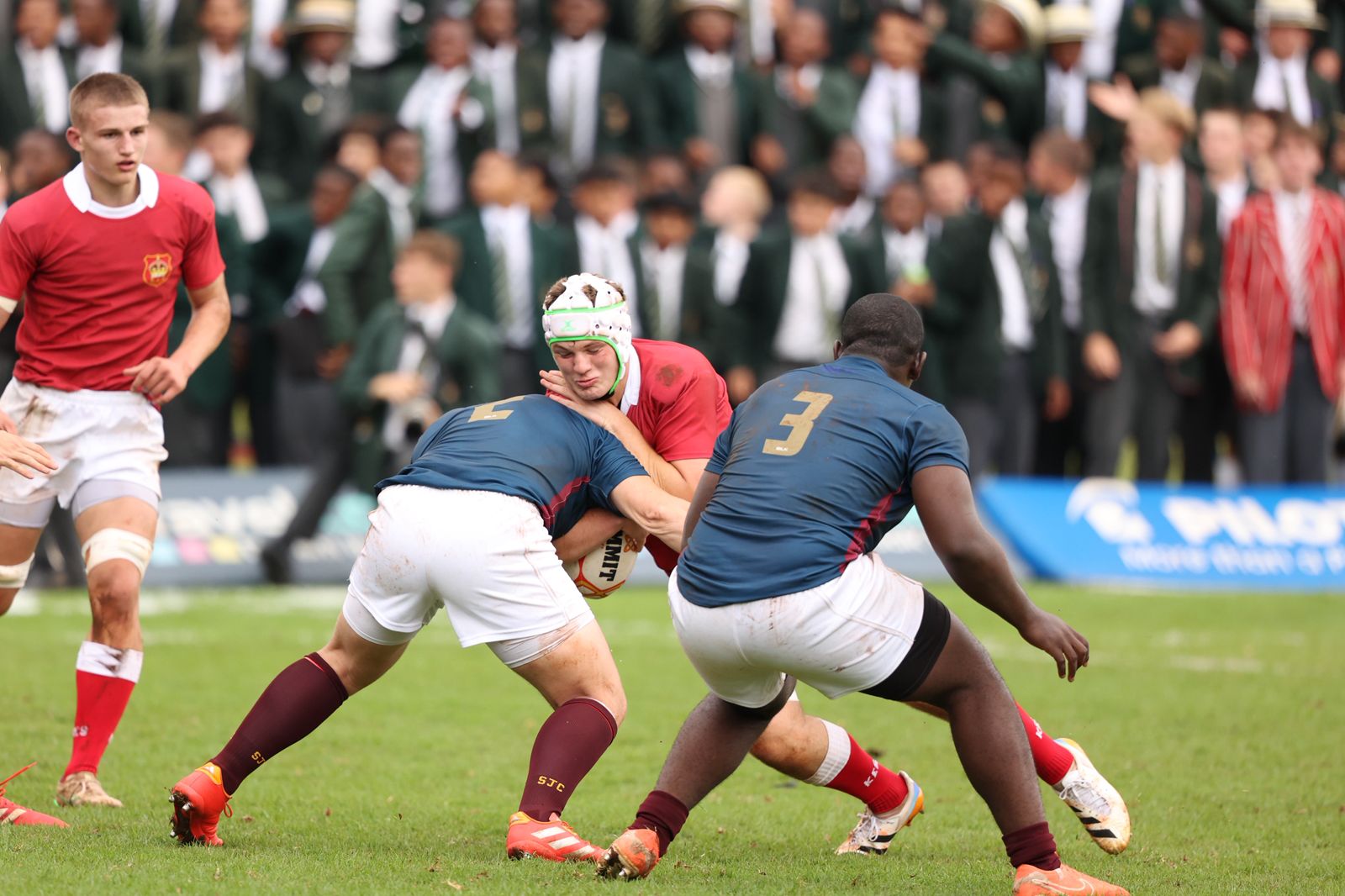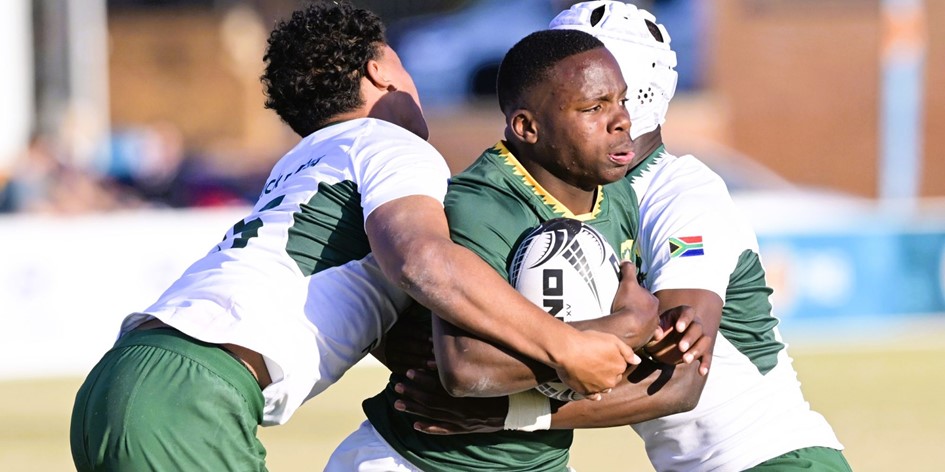
The dynasty is dead. South African schoolboy rugby’s untouchable aristocracy, the fabled Big Five who ruled supreme, has been dethroned. Not by revolution, but by evolution. Not through decline, but through others’ ascent.
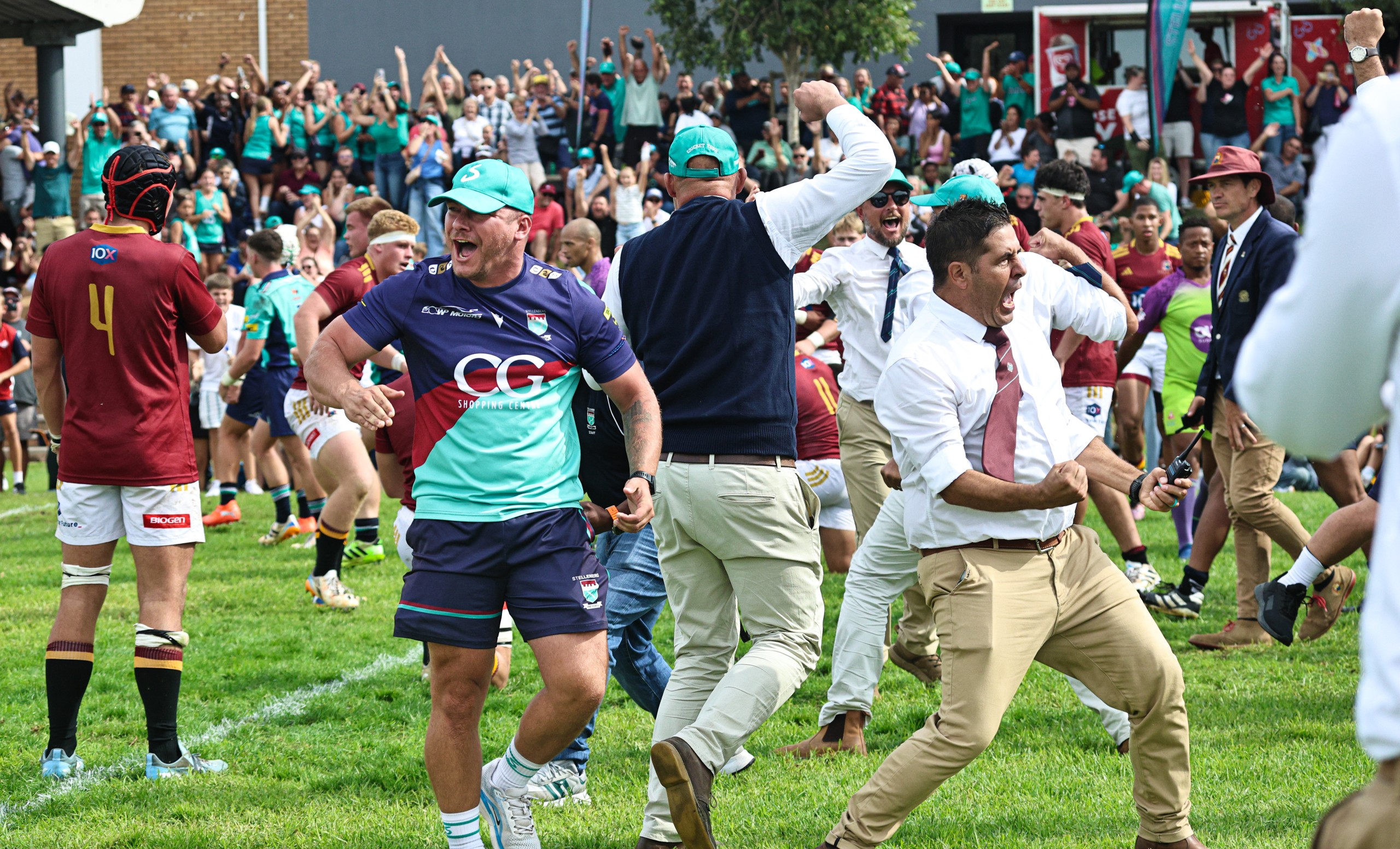
Stellenberg and Garsfontein haven’t simply knocked on the door of schoolboy rugby’s exclusive penthouse. They’ve battered it down, dragged furniture inside, and settled in for the long haul. What’s unfolding across South African school fields represents a power shift that promises profound implications for the entire rugby ecosystem.
The Big Five’s stranglehold has fractured. In its place emerges something far more compelling, genuine competition, tactical sophistication, and an arms race of investment that’s elevating standards across the board.
Investment rewrites the hierarchy
Money talks, and in schoolboy rugby, it’s currently delivering a compelling monologue about ambition, infrastructure, and the professionalisation of age-grade programmes. The obvious investment flooding into schools’ rugby operations has fundamentally altered the competitive landscape.
Bursaries for promising players represent the most visible manifestation of this investment. Talented youngsters who previously might have languished at mid-tier schools now receive opportunities at institutions prepared to invest in their development.
But financial muscle extends beyond player recruitment. Schools are headhunting experienced coaches from professional ranks, bringing tactical nous and training methodologies honed in senior rugby environments. These aren’t passionate teachers doubling as rugby coaches anymore; they’re specialists who’ve operated within franchise systems, absorbed professional standards, and understand what elite player development demands.
The impact manifests immediately. Training sessions resemble professional environments, periodisation mirrors franchise programmes, and tactical preparation reaches levels previously reserved for senior rugby. Schoolboy sides now possess coaching staffs that could comfortably operate at club level, and the results speak for themselves.
Stellenberg and Garsfontein exemplify this model. Their rise correlates directly with sustained investment in infrastructure, coaching quality, and player recruitment.
The tactical revolution
Perhaps nothing illustrates schoolboy rugby’s evolution more vividly than the tactical sophistication now evident across fixtures. The ubiquitous 1-3-3-1 formation—simple to teach, effective to implement, rugby’s equivalent of painting by numbers, no longer dominates every teamsheet.
“There are different formations being used and mini moves being put into place within these formations,” confirms André Tredoux, head coach of Shimlas’ Varsity Cup team. His observation captures a fundamental shift in how schools approach attacking structures.
The 1-3-3-1 served schoolboy rugby admirably for decades. It provided structure without demanding exceptional rugby IQ, allowing teams to execute basic phase play whilst minimising catastrophic errors. Every school ran it, every opponent knew it, and matches often descended into attrition battles where superior athletes prevailed regardless of tactical nuance.
That era has ended. Schools now deploy varied formations tailored to their personnel strengths. Some favour 2-4-2 alignments that create width quickly. Others employ 1-2-2-2-1 structures that offer multiple strike options. The variety forces defences to adapt on the fly, identify threats in real-time, and respond to attacking wrinkles they haven’t encountered previously.
Mini moves, pre-planned strike plays integrated into phase structures, add another layer of complexity. Rather than predictable pick-and-drives or generic pod carries, teams execute rehearsed sequences designed to exploit specific defensive vulnerabilities. It’s chess rather than checkers, requiring genuine tactical preparation.
This sophistication stems directly from professional coaches transplanting senior rugby concepts into schoolboy environments. They arrive armed with playbooks developed at franchise level, tactical innovations trialled in Currie Cup fixtures, and attacking philosophies that prioritise intelligent decision-making over brute force.
The result? Schoolboy rugby that resembles professional rugby’s junior cousin rather than its distant relative.
Breaking down the barricades
Stellenberg’s emergence particularly underscores how investment and coaching expertise combine to shatter traditional hierarchies. The Western Cape school has systematically built a programme capable of competing with, and beating, schools who previously existed in a different stratosphere.
Their rise didn’t materialise overnight. It required sustained investment in coaching appointments, player development pathways, and creating an environment where talented youngsters wanted to be. Success breeds success; victories over traditional powerhouses attract better players, which facilitates more victories, creating a virtuous cycle.
Garsfontein’s trajectory mirrors this blueprint. The Pretoria outfit invested heavily in their rugby programme, recruited strategically, appointed quality coaches, and watched as results followed investment. They’ve become fixtures in top-tier schoolboy competitions, regularly competing against sides who once dismissed them as also-rans.
What makes their ascent particularly significant is its replicability. Stellenberg and Garsfontein haven’t succeeded through geographic advantage, historical prestige, or unique circumstances unavailable to competitors. They’ve succeeded through deliberate strategic choices, invest wisely, coach professionally, recruit intelligently.
That blueprint lies accessible to any school willing to commit resources and expertise.
Strengthening the ecosystem
The democratisation of schoolboy rugby excellence carries profound implications for South African rugby’s entire ecosystem. More competitive schools rugby produces more quality players emerging into provincial academies, university programmes, and franchise systems.
When only five schools consistently produce elite talent, the player pool feeding senior rugby remains artificially constrained. Expand that number to ten, fifteen, twenty genuinely competitive schools, and suddenly the talent pipeline widens dramatically.
Crucially, increased competition raises standards across the board. The Big Five can no longer cruise through fixtures on reputation alone, they must innovate, invest, and evolve.
Players developing in this intensely competitive ecosystem arrive at senior rugby better prepared tactically, more accustomed to high-pressure environments, and possessing skill sets honed against quality opposition. They’ve faced varied attacking structures, defended against sophisticated game plans, and experienced genuine competition rather than predictable walkovers.
The pathway strengthens because the foundation strengthens. Better schoolboy rugby creates better Under-19 players, which produces better Under-21 players, ultimately feeding better professionals into the Springbok system.