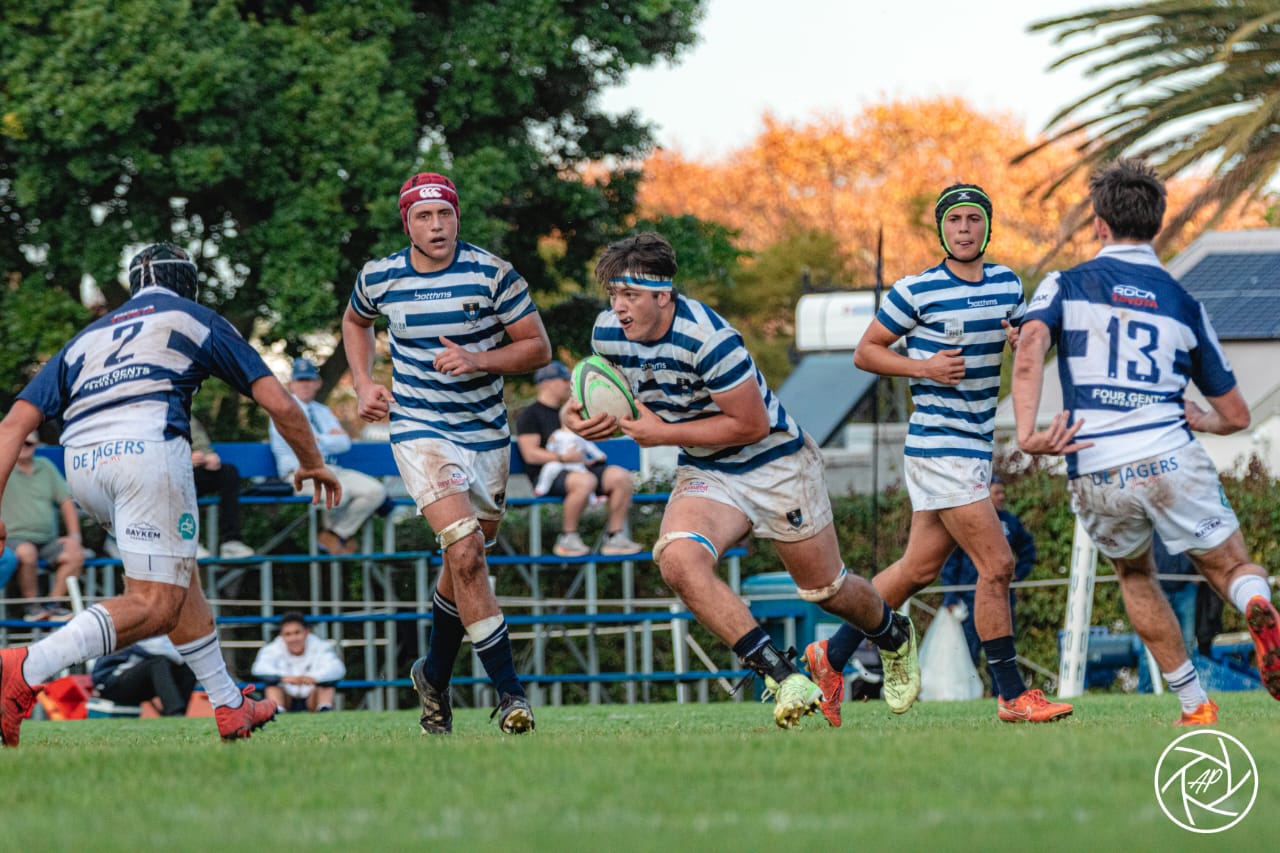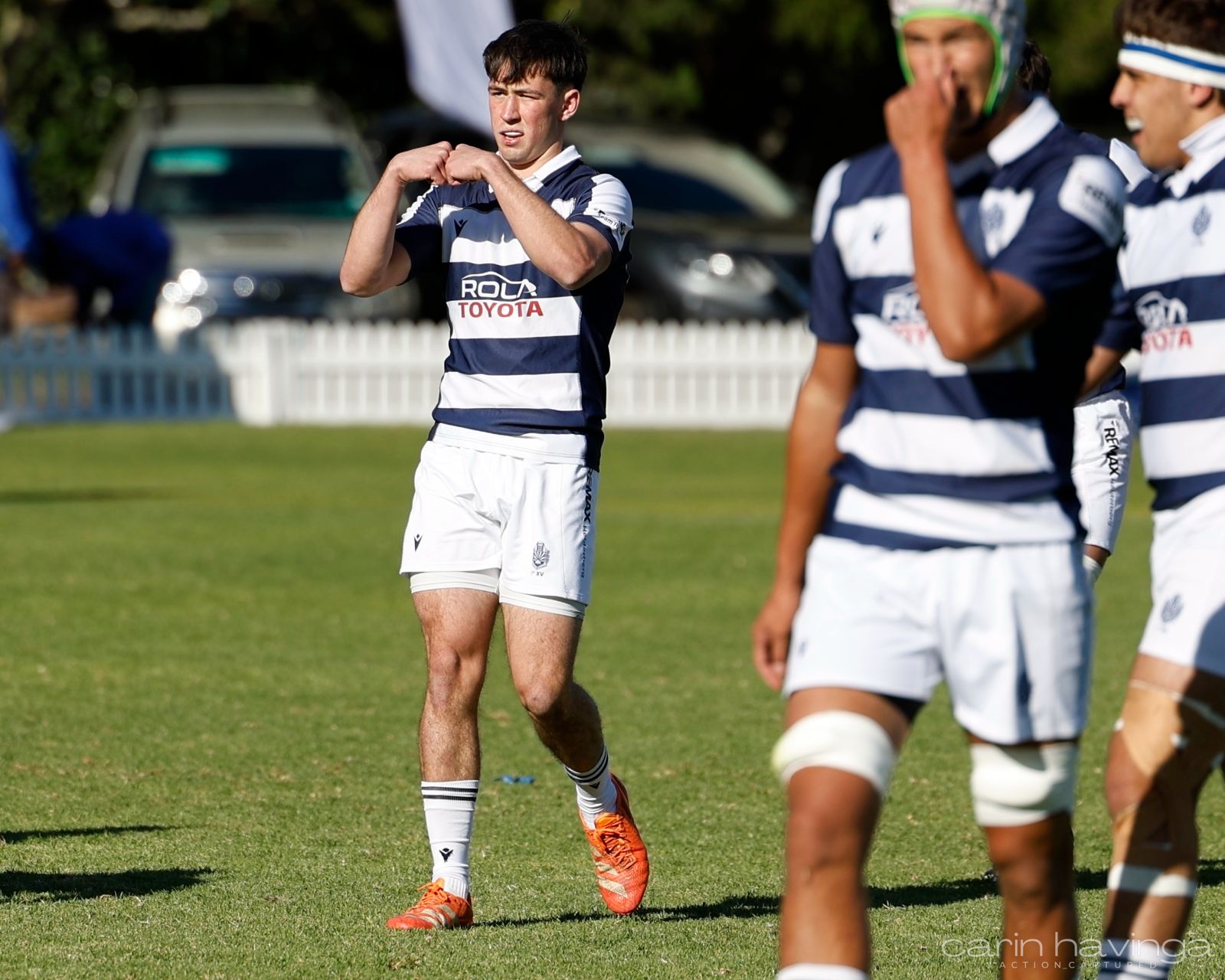
The Helderberg mountains cast long shadows over Parel Vallei High School, but this is a rugby programme no longer content to live in anyone’s shade. In a region saturated with rugby powerhouses, Parel Vallei are plotting an audacious ascent that could reshape the Western Cape schools rugby landscape.
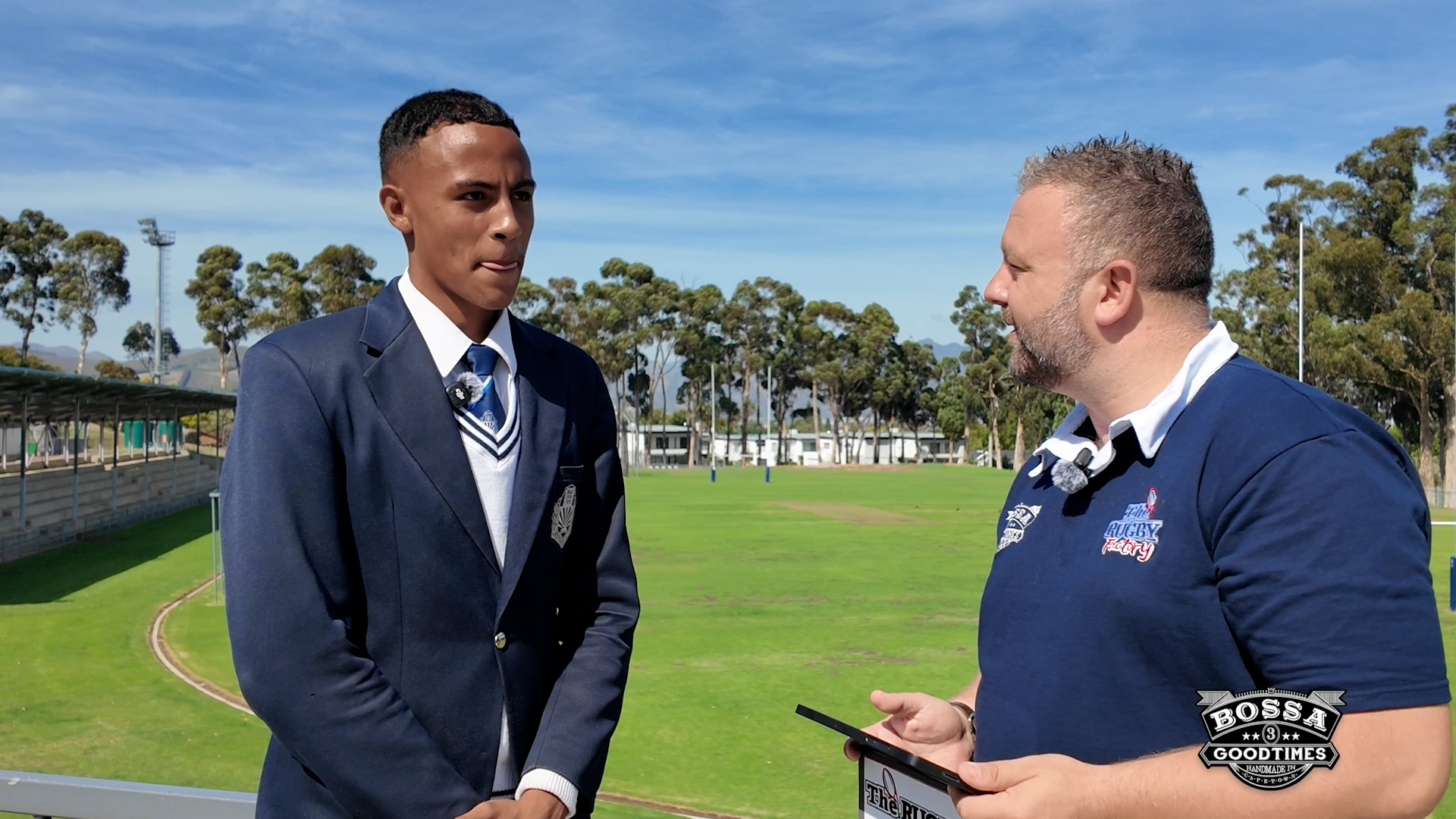
Andy Daniel ventured into the heart of this revolution, sitting down with the architects of Parel Vallei’s transformation to uncover how a school that once shipped 50-point drubbings is now rising running some Premier A schools close.
Building belief from the bottom up
Alwyn Burger, the school’s Director of Rugby, exudes the quiet confidence of a man who has seen his blueprint come to life. When he assessed Parel Vallei’s potential in 2023, he saw not just 15 players on a field, but untapped talent waiting for the right system.
” I saw potential in the school from where it was in 2023 and now in 2026, I think we have met our objectives,” Burger reflects.
“I think the big thing is the belief in the boys. Every child has the self-confidence to be able to play and exhibit his skills. We work a lot on fundamentals and small things, small moments, things that normally get neglected.”
It’s the marginal gains philosophy applied to schoolboy rugby, perfecting the clear out technique, mastering the box kick under pressure, nailing the exit strategy. The stuff that wins tight matches against bigger names.
Taking the fight to rugby royalty
Parel Vallei currently compete in the Western Province Premier B League, but Burger harbours no illusions about where his sights are set.
“The main thing is to honour the premier B, but also convince them to put you against the Premier A schools,” Burger explains. “We want to show WP and SA schools that we can play the bigger schools.”
It’s a statement of intent that resonates through the squad. For Owen Cockcroft, one of Parel Vallei’s players, the focus remains unwavering.
“The big focus for this year, is all about working hard, discipline, never giving up and playing for the people around you,” Cockcroft states. “Most of the players came up together so we gel well together.”
That cohesion, boys who’ve grafted through the age groups together, provides the spine of a team that punches well above its weight.
The SACS vendetta
If you want to understand Parel Vallei’s ambitions, look no further than their fixture against SACS. Last year’s 14-12 defeat still stings, the kind of narrow loss that haunts a changing room through the off-season.
“Last year was a big disappointment. It’s a game we feel we should have won, so we are looking forward to it,” Cockcroft admits, the frustration still evident.
Enter Shudley Rhoda, the playmaker who announced himself with a hat-trick at the Noord-Suid last year. Comfortable at both fly-half and fullback, Rhoda has a clear preference.
“I prefer 10 because I like to control the game myself more,” he reveals. Control is what Parel Vallei will need against SACS, controlling territory, tempo, and their own destiny.
“SACS is the biggest game of the year other than our interschools game at the end of the year. We are looking forward to it. This year we’re going for the victory,” Rhoda declares with the conviction of a player who knows exactly what’s at stake.
The talent retention challenge
In the cutthroat world of Western Cape schools rugby, talent poaching is an uncomfortable reality. Boys from Strand, Somerset West, and Gordon’s Bay often find themselves courted by the big city schools, lured by promises of better facilities and higher exposure.
“A lot of the boys that get on the bus and go over the mountains, they made their decision early,” Burger acknowledges. “We try to catch them early. I think with our results and the relationships we have with the parents and the kids, we go and watch their games, we meet up with them to show what we can offer, so we focus on catching them early.”
But Burger’s retention strategy goes beyond fixtures and results. His approach is deeply personal, almost paternal.
“It is personal for me, because I am working with someone’s child. I like to ‘adopt’ them to see that all players are my players as well. It’s a challenge to figure out what makes them tick. I try and meet up with them before school, at break time I am on the ground checking if they play touchies or soccer. I try and meet up with them after school before they get onto the field. It’s a personal relationship.”
The impact? Profound. “A dad told me that the kids believe more in me than their own parents,” Burger reveals.
On school rankings, Burger maintains a pragmatic stance: “Rankings for me is nice as a selling point. I am not a big fan, but people do like it and I watch and send it on if we jumped 10 places. But for me it’s for the boys, we want to be measured against the best.”
From ghost town to destination
The rugby transformation is inseparable from the broader school renaissance overseen by headmaster David Schenck, who inherited a struggling programme in 2014.
“I’m very happy. When I took over in 2014, there were only a handful of people watching the games, we had no B teams, and we lost most games by 50 plus. And to be in a position where we are in Premier B knocking over some bigger names is a dream to me,” Schenck reflects.
“It is a well-balanced school, but we are unashamedly pushing rugby very hard.”
The headmaster understands the economics of school sport at this level, sponsors don’t arrive for mediocrity.
“Sponsors are vital to the cause, but they don’t come unless you build it. You have to do something extraordinary to start attracting attention, and that happened year on year. Something that you build cheaply and quickly breaks down cheaply and quickly. So you take a long time to build and you build from the core.”
That core, Schenck insists, extends beyond the try line.
“You show your values in everything you do, not just academics, in everything you do. The way the kids walk around town after school, the way they greet people. That is vital to me. It’s almost like bees to honey, people want to be associated with a good name brand.”
The promised land
Schenck’s vision extends far beyond consolidating Premier B status. He sees Parel Vallei climbing into the same conversation as Stellenberg and Garsfontein, powerhouses who compete for national honours.
“People don’t really take cognisance of the fact that we are situated at the foot of the Helderberg in the shadow of Stellenbosch, right under the Paarl mountains. With the Southern Suburbs schools, there are 10, 12, 15 unbelievable sports schools, it’s the greatest concentration of that quality in South Africa. To compete in that realm is a privilege.”
“My aim is that we win everything in Premier B, and the one or two schools that we play in Premier A to knock them over too. If we get that right, we are launching ourselves to become like a Stellenberg or Garsfontein. Then we can put other plans in place—better funding, more coaching. I really do see that the sky is the limit.”
It’s an ambitious roadmap, but one built on solid foundations: player development, cultural excellence, and strategic patience. The kind of blueprint that turns sleeping giants into kingmakers.
As SACS week approaches, Parel Vallei aren’t just playing for rankings or bragging rights. They’re playing to prove that geography isn’t destiny, that the mountain can cast its own shadow over the valley below.