

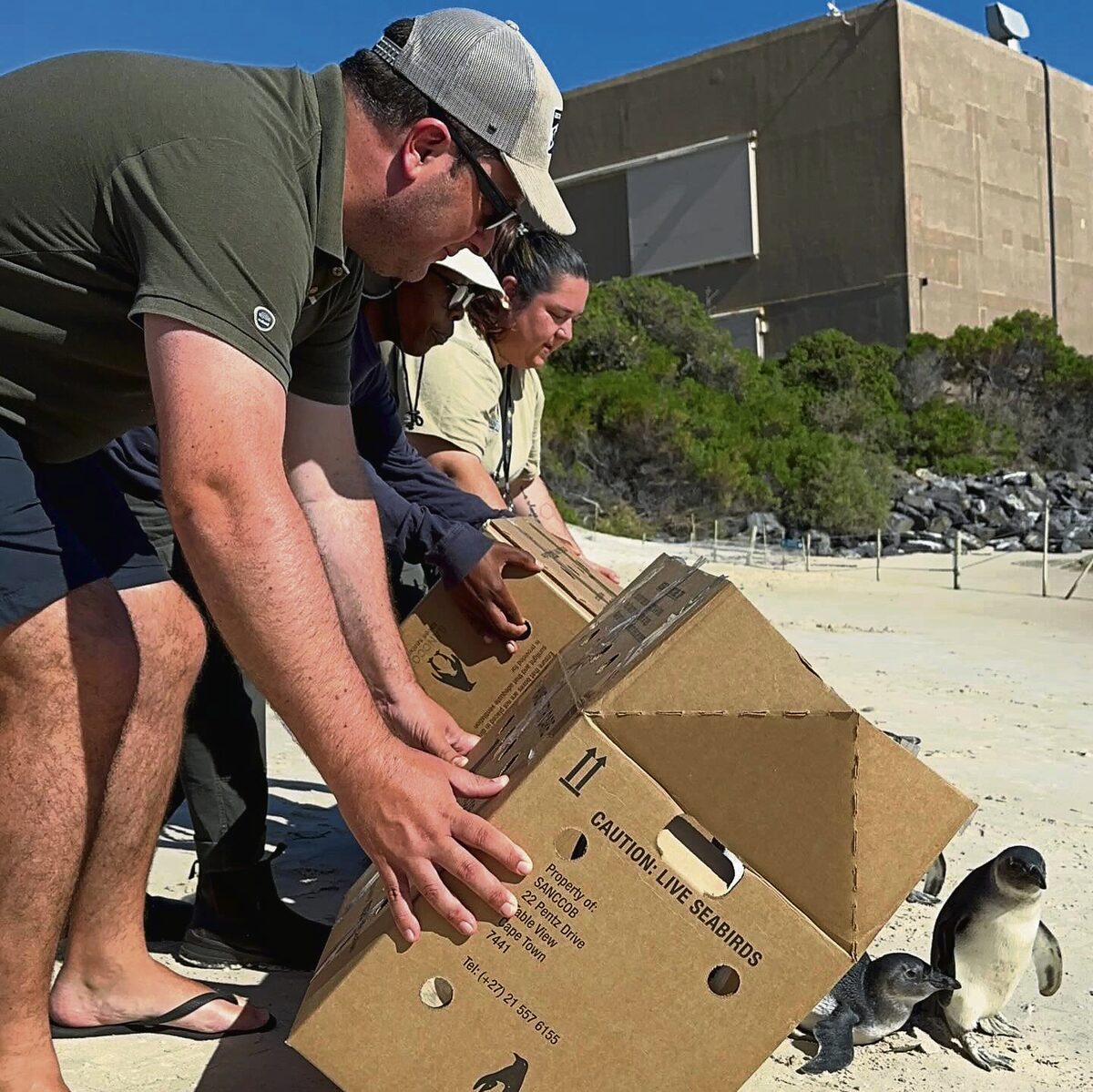
The Executive Mayor of Cape Town, Geordin Hill-Lewis, recently attended a special release event with the Southern African Foundation for the Conservation of Coastal Birds (Sanccob), standing alongside the dedicated team working tirelessly to save the critically endangered African Penguin.
On 20 January, celebrated as Penguin Awareness Day, Sanccob ambassador Martine Viljoen spent time feeding the critically endangered African Penguins in care, underlining the essential, ongoing efforts required to nurture their recovery and survival.
Adult penguins require between six and 10 fish per day to thrive, demonstrating how vital consistent care and feeding are.

Penguin Awareness Day: More than a moment
Releases of rehabilitated penguins are powerful symbols of hope, but Sanccob stresses that real conservation success demands ongoing support.
“Releases are more than moments — they show what’s possible when leadership, science, and public support work together,” said a Sanccob representative.
To encourage public participation in this vital mission, Sanccob is inviting donations to help feed penguins in their care. Those who donate a minimum of R150 stand a chance to win a luxury one-night stay for two, including breakfast, courtesy of The Oyster Collection.
African Penguins face grave threats from Bird Flu
African Penguins are currently facing severe challenges from an outbreak of High Pathogenicity Avian Influenza (HPAI), commonly known as Bird Flu. Since September 2025, 23 African Penguins have tested positive, with at least nine confirmed deaths among wild populations.
The disease has caused widespread mortality among seabirds along South Africa’s coastline, including species such as Common Terns, Hartlaub’s Gulls, Great White Pelicans, and various cormorants.
Bird Flu severely affects the brain, causing unusual behaviour, twitches, and seizures. While the risk to humans remains low if basic precautions are followed, Sanccob urges the public not to touch sick or dead birds and to report sightings immediately.

Community vigilance critical to penguin survival
Sanccob is working closely with State Veterinary Services and conservation authorities to monitor the spread of HPAI and protect vulnerable seabird populations. Public reporting of sick or deceased birds greatly assist surveillance efforts.
If you encounter a seabird that appears ill, injured, unusually tame, or deceased, do not touch it. Instead, report it immediately to Sanccob or the relevant authorities. The public can submit sightings via an online reporting form here or contact Sanccob directly.
Tracking the outbreak
Up-to-date information about the bird flu outbreak and its impact on seabirds, including African Penguins, is available through an online dashboard hosted by the Department of Environment Affairs: https://dea-surveys.maps.arcgis.com/apps


