

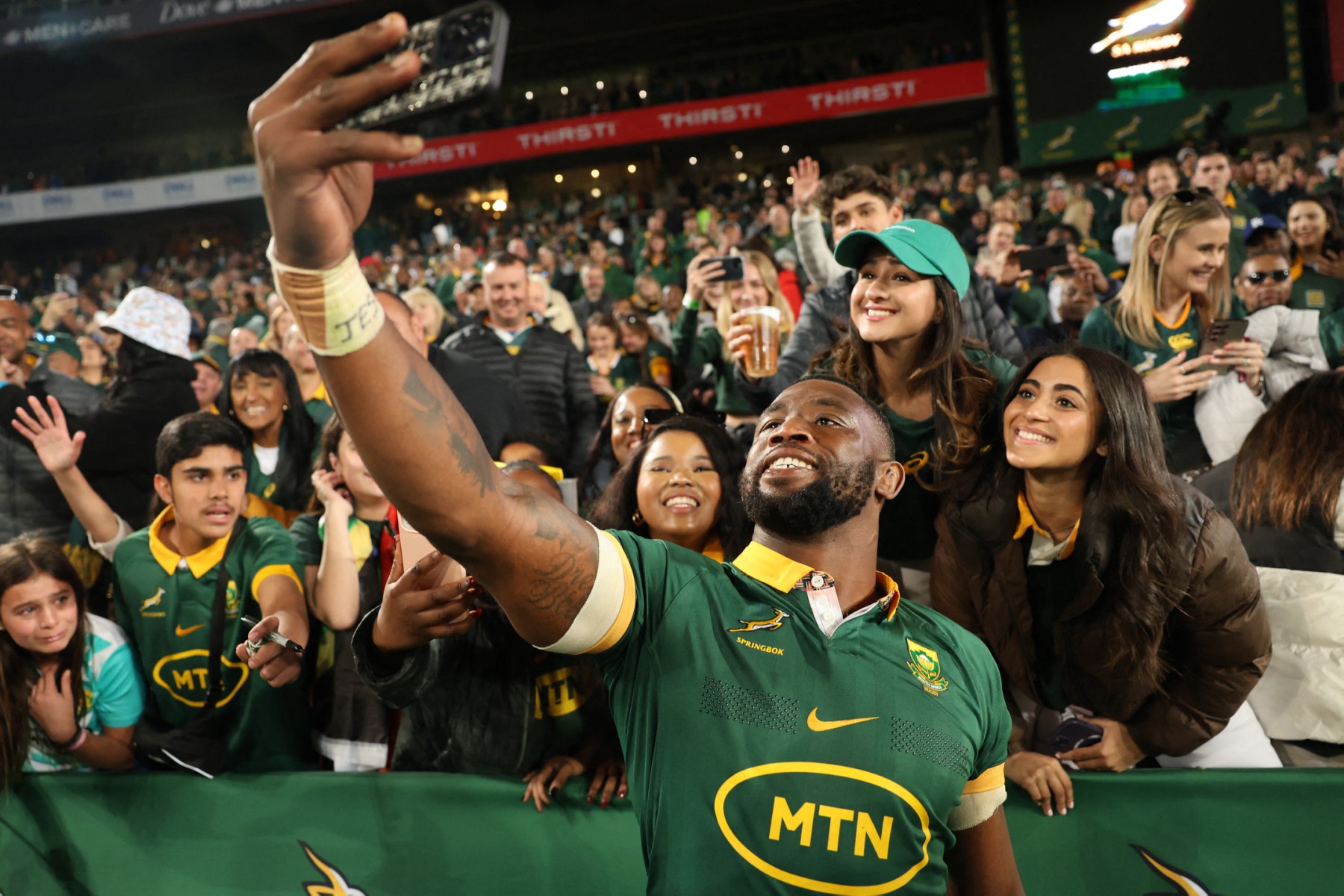
South African Rugby has spent R500m of its R2 billion revenue on it’s national teams. Whilst the investment is paying spectacular dividends on the pitch, the suits in Cape Town are still sweating over a R40 million loss that underscores the brutal financial reality facing modern rugby.
The numbers revealed at Thursday’s Annual General Meeting paint a picture of an organisation that’s backing its champions to the hilt, spending a quarter of its total income directly on national teams. But even with revenues skyrocketing by 29% from R1.5 billion in 2024, SA Rugby finds itself caught in the classic sporting paradox, massive success, stubborn losses.
Pour half a billion rand into your elite programmes, watch the trophies flood in, then cross your fingers that commercial revenues can eventually catch up with the expenditure explosion.
The results? Pure rugby gold across every national team programme.
The R500 million question answered
When SA Rugby threw R500 million at its national teams in 2025, R281 million directly on the Springboks and R221 million into the newly-formed High-Performance Department, sceptics questioned whether the investment would translate into tangible success.
The trophy cabinet now provides the emphatic answer.
The Springboks continued their world-beating dominance. The Blitzboks claimed the HSBC SVNS World Championship and carried that momentum into 2026. The Junior Springboks ended a 13-year drought by capturing the U20 World Cup, then added the SANZAAR U20 Rugby Championship title just last Saturday for good measure.
Perhaps most significantly, the Springbok Women smashed through their own glass ceiling, reaching World Cup play-offs for the first time and breaking into the world’s top ten, achievements that represent genuine paradigm shifts rather than mere incremental progress.
Rian Oberholzer, SA Rugby’s CEO, didn’t mince words about the correlation between investment and performance, the money had borne “immediate on-field dividends” across the board.
Those results vindicate the creation of the High-Performance Department, whose R221 million budget funds everything from the state-of-the-art facility in Stellenbosch to expanded playing programmes that have transformed South African rugby’s depth and breadth.
Commercial revolution drives revenue surge
The financial firepower enabling this investment spree didn’t materialise from thin air. SA Rugby embarked on a comprehensive commercial reset that delivered eye-watering results across multiple revenue streams.
Sponsorship income exploded by 51%, catapulting from R488 million to R739 million, a jump so significant it pushed sponsorship revenue ahead of broadcast income for the first time in the organisation’s history.
Broadcast revenues still delivered a robust R678 million, but the sponsorship surge represents a strategic breakthrough that reduces dependence on traditional media income streams whilst diversifying revenue sources.
The Test match hosting revolution provided another financial catalyst. SA Rugby’s decision to take complete ownership and delivery of Springbok fixtures generated R402 million in revenues against direct costs of R213 million, effectively turning match days into profit centres rather than expense burdens.
Even merchandise sales reflected the commercial renaissance. Licensing revenues climbed to R78 million, driven by the opening of two dedicated Springbok stores and insatiable market appetite for official gear.
The sustainability squeeze
Yet for all the commercial success and on-field triumph, SA Rugby’s accounts tell a sobering tale about modern rugby economics. Despite generating R2 billion in revenues, the organisation posted a pre-taxation loss of R40 million.
The challenge isn’t unique to South Africa. Every major rugby nation grapples with escalating costs, expanding programmes, and the constant pressure to reinvest success into future competitiveness. Player payments, insurance costs, facility upgrades, expanded playing schedules, the expenses multiply faster than revenues can keep pace.
Another R195 million was spent on player and referee costs, covering image rights for commercial purposes and comprehensive injury insurance. It’s the hidden cost of professionalisation, securing your human assets against both commercial exploitation and physical catastrophe.
Direct investment into the 15 member unions consumed R400 million in distributions, money that flows directly into grassroots development and provincial rugby sustainability. Cut these distributions, and you undermine the foundation supporting elite success.
Presidential perspective and CEO confidence
SA Rugby President Mark Alexander struck a tone of cautious optimism when addressing the financial reality, emphasising the organisation’s resilience through turbulent periods including the COVID devastation.
“SA Rugby has demonstrated its resilience in a challenging operating environment for many years, especially through COVID, and we have taken deliberate steps to future-proof our financial sustainability,” Alexander declared.
His confidence rests on strategic investments in new competitions like Rugby’s Greatest Rivalry and the Nations Championship, alongside technological upgrades and the commercial programme reset already delivering results.
“A return to sustainable profitability is within reach,” Alexander insisted, though he stopped short of providing specific timelines.
CEO Oberholzer doubled down on this optimism, citing upcoming competitions, SA Rugby’s conversion to shareholder status in the Vodacom United Rugby Championship, and a digital transformation strategy designed to optimise fan engagement whilst creating new commercial opportunities.
“We have reset the business across event delivery, digitisation, commercialisation, high performance and participation and development over the last two years to build a business platform into the medium and long term,” Oberholzer explained.
The auditor’s blessing and future foundations
Despite the R40 million loss, SA Rugby’s accounts received an unqualified audit opinion, the financial equivalent of a clean bill of health. The auditors’ confidence stems from a detailed management solvency assessment and action plan supporting the view that SA Rugby can continue as a going concern.
It’s the accounting world’s way of saying: “Yes, they’re making losses, but they know what they’re doing and have a plan to fix it.”
The need for reserve funds and investment vehicles remains critical in modern sport, but SA Rugby appears to be building sustainable foundations rather than living hand-to-mouth. The commercial reset, diversified revenue streams, and strategic competition investments represent long-term thinking rather than short-term fixes.


