

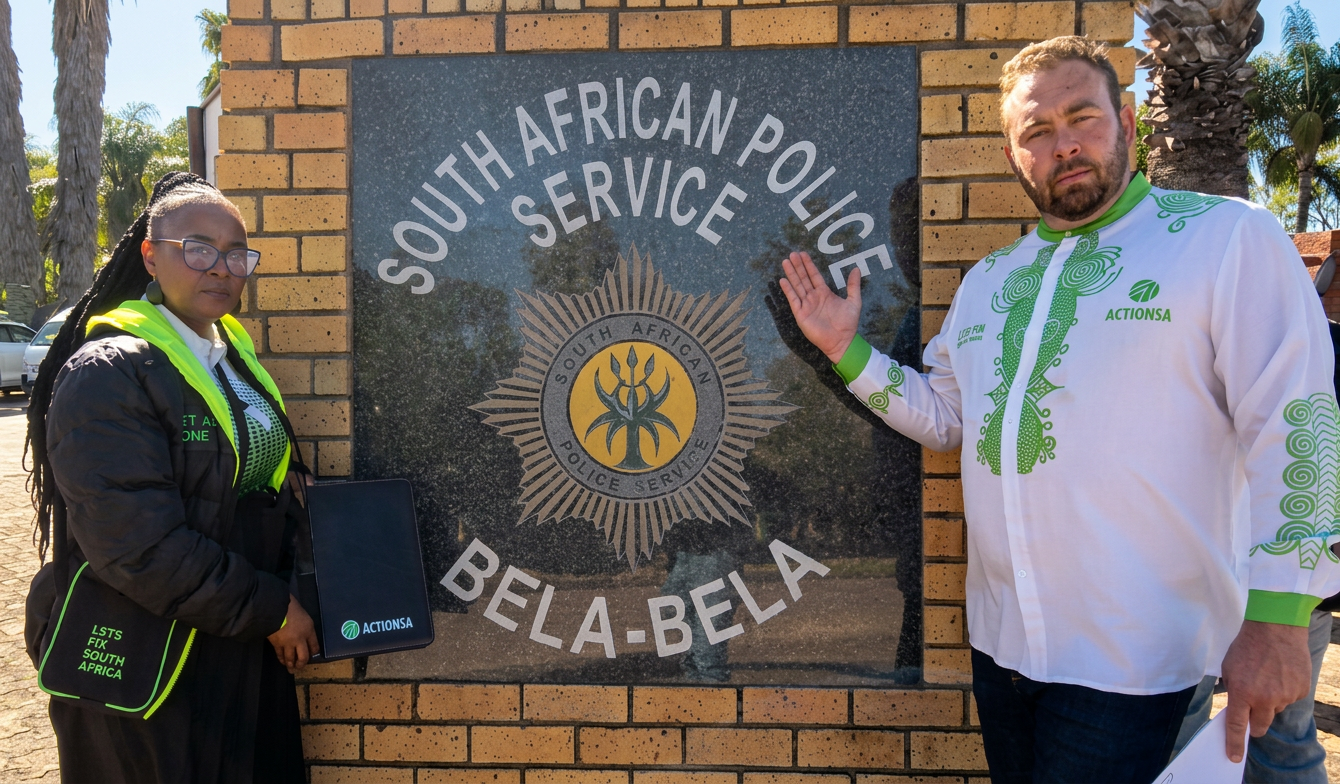
ActionSA has filed criminal charges against President Cyril Ramaphosa in connection with the ongoing Phala Phala matter, alleging serious breaches of anti-corruption laws, perjury, and fraud. The charges were formally laid at the Bela-Bela Police Station in Limpopo on 13 May by senior ActionSA leaders, including national chairperson Michael Beaumont, parliamentary chief whip Lerato Ngobeni, and Limpopo provincial chairperson Victor Mothemela.
The legal action centres on claims that the true amount of money stolen during the February 2020 burglary at the President’s Phala Phala farm was significantly under-reported. While the initial figure disclosed was approximately $580 000 (about R8,75 million at the time), ActionSA and other sources now allege the sum may have been at least R15 million. The party argues that this alleged under-disclosure raises questions about compliance with Section 34(1)(b) of the Prevention and Combating of Corrupt Activities Act 12 of 2004 (PRECCA), which obliges persons in authority to report corruption involving substantial sums.
Details of the charges
ActionSA’s charges against President Ramaphosa include:
- Alleged contravention of Section 34(1)(b) of PRECCA: The party claims the President failed to accurately report the full extent of the funds stolen, as required by law.
- Perjury: ActionSA alleges that statements made under oath regarding the incident may have been incomplete or misleading.
- Fraud: The party contends that any deliberate misrepresentation of the stolen amount could constitute fraud and undermine the integrity of the criminal justice process.
The party’s press statement highlights concerns that cash flow analyses conducted by the National Prosecuting Authority (NPA) on one of the accused in the burglary have already raised questions about the true scale of the funds involved. ActionSA has called for similar analyses on the remaining accused, suggesting that further investigation could reveal a larger network of transactions linked to the matter.
Background: Phala Phala timeline
The Phala Phala scandal dates back to a burglary at President Ramaphosa’s farm on 9 February 2020. The incident only became public in June 2022, when former State Security Agency head Arthur Fraser lodged a criminal complaint, alleging that the burglary and its aftermath were concealed and not reported to the police as required.
A parliamentary Section 89 panel later found prima facie evidence that the President may have committed serious violations, including possible breaches of anti-corruption laws and the Constitution. However, in December 2022, the National Assembly voted against establishing an impeachment committee, effectively halting formal parliamentary action at that stage.
The NPA’s investigation into the burglary, the source of the funds, and possible contraventions of financial and anti-corruption laws remains ongoing. Several suspects have been arrested and charged, with legal proceedings still underway as of May.
Recent developments
ActionSA’s charges come shortly after a Constitutional Court ruling allowing a public impeachment hearing into President Ramaphosa’s conduct in the Phala Phala matter. The party maintains that the South African public has not been told the full truth about the incident and insists that accountability should not depend on political status or public office.
Broader implications
ActionSA argues that the matter extends beyond one individual, raising fundamental questions about constitutional governance, public trust in the Presidency, and the integrity of state institutions. The party has pledged to pursue accountability through all lawful constitutional mechanisms and insists that the criminal justice system must be allowed to function independently and without interference.



You must be logged in to post a comment.