
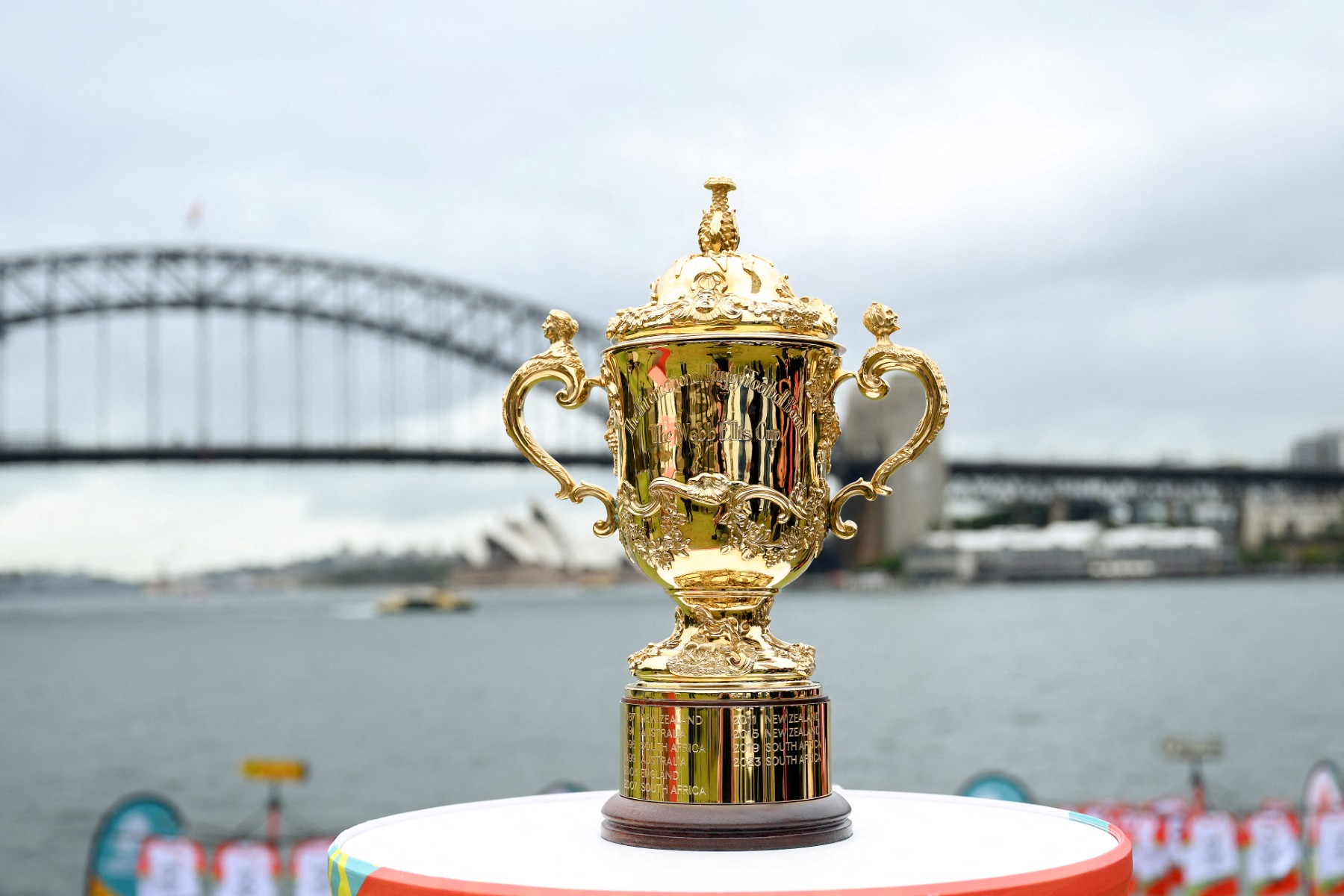
Here’s a scenario that’ll twist your rugby brain into knots: what if losing the biggest Trans-Tasman clash at a home World Cup actually gifts you an easier path to the final? Welcome to the beautifully brutal mathematics of Rugby World Cup 2027’s Pool A, where New Zealand and Australia face off in Sydney on 9 October with stakes that extend far beyond 80 minutes of rivalry.
Also read: Australia and New Zealand set for epic pool battle as 2027 Rugby World Cup draw delivers drama
The draw, conducted in Sydney last December, placed the All Blacks and Wallabies together alongside Chile and Hong Kong China. Both Antipodean giants should comfortably dispatch the latter two. Which means everything hinges on that Stadium Australia showdown, a match that’ll determine not just pool placings, but potentially the entire route to glory.
And here’s where it gets deliciously complicated: the team that finishes second might actually catch the better draw.
Former Wallaby captain Stirling Mortlock sparked the debate, on the Breakdown and it’s one that won’t die down until kick-off. Analyst Greg Devine has dissected the bracket, and the numbers tell a fascinating story. Lose in Sydney, navigate the “easier” side of the draw, and potentially waltz into a final having avoided the tournament’s biggest heavyweights until the very end.
Except, and this is the catch that makes the entire discussion both fascinating and ultimately futile, nobody’s going to deliberately throw a home World Cup Test match to game the system.
The bracket breakdown
Follow the seedings and the implications become clear. Win Pool A and you’re rewarded with… well, a path straight through hell.
The winner’s route: a third-placed side in the round of 16 (manageable), then Pool B’s winner in the quarter-final. On current seedings, that’s South Africa – the back-to-back-to-back world champions who’ve made a habit of destroying dreams in knockout rugby. Survive that bloodbath and you’re rewarded with France’s half of the draw in the semi-final.
The runner-up’s route: Pool E’s second-placed side in the round of 16 (likely easier than a third-place team from a tougher pool), then the winner of Pool F’s top side against Pool B’s runner-up. On seedings, that’s England – formidable, but not South Africa. Win that quarter-final and you’re facing Argentina or Ireland in the semi-final. Still brutally tough, but critically, you’ve avoided South Africa and France until the final.
It’s the scenic route versus the mountain pass. Both get you to the same destination, but one demands you scale Everest whilst the other skirts around it.
Former All Blacks coach Steve Hansen has already weighed in, arguing this quarter-final structure costs fans a potential final between the two best sides in the world. He’s got a point. If New Zealand top the pool and South Africa win Pool B as expected, they’ll collide in the quarters. One tournament favourite eliminated before the semis, whilst the “easier” side of the draw opens up for the runner-up.
The South African caveat
But here’s the massive catch that blows up the entire neat theory: the Pool B runners-up sit on that supposedly “easy” side of the bracket.
If South Africa, for whatever reason, slip to second in Pool B, suddenly the runner-up’s road runs straight into the Springboks anyway. All that careful seeding analysis evaporates the moment the world champions don’t do exactly what’s expected.
Pool B contains South Africa, Italy, Georgia and Romania. The Boks should win comfortably, but rugby doesn’t always respect “should”. An injury crisis, a shock result, deliberate rotation strategies, any number of scenarios could see South Africa finish second. And if they do, whichever side finishes runner-up in Pool A walks straight into them in the quarter-final anyway.
The “easy” route only exists if every other seeded team plays to script. One upset, one unexpected result, and the entire equation changes.
The match nobody will tank
Even if the bracket advantages were guaranteed, which they’re not, the idea that either New Zealand or Australia would deliberately lose this match is laughable.
This is a home Rugby World Cup Test for Australia. Stadium Australia packed with 80,000 screaming Wallabies fans. The chance to knock over the All Blacks on home soil at a World Cup. No Australian coach is walking into that dressing room and suggesting they take it easy for tactical reasons.
And New Zealand? They’ve held the Bledisloe Cup for 24 consecutive years. That’s nearly a quarter-century of dominance over their fiercest rivals. The psychological weight of that streak,is not something the All Blacks will give up to game a bracket.
Mortlock acknowledged this reality in the same breath he raised the bracket debate. Devine hedged his analysis the same way. Both know the theory is fascinating but the practice is impossible.
The beautiful madness of it all
This is what makes World Cup pool draws so captivating. The unintended consequences, the strategic puzzles, the debates that rage for months before a ball is kicked. New Zealand versus Australia has always been box office, add in home advantage, World Cup stakes and a bracket structure that rewards the loser, and you’ve got sporting theatre that writes its own scripts.
Greg Devine is right that the route exists. The Pool A runner-up genuinely does avoid South Africa and France until the final, on paper. But as every rugby coach will tell you, the game isn’t played on paper. It’s played on grass, in front of crowds, with egos and pride and history all screaming at maximum volume.
Some matches are too big to lose, regardless of what the draw might gift you later. This is one of them.