

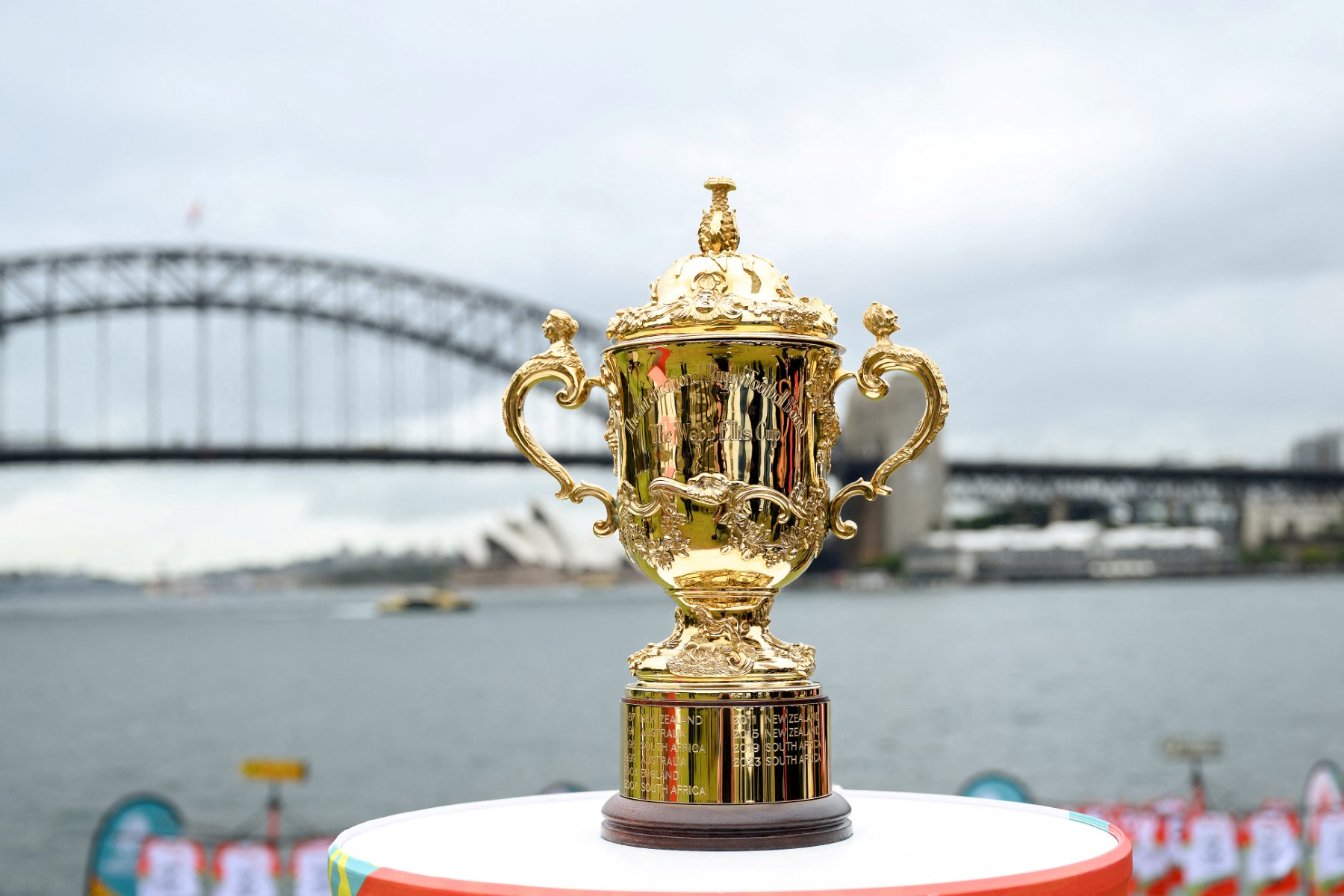
The countdown is on. In exactly 12 months, rugby’s global showpiece explodes into life across Australia with a record 24 nations, 2.5 million tickets and six weeks of unrelenting drama, and ominous back-to-back champions South Africa are already staking their claim to an unprecedented fifth Webb Ellis Cup.
Spread across seven cities, Sydney, Brisbane, Perth, Adelaide, Melbourne, Townsville and Newcastle, the tournament has generated extraordinary demand despite lingering concerns about the sport’s popularity in certain markets.
More than 750,000 pre-sale tickets were snapped up by fans from 135 countries, led by Australia, the United Kingdom, New Zealand, Japan and France. Chile, the United States and Canada were also big buyers, with over half the allocation sold within the first six hours.
“It’s a really good signal,” said World Rugby chief Brett Robinson, an Australian. “We’re really optimistic and excited. It’s going to be a party like nothing on Earth.”
Record-breaking numbers
About 2.4 million fans attended the 2023 World Cup in France. With 2.5 million tickets available in Australia, that record is set to tumble. The next batch is due for release this week, and demand for marquee clashes, Australia vs New Zealand, England vs Wales, Ireland vs Scotland and knockout phase encounters, has been exceptional.
It shapes as an economic windfall for Rugby Australia, which posted a monster operating surplus this year on the back of a lucrative 2025 British and Irish Lions tour. Chairman Daniel Herbert described hosting the men’s World Cup, and the women’s edition in 2029, as a “generational opportunity”, with the national body hoping to bank around AUD$100 million (US$70 million).
Springboks eyeing immortality
Only four nations have ever won the Webb Ellis Cup, South Africa (4), New Zealand (3), Australia (2) and England (1), and the dominant Springboks are overwhelming favourites to add a fifth.
Rassie Erasmus’s side were at their devastating best in taming the All Blacks 3-1 in the just-completed “Greatest Rivalry” four-Test series, reinforcing their status as world number one and sending an ominous message to their rivals.
Given the way the draw has been structured, South Africa and New Zealand are unlikely to meet in the final, instead being on a collision course for a blockbuster quarter-final should they both top their groups as expected.
The Springboks face Italy, Georgia and Romania in Pool B, whilst Dave Rennie’s All Blacks, bidding for a first title since 2015 after being edged 12-11 in the 2023 final, are pitted against Australia, Chile and debutants Hong Kong in Pool A.
Despite being favourites, Erasmus is taking nothing for granted. “There have been surprises in the tournament before, so we’ll need to be up mentally and physically for every match,” he said.
New Zealand captain Scott Barrett echoed that caution. “Along the way you’re going to play potentially number one, two and three in the world, and it might not be in the final. That’s the beauty of the World Cup. You’re going to have to peak at the right time.”
Pool composition and tournament format
Third-ranked Ireland are in Pool D with Scotland, Uruguay and Portugal, whilst three-time runners-up France headline Pool E alongside Japan, USA and Samoa. England, the 2003 champions, are in Pool F with Wales, Tonga and Zimbabwe.
Les Kiss’s Wallabies, a shadow of Australia’s once all-conquering sides that lifted the trophy in 1991 and 1999, open the tournament in Perth against Hong Kong. Despite their struggles in recent years, they did beat the Springboks 42-38 in Perth last weekend despite being reduced to 11 players at one stage, offering a glimpse of their potential.
To accommodate 24 teams, the format has changed significantly. Instead of the traditional four pools of five teams, there will be six pools of four.
Played across 19 match-days, the schedule clusters games on weekends to maximise attendance, with the pool phase concluding in a Super Sunday on 17 October featuring five matches in a single day, a tournament first.
Brisbane, Melbourne, Perth and Sydney then host a first-ever round of 16, with pool winners and runners-up qualifying automatically. The four best third-placed teams also progress to the knockout stages.
Sydney and Brisbane split the quarter-finals before the 82,000-capacity Stadium Australia hosts both semi-finals and the 13 November final, a fitting climax to what promises to be rugby’s biggest and most spectacular World Cup yet.
The stage is set. The tickets are flying. The Springboks are coming. Australia, are you ready?


