

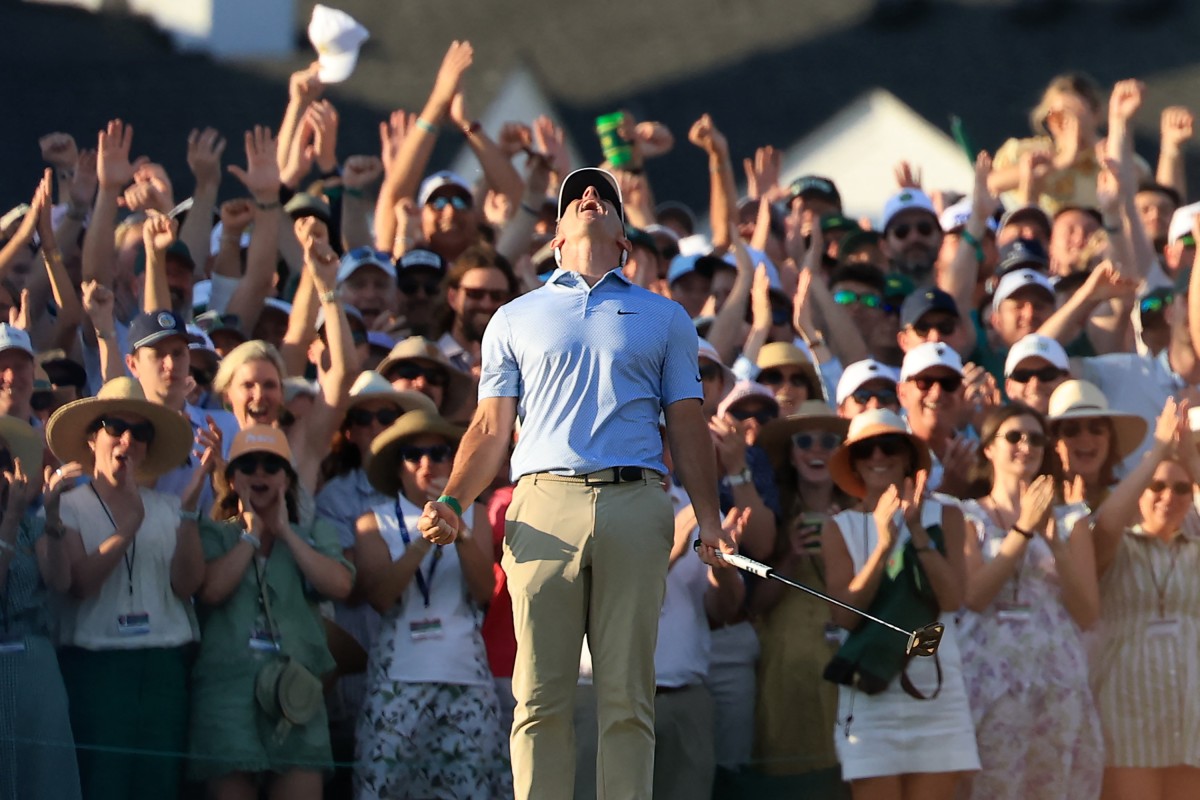
Rory McIlroy has etched his name into Masters folklore, becoming only the fourth player in tournament history to defend successfully at Augusta National. The Northern Irishman clawed his way through a nerve-shredding final round on Sunday, holding off world number one Scottie Scheffler by a single stroke to claim his sixth major championship and a record-breaking $4.5 million payday.
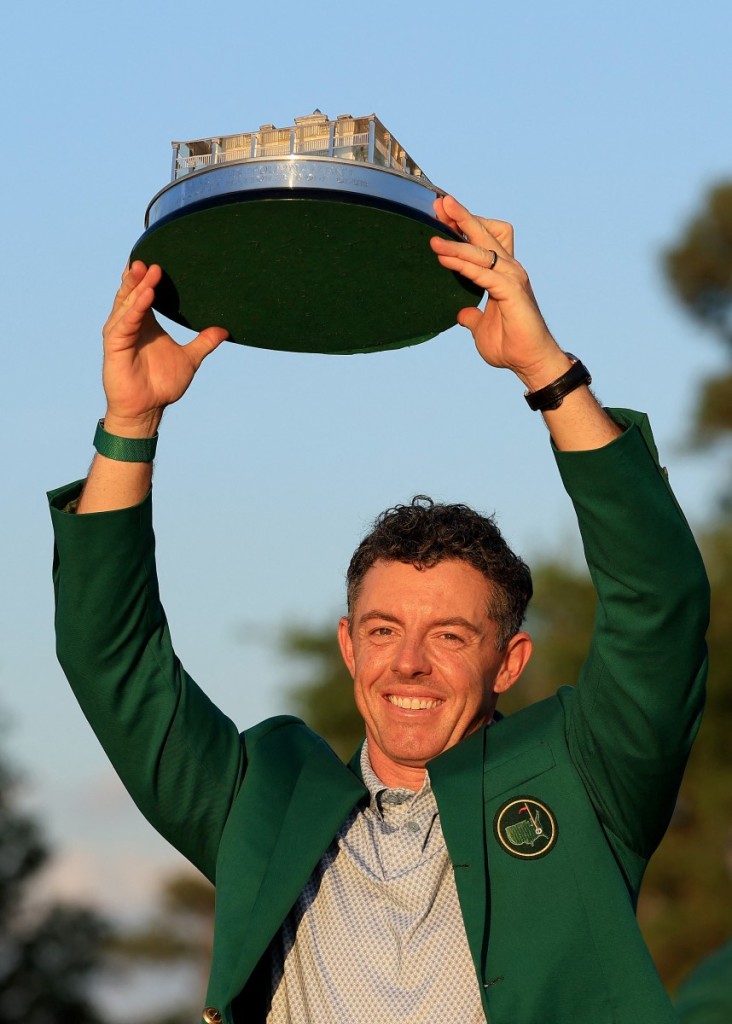
In doing so, McIlroy joins the most exclusive club in golf, standing alongside Tiger Woods, Jack Nicklaus, and Nick Faldo as the only back-to-back Masters champions. For a player who waited 17 years to slip on his first green jacket, adding a second in consecutive years represents the sweetest of vindications.
“I just can’t believe I waited 17 years to get one green jacket and you know I get two in a row. It’s just sort of the way,” McIlroy said, still processing the magnitude of his achievement. “I think all of my perseverance at this golf tournament over the years has really started to pay off.”
The rocky road to glory
This was no wire-to-wire procession, despite McIlroy establishing a commanding six-stroke advantage at the halfway stage, a 36-hole Masters record. The weekend proved a test of nerve and resilience as the 36-year-old world number two played the final two rounds at level par, watching his cushion evaporate shot by shot.
Sunday’s finale began ominously. A double bogey at the fourth hole followed by another dropped shot at the sixth sent murmurs through the Augusta pines. But McIlroy answered emphatically with four birdies across the next seven holes, reasserting his authority when it mattered most.
The closing stretch, however, delivered the drama that Masters Sundays demand. McIlroy, who ranked third-from-last in driving accuracy for the week, navigated a hairy moment at the 15th, scrambling for par from the trees. Then came the 18th, a hole that nearly authored a catastrophic conclusion.
His tee shot sailed over the trees on the right, finishing near the adjacent 10th fairway. With victory hanging in the balance and the Augusta galleries holding their collective breath, McIlroy produced a moment of magic. He curled a sweeping approach around the towering pines, finding a greenside bunker. From there, he splashed out to 12 feet and two-putted for bogey.
It was enough. A final round of one-under-par 71 gave him a 12-under-par total of 276, one clear of Scheffler’s late charge.
“It’s nice to have that two-shot cushion instead of the one like I had last year,” said McIlroy, referencing his 2024 playoff victory that completed his career Grand Slam and snapped a decade-long major drought.
As the winning putt dropped, McIlroy unleashed a primal roar, arms thrust skyward in triumph. The emotion poured out as he embraced wife Erica, daughter Poppy, and his parents beside the 18th green, a family celebration 17 years in the making, now doubled in 24 months.
The turning point
While the closing holes provided theatre, McIlroy identified two crucial moments that swung Sunday’s pendulum decisively in his favour.
England’s Justin Rose had mounted a formidable challenge, birdieing four of the last five holes on the front nine to seize a share of the lead at 12-under. But consecutive bogeys at the 11th and 12th halted Rose’s momentum, whilst McIlroy simultaneously shifted gears.
At the treacherous par-three 12th, where so many Masters dreams have perished in Rae’s Creek, McIlroy struck a sublime tee shot and converted a seven-foot birdie putt. He immediately followed with an 11-foot birdie at the par-five 13th to establish a three-stroke buffer.
“I think the tee shot on 12 and then the tee shot on 13, just to give me the option to go for the green in two,” McIlroy explained when asked about the day’s defining shots. “I made a really good committed swing off the 13th tee, and that enabled me to go for the green in two and to make a birdie there, following the birdie on 12. That was massive.”
Those back-to-back birdies at Amen Corner, golf’s most hallowed ground, ultimately proved the difference between glory and heartbreak.
Scottie Scheffler, seeking his third Masters crown in five seasons and fifth major overall, refused to surrender without a fight. The Texan posted a bogey-free weekend, carding a final-round 68 to finish on 277.
“Over the weekend I put up a good fight, did a lot of good stuff in order to give myself a chance and ultimately came up a couple shots short,” Scheffler said, gracious in defeat.
For 45-year-old Justin Rose, the Masters delivered another agonising near-miss. The 2013 US Open champion has now finished runner-up at Augusta three times, with a share of third on Sunday adding to his collection of close calls.
“I felt like there was an opportunity to do better, so obviously that’s frustrating for sure,” Rose admitted, the disappointment evident despite a spirited final-day charge.
England’s Tyrrell Hatton joined Rose in a four-way tie for third alongside Americans Russell Henley and Cameron Young, all finishing on 278.
In a break from tradition, Augusta National chairman Fred Ridley placed the green jacket on McIlroy’s shoulders—a role typically reserved for the previous year’s champion. The moment symbolised the unique nature of McIlroy’s achievement, becoming the first back-to-back winner since Woods in 2001-02.
With six majors now adorning his résumé, McIlroy stands among the modern game’s elite. Only eight players in history have won more, and at 36, he shows no signs of slowing down.
“I’m not putting a number on it, but I certainly don’t want to stop here,” McIlroy declared, his appetite for glory clearly unsated.
From the depths of that 10-year major drought to back-to-back Masters triumphs, McIlroy’s resurrection has been complete. He waited 17 years for his first taste of Augusta glory. The second took just 12 months.


You must be logged in to post a comment.