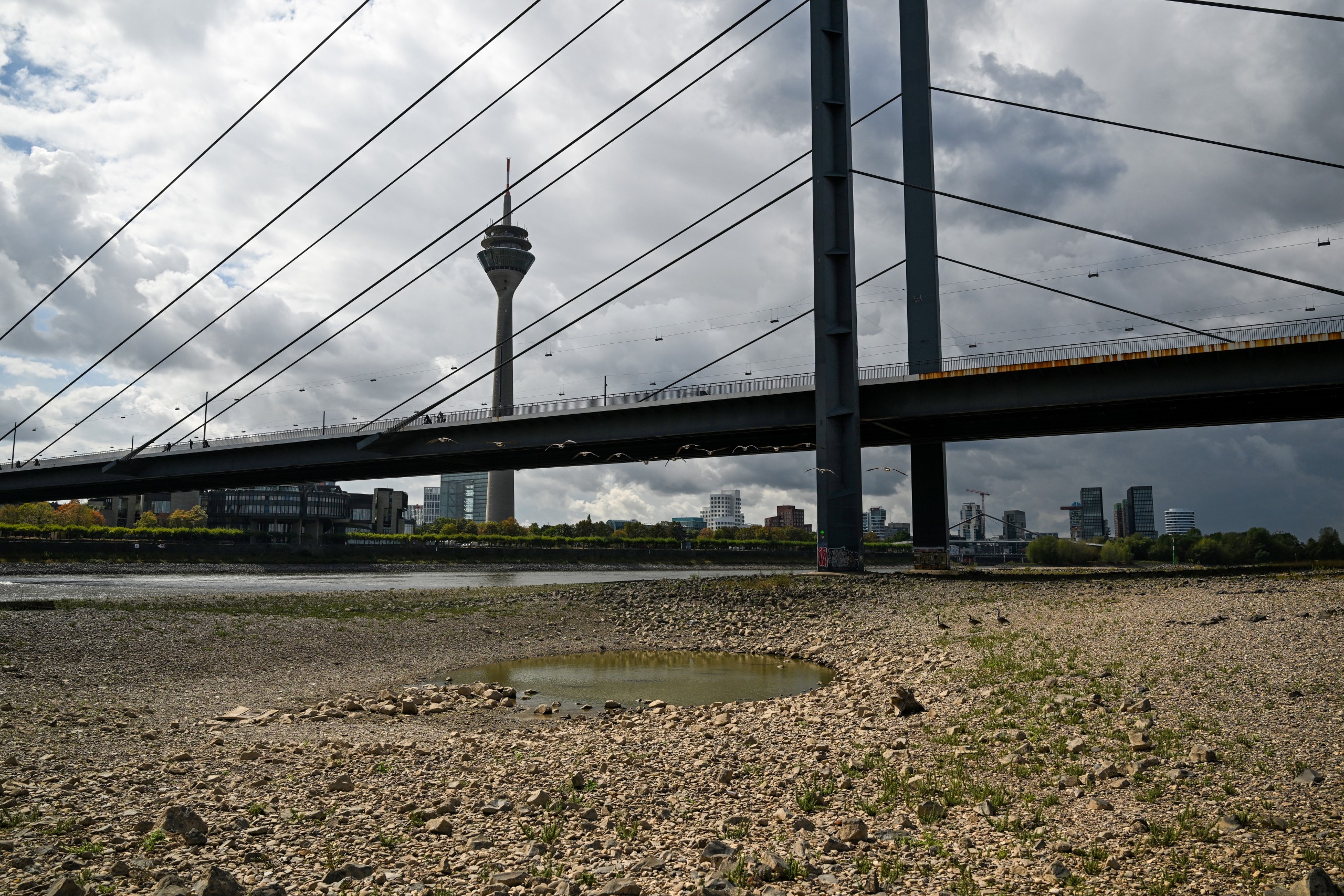
Parts of the Rhine have become impassable for most cargo ships after the river fell to its lowest level ever recorded, an industry group said on Tuesday.
The waterway, which cuts through Germany’s industrial heartland, has struggled since late July when Europe battled a series of heatwaves. Months of sparse rainfall and hot weather have pushed the river to critical levels.
Commercial shipping already faces restrictions, hitting industries from chemicals to steel production. The crisis adds fresh pressure on Europe’s biggest economy, which has barely grown for months.
Water levels force shipping to halt
This week’s continued dry conditions pushed water levels at Kaub – a key reference point for vessels on the Rhine – even lower. The stretch has now become unnavigable for loaded cargo ships.
“Most German ship captains say, that’s too shallow, I’m not sailing there anymore,” Matthias Roeser from the German Inland Shipping Association told AFP.
The navigable depth at Kaub stood at just over a metre on Tuesday. Only specially adapted vessels or those carrying almost no cargo can pass through such shallow waters.
River effectively split in two
The Rhine has effectively divided into two sections, according to Thomas Puls, a transport expert from the IW Economic Institute in Cologne.
The upper and middle parts of the river in Germany cannot connect with major northern ports such as Duisburg in Germany and Rotterdam in the Netherlands.
“The problem here is simply that it has been raining far, far, far too little for months,” Puls told AFP. “We just need rain – nothing else helps.”
Industries scramble for solutions
Steel giant Thyssenkrupp and chemical maker BASF have already turned to specially adapted vessels in recent weeks to move their products.
River transport only accounts for around five percent of goods movement in Germany. However, the Rhine carries an outsized load – around two-thirds of the country’s inland waterway freight, Puls said.
The government lifted a ban on trucks driving on Sundays and public holidays last month to help affected companies. Reports suggest authorities extended this measure on Tuesday.
But Puls said switching cargo from ships to trucks proves difficult. Many trucks are needed to carry what a single commercial vessel can hold. Ships on the Rhine typically transport large volumes of goods such as petroleum products.
Climate change warning
Puls warned that climate change means these low water events will happen more often. He urged authorities to take steps such as using more shallow-draught ships designed for low waters to “strengthen resilience.”
ALSO READ: European drought exposes mammoth bones as major rivers hit record lows