

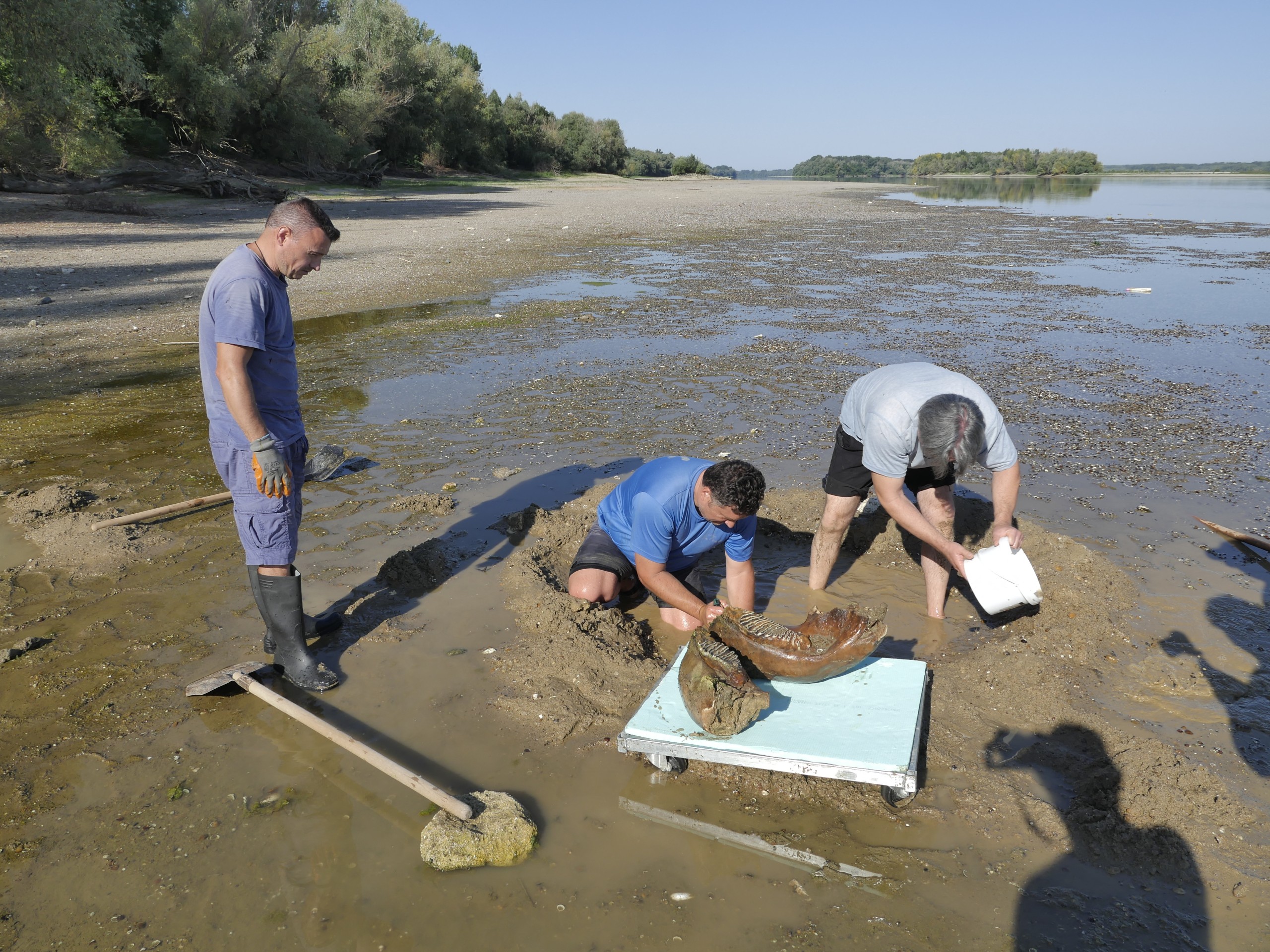
Europe’s worst drought in decades has pushed the continent’s major rivers to unprecedented lows, stranding boats, halting power plants and even exposing ancient mammoth bones on riverbeds that have been submerged for thousands of years.
The Danube and Rhine rivers have both dropped to record low levels across multiple countries after prolonged rain shortages and successive heatwaves since May, according to water management authorities. The drought, made more severe by human-caused climate change, has affected everything from commercial shipping to nuclear power generation across the continent.
Ancient discovery in Bulgaria
Sinking water levels in the Danube near the northeastern Bulgarian city of Ruse have unveiled bone fragments that “very likely” belonged to a woolly mammoth that lived during the Ice Age, according to Nikolay Nenov, director of the Regional Historical Museum.
Specialists have identified a jaw bone, fragments of tusks, part of a shoulder blade and a femur among the remains, which were spotted by a resident of the village of Ryahovo on Wednesday. The bones are well preserved and were concentrated in the same place, indicating they all belonged to the same animal, Nenov said.
The young mammoth’s bones show a dark colour that may indicate it spent considerable time in a marshy environment before dying out about 4 000 years ago. Specialists are planning further searches of the area in hopes of finding additional remains.
Fishermen stranded, boats trapped
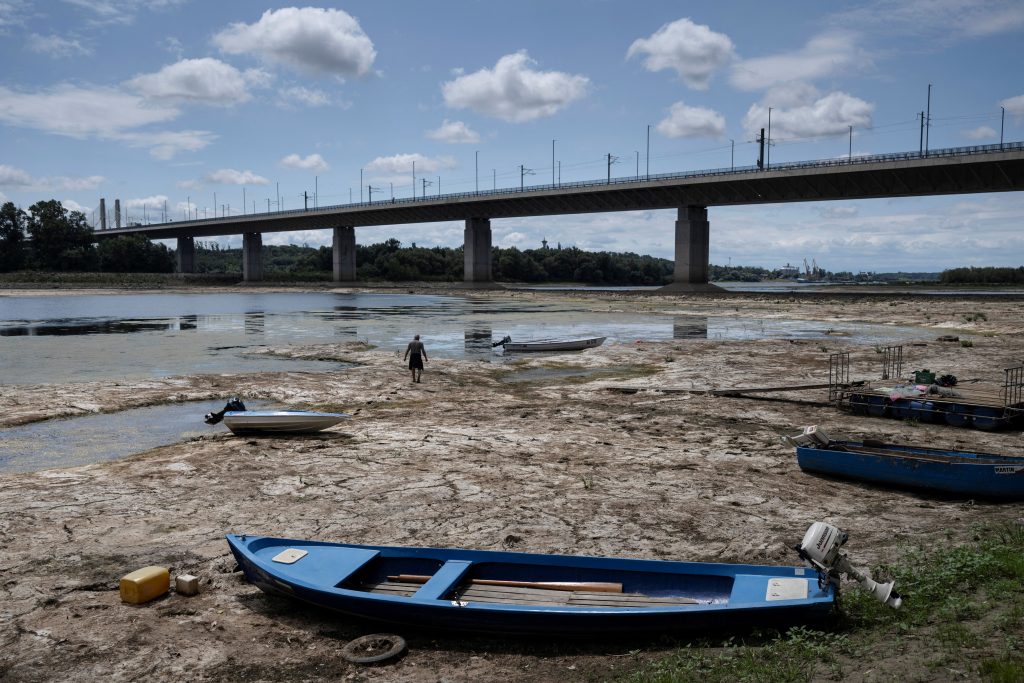
At the Vidin-Calafat bridge connecting Bulgaria and Romania across the Danube, fishermen complained of being out of work because low water levels had trapped their boats onshore.
“It’s never dried up this much before,” fisherman Rossen Dobrev said. “Now we can even walk all the way to Romania.”
Aleksandar Angelov (59), who has been fishing for 39 years, said he had never seen a drought like this before. “The people in charge up there need to take action. We don’t have any water here.”
The tourist port in the Romanian town of Corabia sits deserted except for a few pleasure boats stranded in algae. Doru (71) pointed to an island in the river where water that once required swimming now only reaches chest height. “In two years, we’ll be able to just walk across,” the fisherman said.
Ferry services between Romania and Bulgaria have been suspended temporarily in two areas. A cruise ship with almost 200 passengers had to be evacuated in Bulgaria this week after running aground due to low water levels.
Power and shipping disrupted
The 2 850km Danube, Europe’s second longest river, has dropped to a 30-year low in Romania and Slovakia and to its lowest ever recorded level in Hungary.
Hungary has reduced output at its nuclear power plant, which relies on Danube waters for cooling, whilst Romania shut down both reactors at the Cernavoda plant for the first time simultaneously because of low water levels.
Commercial shipping faces severe disruptions across the river’s length. “Cargo vessels are being forced to wait or sail with a reduced load,” a spokesperson at Bulgaria’s government Danube agency said.
In Romania, water levels along parts of the Danube have dropped one metre below the minimum navigable depth. “This is an exceptional situation. We’re surprised by this very, very low level,” said Adrian Maizel, from the administration monitoring traffic on the Danube.
At Slovakia’s Gabcikovo dam, lock operations have slowed down, causing longer waiting times for vessels.
Rhine hits unprecedented lows
The Rhine has dropped to its lowest recorded level at Lobith, where it flows into the Netherlands, and is expected to fall further, Dutch officials said last week.
“The drought in the Netherlands continues to worsen,” the Dutch infrastructure and water management ministry said. “At the Lobith measuring station, the Rhine has never been this low.”
The river, which rises in the Swiss Alps and flows through four other countries before reaching the Netherlands, serves nine European countries for drinking water, freshwater, hydropower or shipping.
The Netherlands has suffered from an officially recognised water shortage since 16 July. Restrictions on water use have been imposed across most of the country, particularly affecting agriculture. Vessels must wait longer at certain locks because their use has been restricted to prevent river water flowing directly into the sea.
ALSO READ: Two firefighters killed in Greece as Europe battles deadly wildfire season
Climate change connection
The current drought was made more severe by human-caused climate change, according to a report published last week by the World Weather Attribution group of scientists. Extreme heat, rather than low rainfall, has driven the exceptionally dry conditions across Europe.
Today’s hotter climate has accelerated moisture loss from Europe’s soils, lakes and rivers, increasing the likelihood of bone-dry conditions, the study found.
Both Romania and Bulgaria recorded low water levels much sooner than last year. Dozens of Hungarian cities and villages along the river introduced water restrictions during the June heatwave, and several cruises had been suspended by July.
Mitica Nicolae (65), a pensioner from Corabia who has lived there for 25 years, checks public radio every morning for the latest Danube water report. He said he was catching fewer fish than before and feared for farm crops. “I’ve lived here for 25 years and the water has never been this low.”
Romanian authorities have imposed irrigation restrictions on farmers in the southeast. On a beach in southern Romania, a boy sloshed his bare feet through water that only reached his ankles near the Danube shore. “It’s like quicksand,” he shouted in surprise to his family watching from a distance.
With the heat expected to last, there is no immediate relief in sight for Europe’s parched waterways.


You must be logged in to post a comment.