

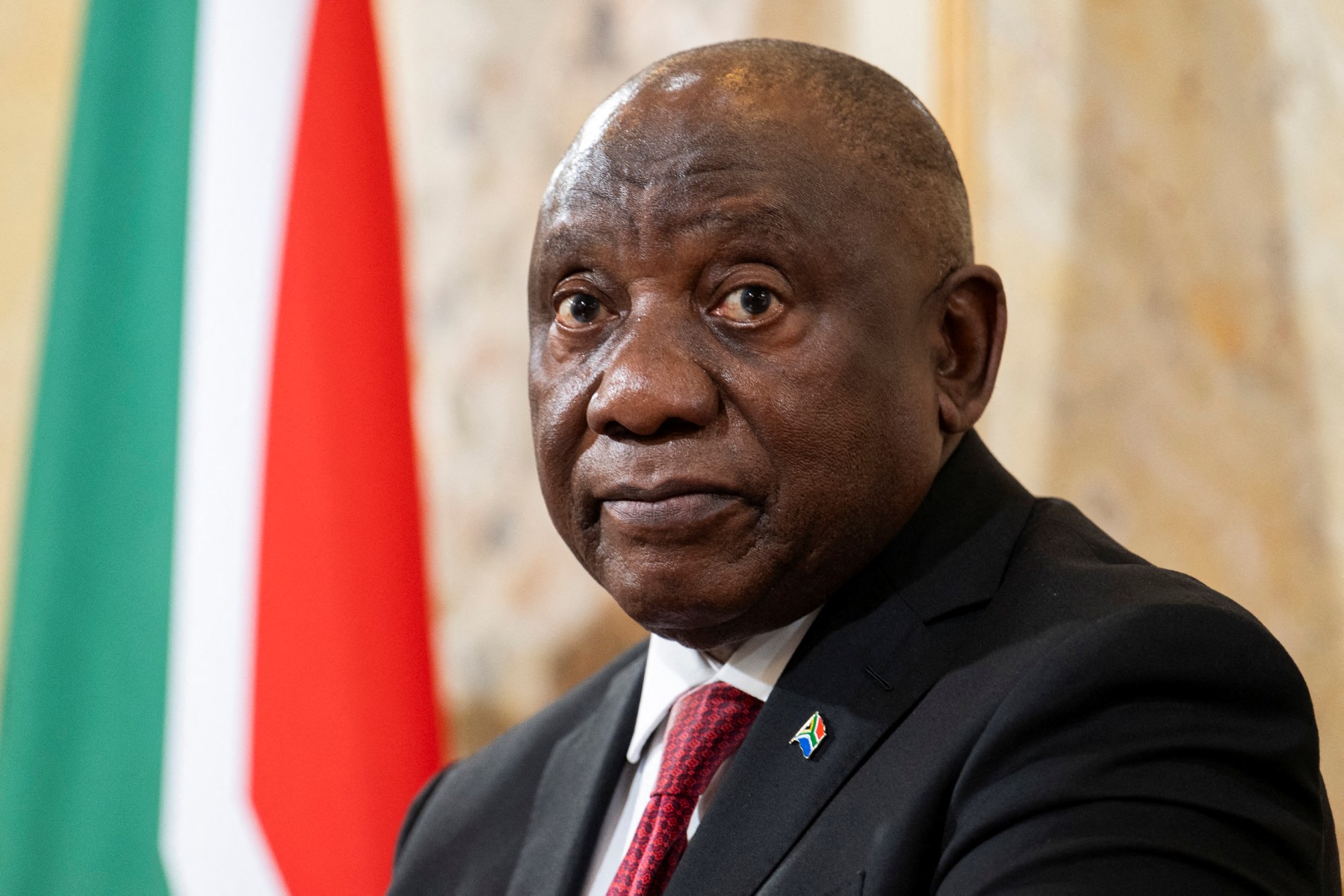
The parliamentary committee investigating whether President Cyril Ramaphosa should face impeachment over the Phala Phala farm scandal has deferred a decision on appointing its chief evidence leader after the president objected to the recommended candidate.
The Impeachment Committee for the Section 89 Enquiry resolved on Wednesday to seek a legal opinion on a letter from Ramaphosa in which he contests the committee’s nomination of Advocate Thandazani Madonsela as evidence leader. The vote to seek legal advice passed with only the uMkhonto weSizwe Party and the EFF opposed.
The committee, chaired by Rise Mzansi MP Makashule Gana, was scheduled to receive an update on the appointment and deliberate on draft terms of reference that will guide its work. Following deliberations that culminated in a vote, members agreed to consider the president’s objections and obtain advice from Parliament’s Legal Services on the options available to it.
Ramaphosa’s legal team wrote to committee chairperson Gana this week — the letter was received on Tuesday night — objecting to Madonsela’s appointment. In it, the president cites two grounds: that he removed Madonsela as his nominee to the Judicial Service Commission following interviews in 2022, and that Madonsela had previously provided legal advice to the ANC parliamentary caucus on matters related to the impeachment process, which the president argues could give the advocate prior knowledge of issues before the committee.
The committee also gave members until next Wednesday, 26 August, to submit further written comments on the terms of reference. Gana said the submissions will be considered at a meeting scheduled for Tuesday, 1 September.
Legal hurdles mount
The impeachment inquiry has been hampered by legal challenges since its revival in May, following a Constitutional Court ruling that declared Rule 129I of the National Assembly’s rules unconstitutional and set aside the National Assembly’s December 2022 vote declining to refer the Section 89 independent panel’s report to an impeachment committee.
The independent panel had found prima facie evidence of serious misconduct against Ramaphosa in connection with the 2020 theft of foreign currency from his Phala Phala farm.
On 24 July, the Western Cape High Court granted an interim interdict preventing the committee from holding public hearings until Ramaphosa’s application to review the original independent panel report is finalised. The president’s review application is scheduled to be heard in the Western Cape High Court from 2 to 4 September.
The African Transformation Movement and other opposition parties sought to overturn the interdict through a direct appeal to the Constitutional Court. The impeachment committee itself – having separately voted, narrowly, to pursue its own appeal – joined that bid. The Constitutional Court refused both applications on 12 August, finding it was not in the interests of justice to hear the matter given the imminent high court review.
Committee presses ahead with preparations
Despite the legal restrictions on public hearings, the 31-member committee, drawn from 16 political parties, has continued preparatory work. Members agreed earlier this month that Ramaphosa should be called to testify, though he would not be the first witness.
The committee has not ruled out conducting a site visit to the Phala Phala farm in Limpopo, where the burglary took place in February 2020. The incident involved the theft of foreign currency that had allegedly been concealed in a sofa at the president’s game farm.
Criminal trial nearing conclusion
A separate criminal trial related to the burglary is proceeding independently in the Modimolle Regional Court. Closing arguments concluded earlier this month, with judgment scheduled for 2 November.
Should the parliamentary committee eventually conclude its inquiry and recommend impeachment, a vote in the National Assembly would require a two-thirds majority of 267 out of 400 members to remove the president from office.
The controversy has overshadowed Ramaphosa’s presidency since the scandal became public in 2022, raising questions about the source of the foreign currency and whether proper procedures were followed in reporting the theft and investigating those involved.
ALSO READ: Ramaphosa takes Phala Phala report to court as impeachment committee begins work

