

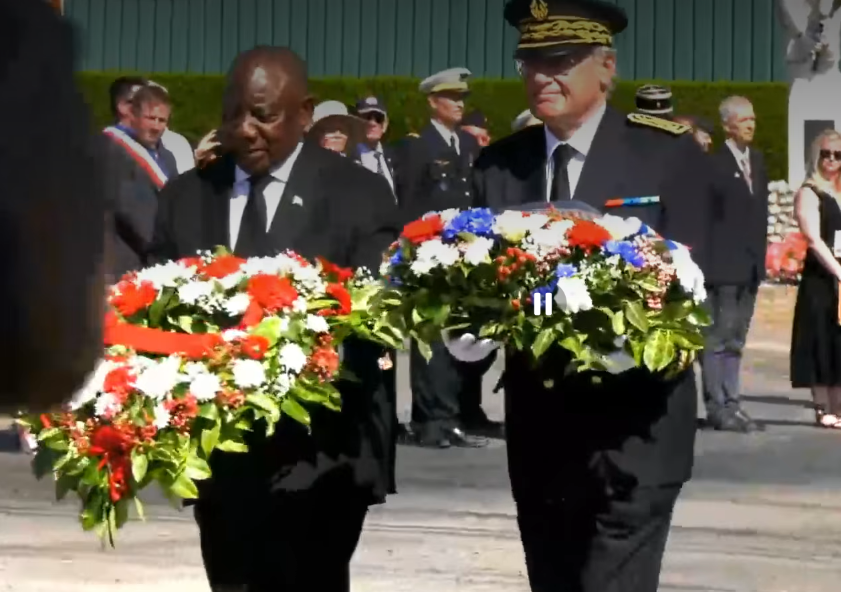
FRANCE – President Cyril Ramaphosa has called for future generations to be taught the full story of South Africa’s involvement in the First World War, including the contributions of Black servicemen who were excluded from official histories for decades.
Speaking at the 110th commemoration of the Battle of Delville Wood in Longueval, northern France, on Sunday, the President said memorials alone are not enough to honour those who served.
“The true test of remembrance is what we teach our children. It is the stories we include in our textbooks. It is the names we speak at national ceremonies. It is the dignity we afford to the descendants of those who served,” Ramaphosa said during his official visit to France.
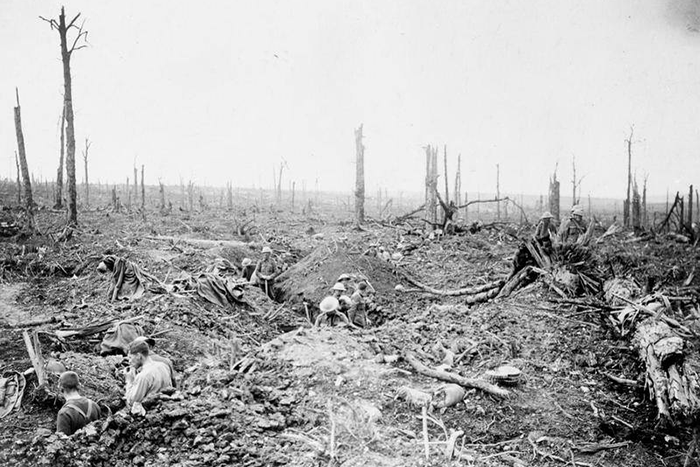
The Battle of Delville Wood took place in July 1916 during the Battle of the Somme, when the 1st South African Infantry Brigade was ordered to capture and hold a small wooded area near the French village of Longueval.
More than 3 000 South African soldiers entered Delville Wood on 15 July 1916 with instructions to take and hold the wood at all costs. For six days and five nights, the South Africans endured relentless shelling, repeated attacks and close-quarter fighting.
Only a small fraction of the men were able to walk out in organised formation. Hundreds had been killed and thousands had been wounded, captured or reported missing.
“Delville Wood became a symbol of South African courage,” the President said, adding that it also became a symbol of the terrible cost of war.
Inclusive remembrance
Ramaphosa said while it is fitting that the Delville Wood Memorial has evolved from being a monument associated primarily with white South African sacrifice into a place that seeks to commemorate all South Africans who served, this transformation must extend beyond memorials.
“We gather to affirm that the memory of a nation cannot be divided according to race. Sacrifice has no colour and courage belongs to no single community,” he said.
The President highlighted the contributions of more than 20 000 Black South African men who travelled to France to serve in the South African Native Labour Contingent. Under the racial policies of the Union of South Africa, Black South Africans were generally not permitted to carry arms as equal soldiers in the European theatre of war.
“They were willing to serve. But they were denied the status, recognition and dignity afforded to white combatants,” Ramaphosa said.
These men performed essential labour in support of the Allied war effort, including unloading ships, maintaining railway lines and carrying supplies.
“The contribution of the labour contingents was therefore not secondary to the war effort. Yet, for decades, their service was treated as though it mattered less. Their names were absent from prominent memorials,” he said.
SS Mendi tragedy
The President also referred to the tragedy of the SS Mendi, which sank in February 1917 while carrying over 800 members of the South African Native Labour Contingent towards France. The sinking remains one of the greatest maritime disasters in South African history.
“The men of the Mendi were not armed soldiers. But they died in the service of a war effort to which South Africa had committed them. Their deaths were deaths in service. But the nation did not fully acknowledge the debt it owed them,” Ramaphosa said.
He said the same was true of many members of the Cape Corps and other South Africans of colour who served in various theatres of war.
Confronting history
The President said a democratic South Africa must remember differently from the governments of the past.
“We cannot repeat a history that elevates some lives and diminishes others. We cannot speak of national sacrifice while excluding the majority of the nation,” he said.
Ramaphosa said future generations must be taught that South Africans fought with extraordinary bravery in the fields and forests of Europe, but also that many Black servicemen served under discriminatory conditions and were denied equal military status.
“Above all, we must teach them that a nation is strengthened when it has the courage to confront all of its history,” he said.
Call for peace
The President said true patriotism does not require one to hide injustice, but rather to correct it.
He said the First World War was born of militarism, imperial rivalry, nationalism and the failure of diplomacy, and that the consequences of war remind leaders today of their profound responsibility to pursue peace.
“As South Africa, we must remain committed to the peaceful resolution of conflict. We must support diplomacy, dialogue and negotiation. At the same time, we honour those who serve in our armed forces today,” Ramaphosa said.
ALSO READ: WATCH | President Ramaphosa honours fallen soldiers at Delville Wood ceremony


You must be logged in to post a comment.