President Cyril Ramaphosa has extended the term of a judicial commission investigating alleged attempts to obstruct justice in apartheid-era crimes, giving it until 18 December to complete its work.
The Khampepe Commission of Inquiry is probing allegations that efforts were made to prevent the investigation or prosecution of crimes documented by the Truth and Reconciliation Commission (TRC). The commission is examining whether deliberate attempts were made to shield perpetrators of apartheid-era atrocities from facing justice.
President Ramaphosa established the commission on 29 May 2025 following a settlement agreement with families of apartheid-era crime victims who had brought a court application demanding action. The families argued that cases which emerged from the TRC process had been deliberately stalled or blocked from proceeding through the justice system.
The TRC, which began its hearings in 1996 and concluded its amnesty process in 2003, was tasked with investigating human rights abuses committed during apartheid. While it offered amnesty to some perpetrators who made full disclosure of their crimes, many cases were referred for prosecution. Families of victims have long complained that numerous prosecutions never materialised, with allegations that certain cases were intentionally buried.
Former presidents’ bid to remove Khampepe
The commission’s work has been significantly disrupted by legal challenges from former presidents Jacob Zuma and Thabo Mbeki, both of whom are required to testify before it. The two filed separate applications seeking the recusal of Justice Sisi Khampepe as chair, arguing that her prior roles create a disqualifying conflict of interest. Specifically, they contend that her service on the TRC’s Amnesty Committee in the 1990s, and her subsequent role as Deputy National Director of Public Prosecutions under then-NDPP Bulelani Ngcuka, compromise her impartiality over a commission whose mandate directly concerns those institutions.
Zuma additionally alleged personal hostility on Khampepe’s part, pointing to the fact that she authored the 2021 Constitutional Court majority judgment that sentenced him to 15 months in prison for contempt of court in connection with the state capture inquiry.
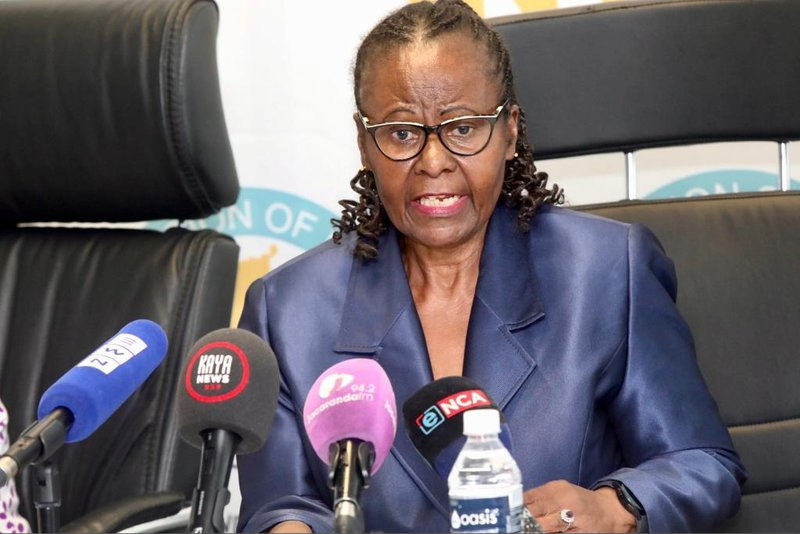
On 30 January, Justice Khampepe dismissed both recusal applications in a written ruling, finding that the former presidents had failed to establish any reasonable apprehension of bias, and had unreasonably delayed bringing their applications despite being aware of her appointment since May 2025. “The work of this Commission has been beset by undue delays,” she said. “The Rule of Law, the principle of legality and the proper administration of Justice dictate that I must ensure that this Commission continues and completes its mandate.”
Zuma and Mbeki then escalated the matter to the Gauteng High Court in Johannesburg for a review of her ruling. On 30 March, a full bench dismissed their application in a majority judgment authored by Acting Deputy Judge President Thifhelimbilu Mudau, on the grounds that the former presidents had failed to first seek permission from Chief Justice Mandisa Maya before instituting legal proceedings against a judge, as required by section 47 of the Superior Courts Act. The court found that Justice Khampepe, as a retired judge chairing a commission of inquiry, continued to perform public service and remained entitled to judicial protections. A minority judgment by Judge Lebogang Modiba would have found in favour of the former presidents.
Zuma subsequently filed an application for leave to appeal at the Constitutional Court, the country’s apex court, in what critics have characterised as a deliberate strategy to delay proceedings. Lawyers for victims’ families have opposed these manoeuvres. “The late bringing of recusal applications can have quite a massive impact; it can delay proceedings further and it can even derail them. This would not be in the interest of justice, and it would definitely be a problem for the families,” Advocate Howard Varney told the commission.
The commission recently requested additional time to complete its investigation and submit a final report. President Ramaphosa considered both submissions supporting and opposing the extension before granting the request.
The extended deadline gives the commission another year to examine evidence, interview witnesses and compile findings on whether systematic interference occurred in the prosecution of apartheid-era crimes.