

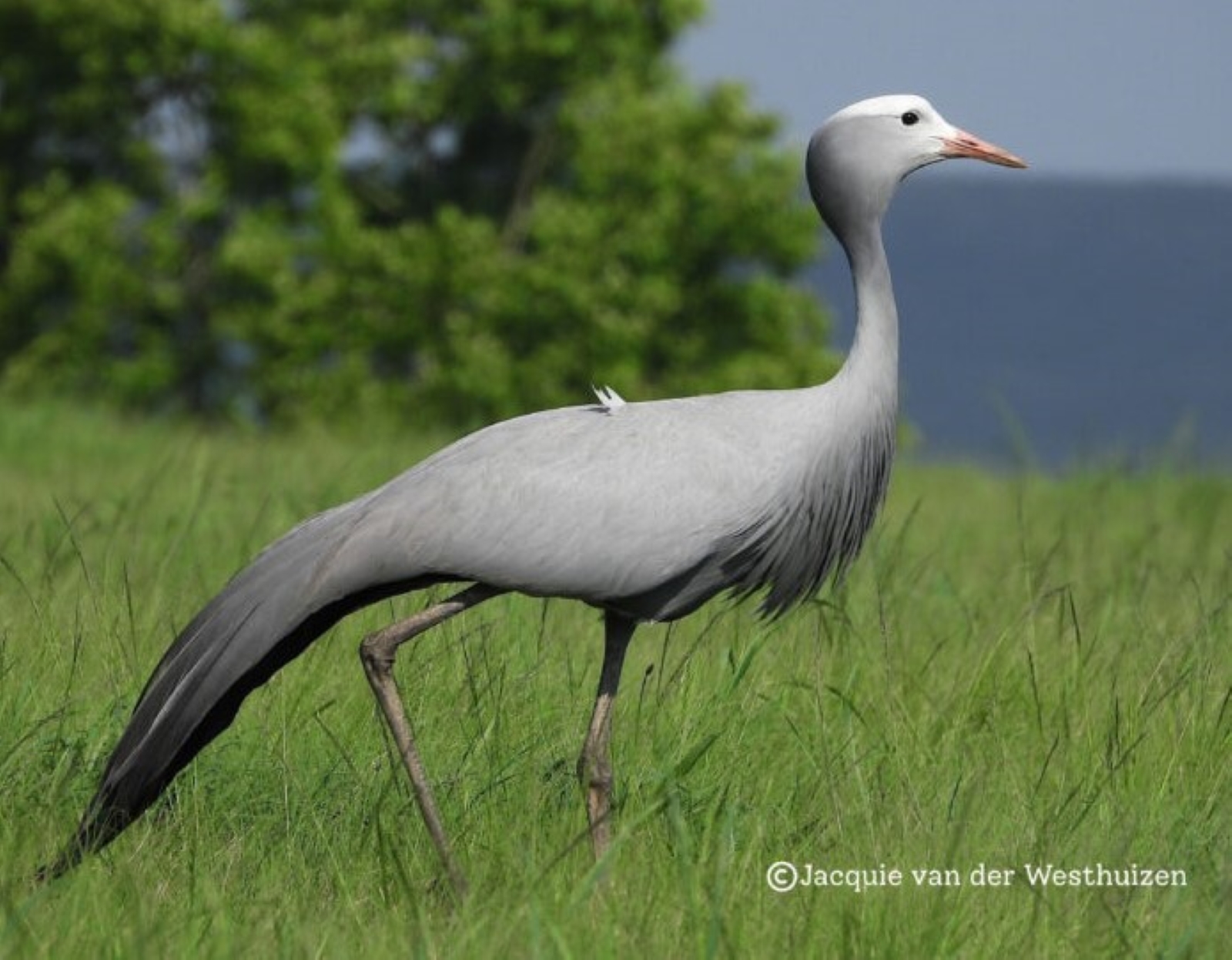
South Africa’s cranes – including the iconic Blue Crane, the country’s national bird – are facing an uncertain future. But this July, everyone from seasoned birders to curious farmers can play a crucial role in their survival.
The Endangered Wildlife Trust (EWT) and International Crane Foundation (ICF) are reviving the National Crane Census for the first time in nearly two decades, calling on all South Africans to participate in a nationwide citizen science initiative from 24 to 27 July under the banner “Every Count Matters.”
Census reborn with modern tools
Last held annually from 1998 to 2006, the census provided invaluable insights into South Africa’s crane populations. Now, after a 20-year pause, it returns with a modern twist: participation is as simple as sending a WhatsApp message to 060 086 9053.
Observers need only record the number of cranes seen, identify the species, note their location, and submit their sightings through the official WhatsApp recording panel.
All information remains confidential, with results to be released following data analysis.
This technological upgrade makes it easier than ever for the public to contribute to conservation. Whether you are an experienced birder, a landowner, or simply enjoy spending time outdoors, your observations can build a clearer picture of South Africa’s crane populations and help secure the future of these iconic birds.
Three species, three different stories
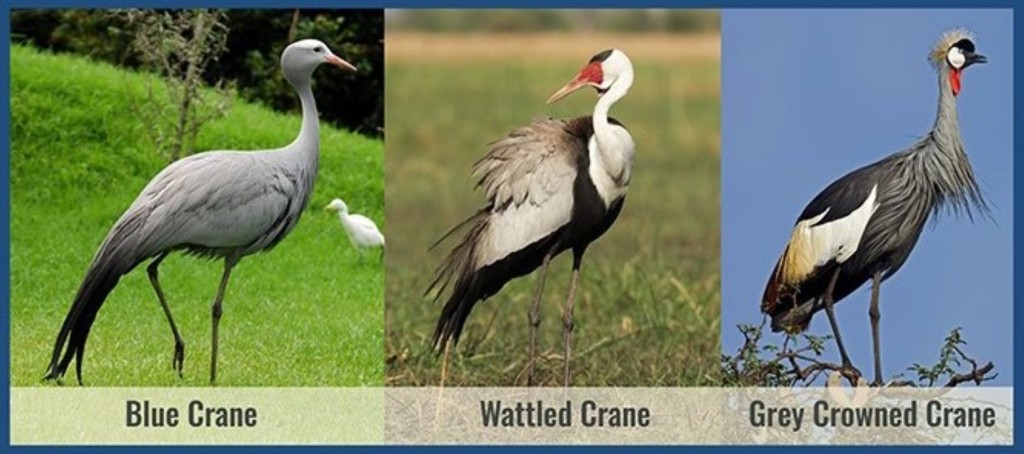
South Africa is home to the Blue Crane, Wattled Crane and Grey Crowned Crane. Each species has unique ecological requirements, and their conservation status reflects vastly different fortunes across the country’s varied landscapes.
Blue Crane: National symbol in decline
The Blue Crane, South Africa’s national bird and an endemic species found nowhere else on Earth, has been uplisted from Near Threatened to Vulnerable in the 2025 Red Data Book of Birds of South Africa, Lesotho and Eswatini. The current population stands at approximately 30 000 individuals -a troubling 39% decline since 2010.
Population declines are particularly pronounced in the Western Cape and potentially in the Karoo. Adding to the complexity, evidence suggests the species’ range is shifting northwards from the Western Cape and westwards in the Karoo. Because the Blue Crane is endemic to South Africa, its global survival depends entirely on conservation efforts within the country. The census will provide critical insights into these distribution patterns and habitat use changes.
Wattled Crane: Conservation success with caveats
The Wattled Crane represents both triumph and ongoing challenge. In 2025 the species was downlisted from Critically Endangered to Endangered – a significant conservation success attributed to sustained efforts in the Drakensberg. The estimated population now stands at approximately 288 individuals, primarily concentrated in KwaZulu-Natal.
However, this population remains critically small, and the increase has been largely confined to one province. In Mpumalanga, the breeding population has collapsed dramatically from 45 pairs in the 1990s to just 4 pairs in 2025. Understanding the current distribution of Wattled Cranes across South Africa is essential to ensure continued conservation success and support future range expansion. The census will play a key role in identifying populations outside KwaZulu-Natal.
Grey Crowned Crane: Stable outlier in continental decline
The Grey Crowned Crane population in South Africa is currently considered stable, with an estimated 7 000 individuals, though the species remains classified as Vulnerable. Remarkably, South Africa hosts the only population in Africa that is not in decline.
Annual aerial surveys conducted in KwaZulu-Natal show steady population growth. However, outside this province, very little is known. Existing data suggests declines may be occurring elsewhere in the country. The census will help determine whether these suspected declines are real and where conservation efforts should be focused.
Why cranes matter
Cranes are considered flagship species for the conservation of wetlands and grasslands – ecosystems that continue to face increasing pressure from mining, development and agricultural expansion. Monitoring crane populations provides valuable insights into the health of these threatened habitats.
ALSO READ: Owl Orphange in West Coast closing doors after 8 years
The threats facing South Africa’s cranes are numerous and complex: loss of grasslands, collisions with power lines and other infrastructure, poisoning, and the relentless march of development. Since the last national census, the EWT and ICF have relied largely on regional aerial surveys. While these indicate encouraging increases in crane numbers in parts of KwaZulu-Natal, populations of all three species are declining elsewhere, highlighting the urgent need for comprehensive national data.
The EWT and ICF partnership has been working on crane conservation for the past 30 years alongside key partners including Ezemvelo KwaZulu-Natal Wildlife, the KwaZulu-Natal Crane Foundation and Eskom. These collaborations have resulted in significant advances in crane conservation across South Africa, with the Wattled Crane’s downlisting serving as proof that sustained, collaborative efforts can reverse even the most dire conservation trajectories.
Every sighting counts
It is vital that observed increases and declines in crane populations are verified with current, comprehensive data. By working together through this citizen science initiative, South Africans can better understand population trends and contribute to meaningful conservation action.
Every sighting helps experts understand where cranes occur, how populations are changing, and where conservation action is most needed. The Drakensberg remains one of the few places in the world where all three crane species occur together – a natural heritage that demands protection and understanding.
As the census dates approach, the message from conservationists is clear: your participation matters. In those four days from 24 to 27 July, every pair of eyes turned skyward, every crane counted, and every sighting reported brings South Africa one step closer to ensuring these magnificent birds grace the nation’s grasslands and wetlands for generations to come.
How to participate
- Dates: 24 to 27 July
- Record: Number of cranes, species, location
- Submit: WhatsApp to 060 086 9053 or scan the official QR code
- Open to: Everyone – birders, landowners, farmers, nature enthusiasts
For more information about the National Crane Census and how to participate, contact the Endangered Wildlife Trust or International Crane Foundation.
Sources: Endangered Wildlife Trust; International Crane Foundation.



You must be logged in to post a comment.