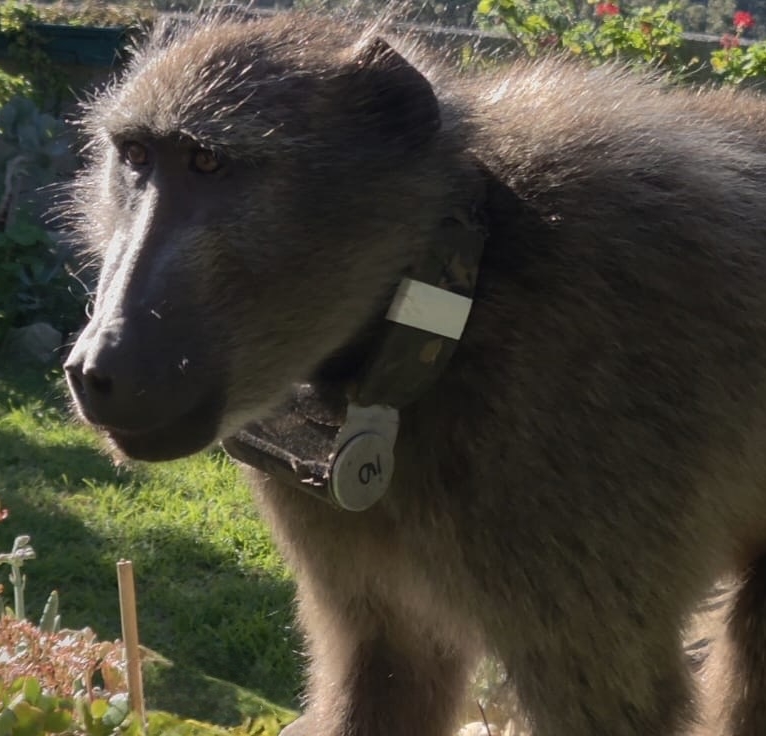
The Cape of Good Hope SPCA has concluded their investigation into the safety of the Da Gama baboon troop which were reportedly fitted with GPS tracking collars this week but have concerns regarding the baboon sanctuary.
Earlier this week, a group of community representatives feared for the safety and wellbeing of the Da Gama baboon troop which was reportedly fitted with GPS tracking collars.
The Cape Peninsula Baboon Management Joint Task Team (CPBMJTT) is overseeing this operation and comprises three authorities: CapeNature, SANParks and the City, who are responsible for developing and implementing a baboon management programme in the Cape Peninsula.
SPCA concludes investigation
All collaring is conducted under strict ethical oversight and veterinary care, the CPBMJTT confirmed to People’s Post.
“The devices are lightweight, specially fitted for primates, and feature safety release mechanisms. While handling causes brief initial discomfort, the data gathered reduces the need for continuous daily aversive herding and helps protect the troop from urban risks,” the CPBMJTT said.
With regard to the Da Gama Troop, the collaring is part of an approved scientific study to “track troop movement, home ranges and urban edge interactions to improve long-term management and fence design,” the CPBMJTT added.
Cape Peninsula Civil Conservation (CPCC) collated information about the research and invited public engagement through a Facebook post stating that “a significant number of the baboons of the Da Gama troop were again collared for the purpose of scientific research” on Sunday 12 July.
Collaring follows research protocols
The Cape of Good Hope SPCA also investigated the concerns relating to the fitting of tracking collars on baboons after the matter was brought to their attention by the public, said SPCA spokesperson, Belinda Abraham.
“The SPCA was not present when the female baboon was initially collared. However, as part of our enquiries, we assessed the information available and noted that the collar currently in use is smaller and lighter than collars that have previously been fitted to baboons,” she said.
A subsequent collaring procedure involving a male baboon was conducted in the presence of an SPCA Inspector, she added.
“Based on the information currently available to us, we have not identified evidence of a contravention of the Animals Protection Act in relation to the collaring procedures,” she said.
The fitting of tracking collars on baboons is not, in itself, a contravention of the Animals Protection Act 71 of 1962, Abraham said.
“The role of the SPCA is not the management of the baboon populations or determining wildlife management policy. Our mandate is to ensure that animals are protected from cruelty and unnecessary suffering in terms of the Animals Protection Act. Where the SPCA is requested to provide oversight during procedures such as the capture, darting, handling, collar fitting and release of wild animals, our focus is to monitor these activities and intervene where necessary should there be evidence of a contravention of the Animals Protection Act,” she said.
Sanctuary plan faces opposition
However, the SPCA maintains its opposed stance towards a baboon sanctuary.
Last year, the Cape Peninsula Baboon Action Plan for relocating the primates was approved by the City, South African National Parks (SANParks), and CapeNature.
In January this year, CPBMJTT confirmed that it has approved the intention to capture and relocate two baboon troops to a purpose-built sanctuary, said the City’s manager of coastal environmental management, Gregg Oelofse.
“The SPCA does not support the placement of free-roaming, wild-caught baboons into a sanctuary as a long-term management solution. This position has previously been communicated to the relevant authorities. We recognise that the management of baboons on the Cape Peninsula is a matter of significant public interest and often attracts differing views. The SPCA remains committed to fulfilling its statutory mandate impartially, with the welfare of the animals remaining our primary consideration,” Abraham said.
Baboon troop relocations that include the Waterfall and Seaforth troops in Simon’s Town are governed by the Cape Peninsula Baboon Management Action Plan (v.2 Final, June 2026).
“Planning and site preparation for the trial enclosure at Kogelfontein are actively moving forward under environmental guidelines. Relocations are executed as whole-troop operations to preserve social cohesion, paired with perimeter fencing to keep troops safe from urban hazards,” CPBMJTT said.
For more information, visit the official Cape Baboon Partnership portal (baboons.org.za) or contact cpbmjtt@capenature.co.za.
The full Action Plan is available at baboons.org.za.Queries can be directed to cpbmjtt@capenature.co.za.
ALSO READ: Community representatives raise concern over GPS collaring of Da Gama baboon troop