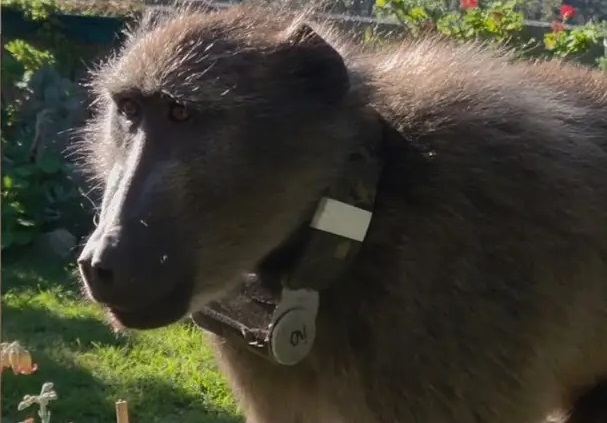
A group of community representative fears for the safety and wellbeing of the Da Gama baboon troop which were reportedly fitted with GPS tracking collars.
Cape Peninsula Civil Conservation (CPCC) collated information about the research and invited public engagement through in a Facebook post where they stated that “a significant number of the baboons of the Da Gama troop were again collared for the purpose of scientific research” on Sunday 12 July.
Collars
The Cape Peninsula Baboon Management Joint Task Team (CPBMJTT) is overseeing this operation and comprises three authorities: CapeNature, SANParks and the City, who are responsible for developing and implementing a baboon management programme in the Cape Peninsula.
All collaring is conducted under strict ethical oversight and veterinary care, the CPBMJTT confirmed to People’s Post.
“The devices are lightweight, specially fitted for primates, and feature safety release mechanisms. While handling causes brief initial discomfort, the data gathered reduces the need for continuous daily aversive herding and helps protect the troop from urban risks,” the CPBMJTT said.
CPCC alleges that there was a lot of controversy when the same troop was collared for research in 2018.
CPCC is a non-profit organisation (NPO) that focuses on educating the community on the importance of biodiversity, through various projects such as Baboon Wise, Nature Club and Safe in the Sea.
CPCC Spokesperson Lynda Silk said they had a meeting with the CBP and the lead researcher, Dr Cecile Sarabian.
“They informed us immediately before they put [the collars] on. As community nominated members of the Baboon Advisory Group we liaise between community and Baboon Management. Especially because so much has been made of “transparency” by the current baboon management, we feel that this should have come before the Baboon Advisory Group for discussion. The advisory group should at least be made aware timeously and then have a chance to actually consider it,” she said.
Tracks baboon movements
With regard to the Da Gama Troop, the collaring is part of an approved scientific study to “track troop movement, home ranges and urban edge interactions to improve long-term management and fence design,” the CPBMJTT added.
Baboon troop relocations that include the Waterfall and Seaforth troops in Simon’s Town are governed by the Cape Peninsula Baboon Management Action Plan (v.2 Final, June 2026).
“Planning and site preparation for the trial enclosure at Kogelfontein are actively moving forward under environmental guidelines. Relocations are executed as whole-troop operations to preserve social cohesion, paired with perimeter fencing to keep troops safe from urban hazards,” CPBMJTT said.
For more information, visit the official Cape Baboon Partnership portal (baboons.org.za) or contact cpbmjtt@capenature.co.za.
The full Action Plan is available at baboons.org.za.
Queries can be directed to cpbmjtt@capenature.co.za.
ALSO READ: Cape Peninsula baboon sanctuary plans face activist concerns over animal welfare