


A parliamentary summit on gang-related violence held in Cape Town this week, has called for a long-term, coordinated state response to address the scourge that has claimed thousands of lives across South Africa this year.
The summit, which opened Parliament’s wider inquiry into gang-related violence, heard harrowing testimonies from residents, police officers, soldiers and researchers about the daily terror faced by communities from the Western Cape to Gauteng.
Portfolio Committee on Police chairperson Ian Cameron said gang violence was not an abstract policy problem but a reality that shapes daily life in affected communities. “Gang violence is not an abstract policy problem. It decides whether a child can walk to school, whether a mother can send her children to the shop, which streets an ambulance may enter, whether a witness will speak, and whether a family sleeps in a bed or on the floor when the shooting starts,” Cameron said.
Weekly bloodbath continues unabated
The summit comes as statistics paint a grim picture of unabated violence. By mid-August, the Western Cape alone had recorded 2 641 killings since the start of the year, with 1 658 attributed to gang activity and crime. Between 2 August and 9 August, 70 people were killed in shootings across the province. In the two weeks preceding 2 August, over 170 murders and 100 attempted murders were recorded.
National crime statistics for the January to March 2026 quarter showed that four provinces – Gauteng, KwaZulu-Natal, Eastern Cape and Western Cape – accounted for 80% of all murders in the country. However, over 90% of South Africa’s gang-related murders occurred in the Western Cape, with hotspots including Nyanga, Khayelitsha, Mitchells Plain, Gugulethu and Mfuleni.
Military deployment fails to stem violence
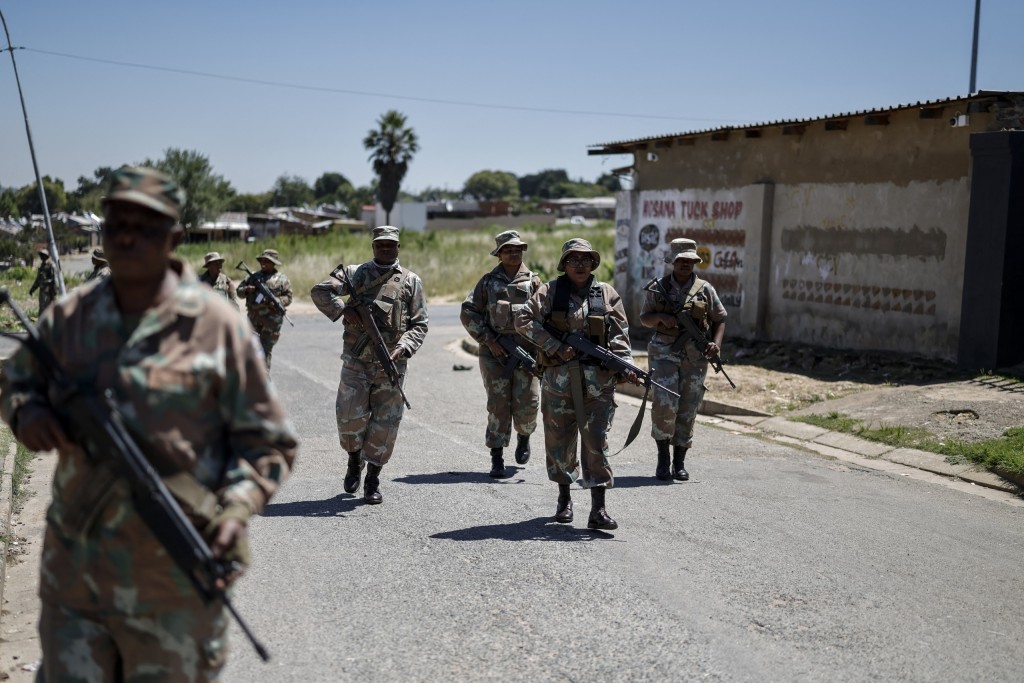
These figures persist despite Operation Prosper, a joint deployment of the South African Police Service (SAPS) and the South African National Defence Force (SANDF) launched in March with approximately 2 200 soldiers deployed at a cost of R823-million.
Parliamentary oversight visits to the Western Cape last week exposed serious problems with the military deployment. Soldiers and officials reported poor coordination between SANDF and SAPS, inadequate intelligence-sharing, and frustration that operations often target lower-level street activity rather than gang leaders and organised crime networks.
Cameron emphasised that while Operation Prosper may have created breathing space for some communities, the calm would be temporary if SAPS, Crime Intelligence, detectives, forensic services, prosecutors and courts cannot use that space to weaken criminal networks. “A roadblock is an activity. An arrest is an output. The harder test is whether murders and shootings decline, whether illegal firearms are removed, whether criminal markets are disrupted, whether cases reach court and whether communities remain safer after the operation ends,” he said.
Victims expose police corruption and state failure
The summit heard that gang violence is sustained by an ecosystem involving territorial control, the illicit drug trade, access to illegal firearms, and the systematic recruitment of children as young as seven or eight years old. Participants also heard serious allegations of police complicity, including officers accepting bribes, engaging in extortion and leaking operational information to gang networks.
Victims and civil society representatives testified about what they described as the state’s failure to protect citizens. Communities welcomed some drug-related arrests but called for clearer plans regarding the sustainability of security once the SANDF deployment concludes.
ALSO READ: Gang Monitor says defections fuel Cape Flats violence
The Democratic Alliance’s police spokesperson Lisa Schickerling called on acting minister of police Firoz Cachalia to turn the summit into a concrete plan of action. “Communities do not need another talkshop or another report. They need police who can keep them safe,” Schickerling said.
Lieutenant-General Nhlanhla Mkhwanazi made what many considered one of the summit’s most important contributions, highlighting that SAPS cannot carry the full burden of policing alone and raising the question of whether policing powers should be devolved to provinces with the capacity and capability to exercise them effectively.
ALSO READ: Emergency summit on gang violence crisis plaguing Western Cape
Long-term inquiry to continue into 2027
The committee confirmed the summit was not a one-off event but the beginning of a comprehensive inquiry expected to continue into 2027. Planned next steps include further community engagements, site visits to affected areas, and joint meetings with relevant departments and portfolio committees. The committee intends to finalise its findings and recommendations for submission to the National Assembly by the end of the 2026/2027 financial year.
Cameron said the inquiry must examine the entire ecosystem that sustains gangs, including gun suppliers, drug markets and financial networks controlled by gang leaders. These networks enable gangs to use illicit proceeds to recruit children and replace street-level members who are arrested or killed.
“For residents whose lives are shaped by gunfire, the question is not whether another summit can produce another set of promises. It is whether the inquiry can drive decisions that have been postponed for too long,” Cameron said.
ALSO READ: Cape Town mayor backs parliamentary probe into violent crime crisis


You must be logged in to post a comment.