The Western Cape Government has released the first findings of the Overberg Rail Business Case, outlining plans to transform the region’s long-dormant rail infrastructure into a modern freight corridor linking the Overberg to major inland markets.
The findings were presented at a high-level stakeholder feedback session held in Bredasdorp on Friday, 20 February, marking a significant step in efforts to revive the province’s underutilised rail network.
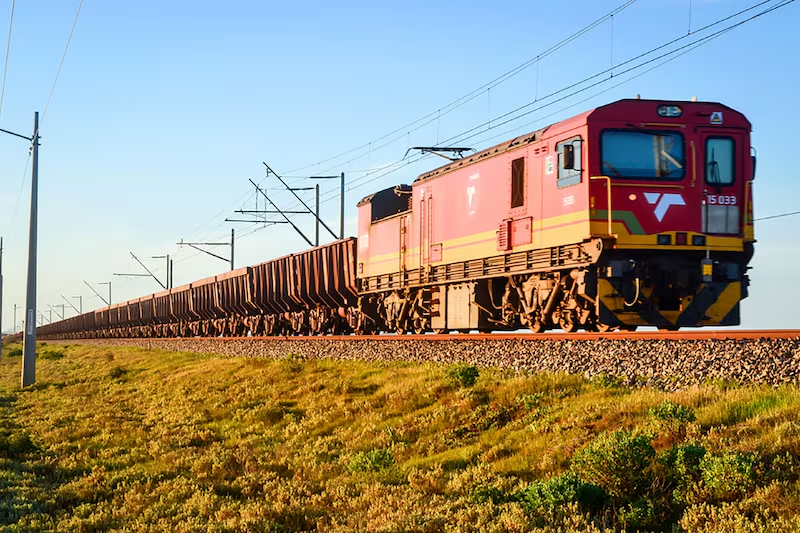
The business case proposes a seamless intermodal corridor connecting Transnet-operated rail, the Belcon Inland Terminal, and the Port of Cape Town. The integrated system would transport agricultural and bulk commodities including barley, wheat, canola, animal feed, and fertiliser to domestic and export markets, while creating backloading opportunities from inland regions.
According to updated freight demand projections, the corridor has the potential to move approximately 105 000 tons of freight annually between the Western Cape and Gauteng, along with an estimated 2 000 refrigerated containers each year. Officials say these volumes represent a substantial opportunity to shift freight from road to rail.
Western Cape Mobility Minister Isaac Sileku first announced the launch of the Overberg Rail Business Case in July 2025, emphasising the need to unlock the province’s rail heritage.
“This business case positions the Overberg rail corridor as a key enabler to triple Western Cape exports by 2035. By unlocking dormant rail capacity, strengthening intermodal links, and attracting private investment, we are building a freight system that drives economic growth, supports producers, and reduces road congestion,” said Sileku.
Sakkie Franken, Executive Mayor of the Overberg District Municipality, welcomed the findings.
“The revitalisation of the rail corridor will strengthen supply chain reliability, reduce pressure on our roads, and improve the competitiveness of Overberg producers in both domestic and export markets. As the Overberg District Municipality, we support this collaborative initiative and remain committed to working with provincial and national partners to ensure the successful implementation of a modern, integrated freight system that drives sustainable economic growth,” said Franken.
The business case aligns with recent freight rail reforms announced by the National Minister of Transport, which aim to open underutilised branch lines to third-party participation.
“These reforms create a historic opportunity to unlock dormant rail capacity and attract investment into regional corridors such as the Overberg. As the Western Cape Government, we are positioning ourselves at the forefront of this reform process by developing credible, evidence-based projects that enable private sector participation, strengthen intermodal integration, and restore rail as the backbone of our freight system,” Sileku added.
Stakeholders at the session highlighted the importance of partnerships between government, industry, and rail operators to secure long-term freight commitments and investment certainty.
The next phase will focus on finalising the implementation plan, addressing infrastructure needs, and deepening collaboration with industry partners. The provincial government says the Overberg Rail Business Case pilot will provide insights to guide future freight rail revitalisation efforts across the Western Cape and South Africa.
ALSO READ: Western Cape launches ambitious rail freight revival to slash road congestion