

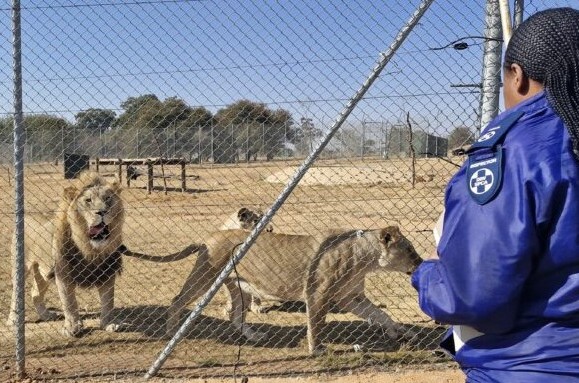
The National Council of SPCAs (NSPCA) has welcomed the approval of a draft notice aimed at restricting South Africa’s captive lion industry, describing it as a significant step after years of sustained advocacy.
On 24 March, the National Council of Provinces approved the Draft Notice Prohibiting Certain Activities Involving African Lions — a move the NSPCA says carries “real weight” for those who have long opposed the industry.
“For those who have spent years documenting the suffering that flows from South Africa’s captive lion industry, this parliamentary milestone carries real weight,” the NSPCA said in a statement issued on 27 March.
The draft notice prohibits the establishment of new captive lion breeding facilities, signalling a shift in government’s approach to an industry that has drawn increasing scrutiny both locally and internationally.
South Africa is estimated to have between 8 000 and 12 000 captive-bred lions across more than 350 facilities, with the animals often used for cub petting, tourism experiences, trophy hunting and the export of bones.
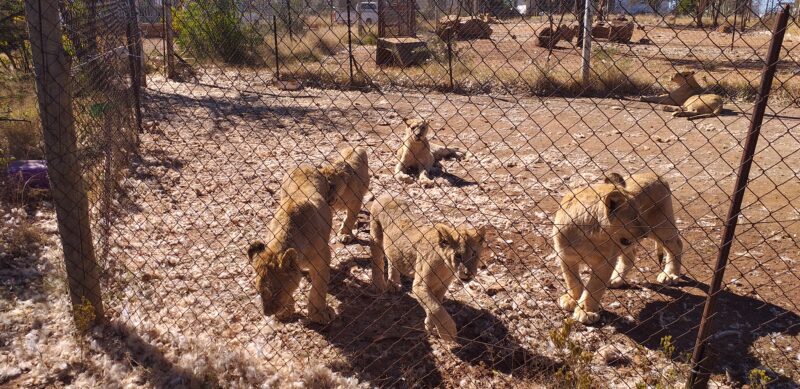
The NSPCA said the industry has long been misrepresented as conservation-driven.
“The ‘conservation’ label applied to these operations has always been a commercial fiction,” the organisation said, adding that captive-bred lions “serve no population recovery function” and cannot be released into the wild.
It also noted that a 2025 peer-reviewed study found no solid evidence that captive lion breeding benefits wild populations, and warned it may in fact be harmful.
The approval of the draft notice reflects growing political consensus, with the NSPCA highlighting that the decision was supported unanimously by provincial representatives.
“What has long been contested in courts, lobbied against in committee rooms, and dismissed as impractical by commercial interests has now been endorsed … by the country’s provincial representatives,” the statement reads.
The organisation credited years of pressure from civil society, scientists and the public for driving the shift.
However, the NSPCA cautioned that the draft notice marks only an initial step. While it prevents new facilities from being established, it does not yet dismantle existing captive breeding operations or end the commercial trade.
For the measures to take effect, the notice must still be formally gazetted by the Minister of Forestry, Fisheries and the Environment, Willie Aucamp.
“Approving a notice and enacting it are not the same thing,” the NSPCA said, calling for the prohibition to be implemented without delay and for a full phase-out of captive lion breeding and trade.
The organisation also warned that opposition from industry stakeholders remains active, pointing to ongoing legal challenges aimed at reinstating lion bone export quotas.
Despite this, the NSPCA said the approval marks a turning point.
“A country once defined internationally by its captive lion trade has taken a formal, legislatively-backed step toward ending it,” the statement said.



You must be logged in to post a comment.