
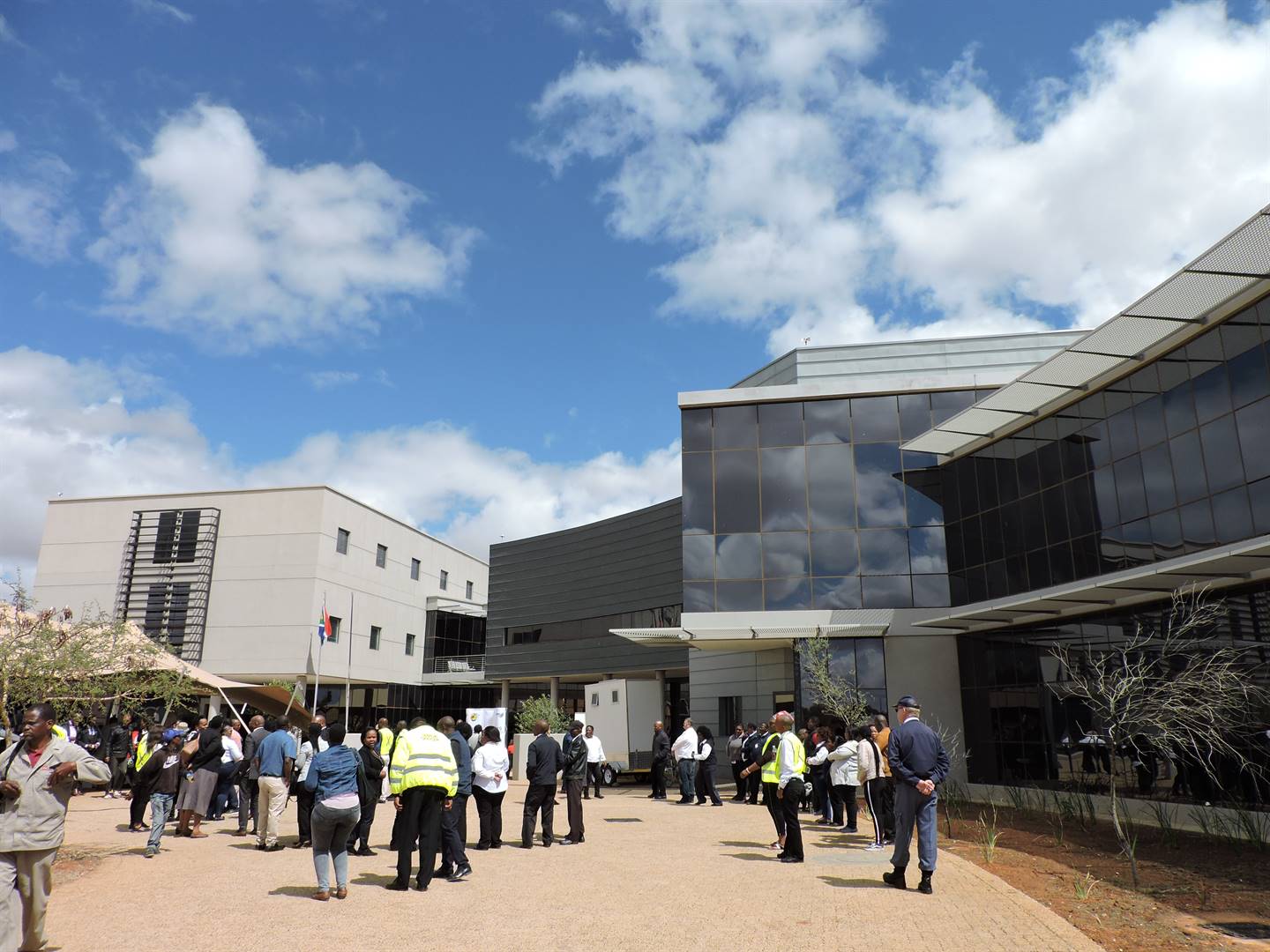
Serious infrastructural defects in parts of the Northern Cape Mental Health Hospital outside Kimberley, render it inhabitable. Another concern is the gradually declining state of this facility.
This is according to the South African Human Rights Commission (SAHRC) in a recent release on its findings after visiting the hospital in May.
The hospital took 15 years to construct at an inflated cost of R2 billion and was described as a “monument to corruption” by Dr. Zamani Saul, premier, and “a building full of emptiness” by the previous provincial DA leader.
Dr. Henk Boshoff, a commissioner at the SAHRC, in a recent press briefing said the commission had conducted visits to several health care facilities.
The SAHRC, concerned about mental health care facilities, inadequate resources, capacity and general disregard for mental health care in the Northern Cape, says it is continuously inspecting state facilities where there may be human rights violations.
“We observed that the mental hospital is operating below capacity at 53%. Out of 287 commissioned beds, only 153 beds are in use. This was attributed to infrastructural challenges, and human and financial resource constraints.”
Only two psychiatrists are available as three resigned last year. The vacancies have since not been filled.
Due to cable theft at a substation, the hospital was faced with a dire electricity supply problem. Generators were switched off from 13:00 to 17:00 to prevent it from breaking down, resulting in the hospital being without electricity for this time period.
This resulted in patients bathing in cold water in buckets; lack of functioning toilets; broken windows leading to the exposure to elements; not enough blankets for patients, and a lack of adequate staff.
Also, unkept grass and holes in ceilings among others are an
eyesore.
The provincial Department of Health centrally manages all supply chain processes and the appointment of contractors.
Boshoff says this centralised process impedes the hospital from being effective and leads to procurement delays. The pharmacy had to be relocated from the hospital due to electricity woes.
“Telephones have not been functional for an inordinate period, the closed-circuit television and biometric systems, as well as the laundry units, are nonfunctional.”
Since the SAHRC’s visit in May, problems at the mental hospital have seemingly improved.
“Maruping Lekwene, MEC, and his staff have acted after our
visit in May and electricity supply has since been restored after it was
interrupted for months by cable theft. I am encouraged by the cooperation to
improve conditions and overcome the bureaucratic procurement processes. They
have also started with repairs to the hospital.”
Boshoff says their provincial officers will in the next
months visit many hospitals in the province to observe conditions and prepare
reports.
The SAHRC are also looking at other human rights violations like water
interruptions, sewage spills and related problems across the province.
The Department of Health did not respond to inquiries for
comment.