

From books inexplicably falling to a library floor, to the eerie lights of swinging lanterns on an old battlefield and a mysterious woman dressed in white on the balcony of an abandoned house…
Kimberley is apparently home to many ghosts and ghostly apparitions – many of these to be found in museums and at historical sights.
Steve Lunderstedt, well-known writer and historian from the Northern Cape capital, used to host ghost tours in the city. According to him, Kimberley has many genuine stories of ghost sightings.
Kimberley is said to have 158 haunted houses and buildings, with well over 200 still to be verified by paranormal experts, as stated on the website kimberley.co.za
In the historic Africana Library, the restless spirit of the first librarian roams. He drank arsenic after he was found doctoring the accounts. Many visitors have seen books inexplicably crashing to the floor, and heard teacups tinkling at 16:00.
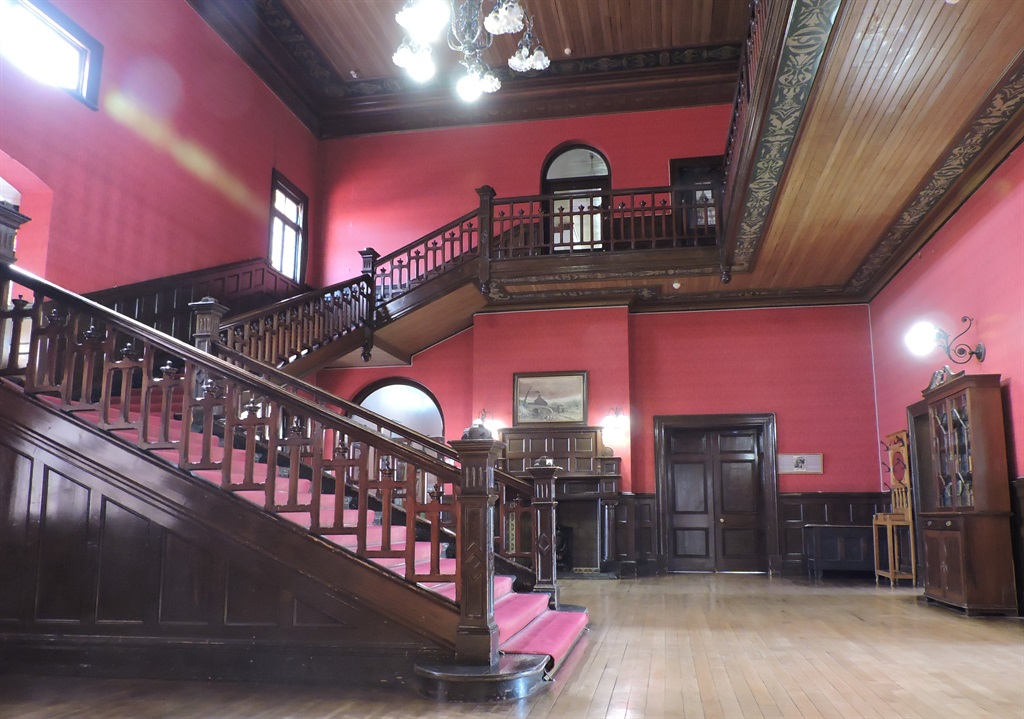
At Rudd House, a woman in white appears on the balcony; the former sick room is haunted by Percy Rudd – the first owner; and the servants’ quarters have at least six ghosts in the courtyard.
A ghostly waiter serves in the dining room of the historic Kimberley Club, and an elderly man walks the upstairs passage, while a woman in period dress stands on the staircase.
In the old De Beers boardroom, an unknown ghost drifts by as lights swing mysteriously, and a ghost dog emits an ethereal howl on the porch. On occasion, balls of fire have dropped from the porch ceiling.
At the McGregor Museum, once a nunnery, a phantom nun wanders, while at the Terry Hall of Militia, a baby’s wail can be heard as the lid of a tin trunk mysteriously opens and closes.
On visiting the Magersfontein Anglo-Boer battlefield on a moonlit night, you may well hear a phantom Scottish piper and see the flickering ghostly lanterns of the stretcher-bearers. Over 50% of visitors claim they have seen this.
Ghosts in the castle
The Castle of Good Hope in Cape Town, the oldest existing colonial building in South Africa, is also known for its ghostly inhabitants.
Workers and visitors report hearing voices and footsteps in the windowless dungeon and in the building’s narrow corridors.
On thelittlehouseofhorrors.com, it is written that the bell in the bell tower sometimes rings of its own accord, although it was bricked up centuries ago. Legend says a soldier once hung himself by the bell-rope.
People also claim to have seen a tall, luminous man leaping off the castle walls. He disappears right before he hits the ground. A man and a woman are frequently heard arguing near the guard’s room. If people investigate, only a shapeless figure is seen.
Lady Anne Barnard also haunts the castle, up until this day. She lived in the castle in the late 18th century. As the first lady, she was responsible to entertain important guests that visited the castle. She seems to keep on doing this, even though she passed away over two centuries ago. She appears when the castle is visited by important people.
Another ghost that keeps popping up, is that of governor Pieter Gijsbert van Noodt. He was a strict and militant man. Van Noodt sentenced seven men to death on 23 April 1728. He refused to grant a prisoner’s last wish right before his hanging. The prisoner then cursed Van Noodt. Later that same day, Van Noodt was found dead in his office. He died of a heart attack, even though he had been completely fine in the morning.
Today, workers and visitors experience his bitter presence and they hear him cursing and swearing inside the castle walls.
Visitations a world-wide phenomenon
Museums all over the world are apparently a natural haunt for otherwordly spirits. Many museums have publicly acknowledged the visitations, according to Katie White on news.artnet.com.
At the Metropolitan Museum of Art (MET) in New York City, the phantom of a young girl has been seen running down the halls, and her giggling and chatter can be heard.
In the Cleveland Art Museum, while curators where busy finalising an exhibition on Claude Monet’s paintings, Monet himself apparently appeared on the balcony with his characteristic salt-and-pepper beard and bowler hat. A photo taken by the director is proof of this incident.
The British Museum is known for its “restless relics” – from the 19th century wooden Congolese sculpture of a dog, to the crying caryatid from the Elgin Marbles.
Also, in the Louvre in Paris, France, a butcher of the 16th century can still be spotted, dressed in red, moving about the museum and the gardens. His murder was arranged centuries ago by Queen Catherine de Medici, since he knew too many secrets of the royal family. Even Napoleon claimed to have seen him in 1815.
The Museum of Shadows, located in Nebraska in Omaha’s historic old market district, is filled with over 3 000 verified haunted artifacts. These have been donated from across the United States and multiple other countries. Visitors have reported being physically touched, seeing apparitions, hearing disembodied voices, and poltergeist activity has been caught on security cameras. This museum is voted one of the world’s most haunted.
“The Power of Museums” acknowledged
International Museum Day was celebrated on Wednesday (18/05), with the theme “The Power of Museums”.
According to the International Council of Museums, the objective of this day is to raise awareness on the fact that “museums are an important means of cultural exchange, enrichment of cultures and development of mutual understanding, cooperation and peace among peoples.”
“Museums have the power to transform the world around us. “As incomparable places of discovery, they teach us about our past and open our minds to new ideas — two essential steps in building a better future,” the council stated.