



School readiness is not about ticking boxes – it is about nurturing confidence that lasts a lifetime.
You start to wonder: Are they ready for the world beyond me? Are they ready to sit in a group, to listen, to speak up, to take turns? Will they be okay when I am not right there?
Real signs of readiness
At Dibber, we have seen it all – the nervous drop-offs, the proud moments when a child says their friend’s name for the first time, the spark in their eye when they master something small but mighty, like fastening a zip or remembering a story they loved.
Readiness is not a tick-box. It is something you feel more than you see. It is in the way they wave goodbye with a little more confidence, or when they comfort a crying friend, even though just weeks ago, they would have cried themselves.
You do not need fancy terms or complicated checklists to know your child is growing. You will notice the little things. Like how they start asking questions then actually wait for answers. Or how they begin to recognise their own name on a hook or a cubby.
You will hear them telling you about the colours in their drawing – not just that they drew a house, but that the roof is red because it is “hot like the sun.” These are the signs that something inside them is beginning to click.
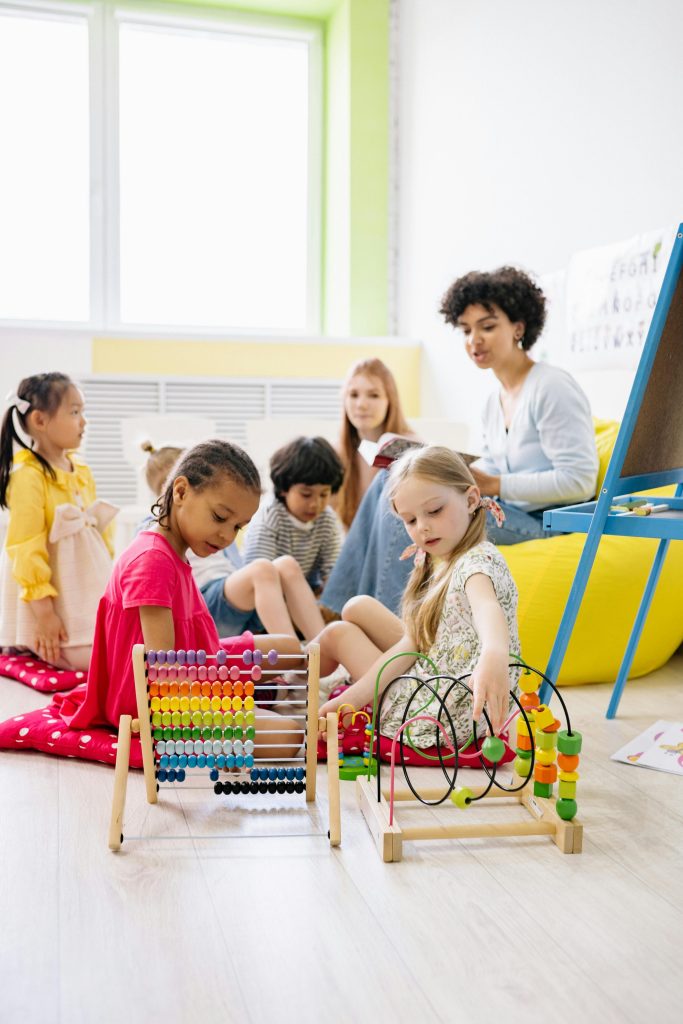
Respect: The foundation that grows
Respect, too, is something that grows. Not in a loud, demanding way, but slowly, through how we speak to our children and how we speak around them. They are always watching. They see how we greet the cashier, how we talk about neighbours or family members. They see how we apologise when we make mistakes.
Children learn respect not by being told to “be respectful,” but by living in a space where respect is simply part of the air they breathe.
Strong foundations, not perfect children
We are not aiming for perfect children. We are not even aiming for “school-ready” children in the old-fashioned sense. We are nurturing something more meaningful: children who feel safe to be themselves, can handle a no without crumbling, and are brave enough to try again after a tough moment.
Children who learn to pause before grabbing a toy, who notice that their friend’s feelings matter. Children who know their voice counts – not because we told them, but because we listen when they speak.
Why gentle doesn’t mean soft
That is why we believe gentle parenting is not soft parenting. It is strong in the ways that matter. It sets firm, clear boundaries, but holds them with calm and warmth. When a child struggles, we do not react with frustration – we guide. We help them make sense of the moment and gently support them through it.
And yes, it takes time. But so does anything that truly lasts.
The mirror effect
The beautiful thing is, when a child feels respected, they start to mirror it. They surprise us. They look you in the eye and say, “I’m sorry.” They offer their last biscuit to a friend. They raise their hand and wait.
These moments do not happen because we told them what to do. They happen because we showed them the way.
The real school preparation
And as for school? Whether your child is heading to Grade R or still a year or two away, the most important preparation you can offer is not flashcards or early reading apps. It is confidence. It is connection. It is giving them daily chances to solve small problems, to use their hands and hearts, to make choices that matter.
Even something as simple as picking their snack or choosing a story gives them a sense of self – that is what they will carry into the classroom more than anything else.
Building belief, not just skills
At Dibber, we hold their hands for a while, but our goal is to help them grow the strength to walk proudly on their own. We know it is not about being the loudest or the fastest learner – it is about building a child who believes, deep down, “I am seen. I am safe. I can do hard things.”
So, if you have been wondering whether your child is ready, maybe take a moment to look at what they can do and who they are becoming. A child who notices. A child who tries. A child who is beginning to belong in their own skin.
That, more than anything, means they are on their way. And that is more than enough.
- Kelly Eyre, quality and pedagogy lead, Dibber South Africa


You must be logged in to post a comment.