
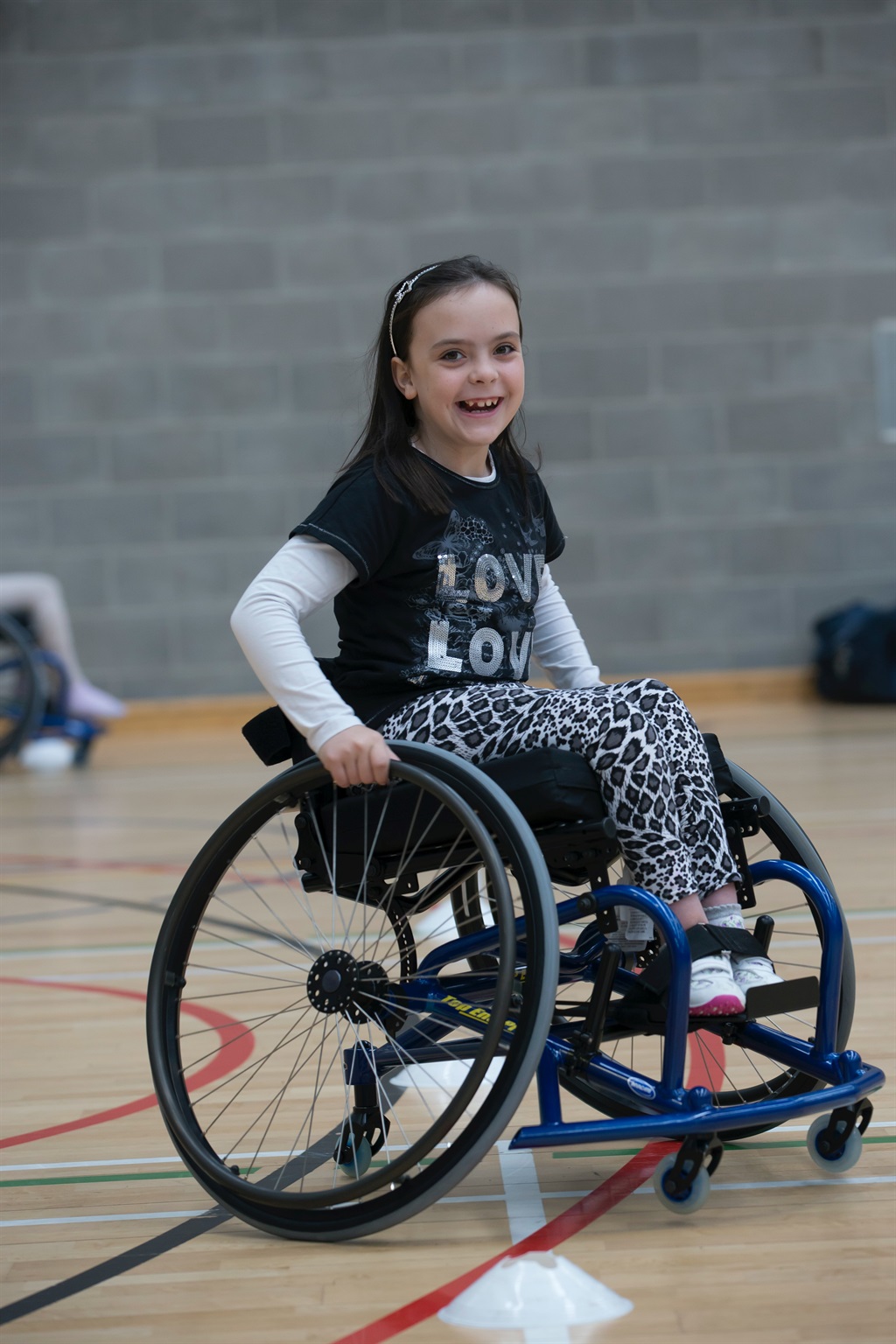
Persons with disabilities should not be viewed as objects of charity, medical treatment and social protection, but as full and equal members of society with human rights.
They are persons who may have one or more disabling condition, and prefer to be referred to in the media or by anybody else, as “persons with disabilities”.
This is according to Fanie du Toit, Adult Basic Education practitioner of the National Council of and for Persons with Disabilities (NCPD).
Du Toit wrote an informative piece from various sources on this issue for December, which is Disability Rights Awareness Month, with 3 December the International Day of Persons with Disabilities.
“Impairment is a perceived or actual feature in the person’s body or functioning that may result in limitation or loss of activity or restricted participation of the person in society with a consequential difference of physiological and/or psychological experience of life,” he wrote.
The International Classification of Disease (ICD) could be utilised for purposes of defining physical, sensory, intellectual, psychosocial and neurological impairments.
The United Nations Convention on the Rights of Persons with Disabilities and the South African White Paper on the Rights of Persons with Disabilities recognise disability as an evolving concept and states that “disability results from the interaction between persons with impairments and attitudinal and environmental barriers that hinder their full and effective participation in society on an equal basis with others”.
The way in which persons with impairments are perceived and treated, rests to a large extent with society. Statements that deny that a certain impairment may be a disability or that persons with impairments are not disabled by society, but rather differently abled, implies that the person with a specific impairment has the “power” over how he or she is perceived and included or excluded in society.
Language can be used as a powerful tool to facilitate change and bring about new values, attitudes and social integration.
These are some of the reasons why the NCPD, of which the Association of and for Persons with Disabilities – Frances Baard District (APD-FBD) is affiliated to, discourages the use of phrases like “My ability is stronger than my disability”, “the only disability is a bad attitude”, “differently-abled”, “able-bodied” or “normal people”.
Dorothy-Anne Howitson, secretary of the APD-FBD, said similar phrases in Afrikaans include “aan rolstoel gekluister” (while wheelchairs give a person freedom), “gestremde persoon” (rather a person with a disability) or “vertraag” (rather a person with an intellectual disability).