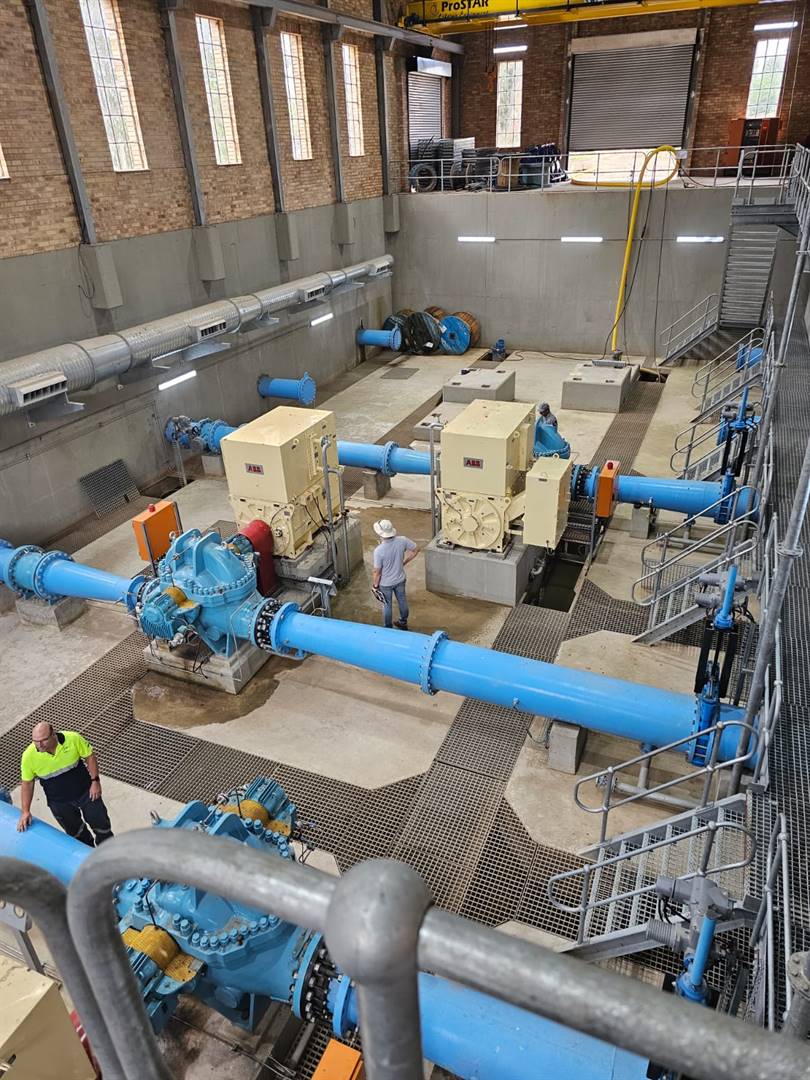

One of Kimberley’s largest private employers, Ekapa Mining, is reinforcing its public-private partnership with the Sol Plaatje Municipality towards quality water production.
Ekapa’s top engineers with expertise in water treatment plant management have undertaken an extensive assessment exercise at the Riverton Waterworks Plants on Wednesday, 6 December.
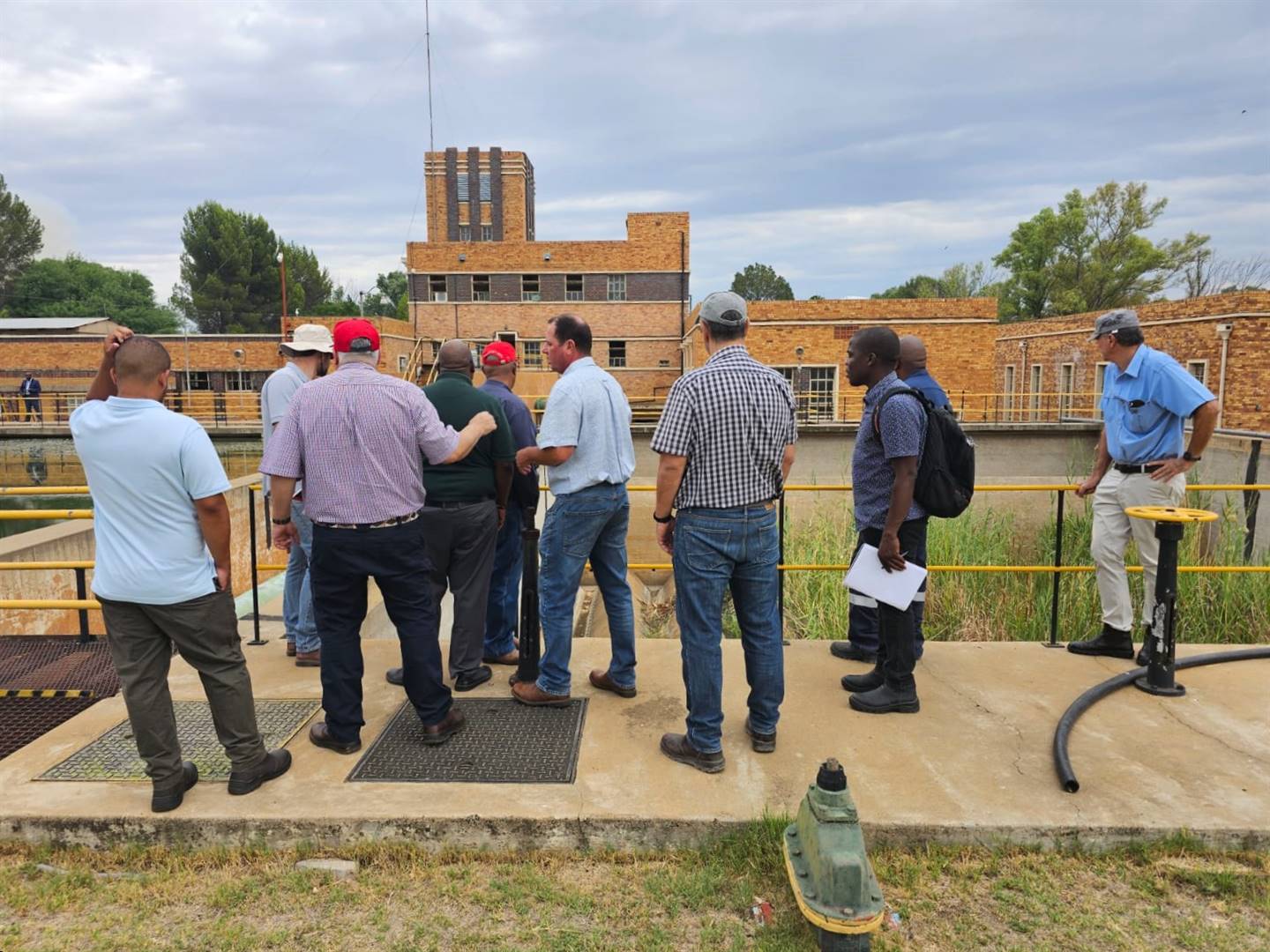
This assessment at the old and the new plants lasted from the morning to beyond midday.
Following this, an action plan will be adopted from a report Ekapa Mining will release, highlighting perspectives into how best water production from Riverton into the water supply network can be enhanced.
“The one good thing that we have seen this morning is that the Riverton Treatment Works is actually running at a high capacity.
“The problem behind it is that there are certain components that have lacked in maintenance and have built up to a point that it became reasonably big problems to overcome again. But these are not completely unaddressable with a good contractor, a good budget, and a good plan to get everything back to top-spec,” asserted Hohne.
“We are serious about addressing the water challenges that have been plaguing Kimberley over many years,”” said Thapelo Matlala, municipal manager.
In bringing Ekapa aboard, the municipality has also moved swiftly in ensuring high level maintenance unfolds at Riverton in early 2024 and is scrutinised for quality output.
With this, the aim is to retain and surpass the Blue Drop status of previous years; which was at 84,23% in 2011, and at 81,46% in 2014.
Ekapa has also committed to assist with high-tech equipment and other technologies to be utilised in eliminating flaws hindering maximum production.
Upholding systems in ensuring water safety
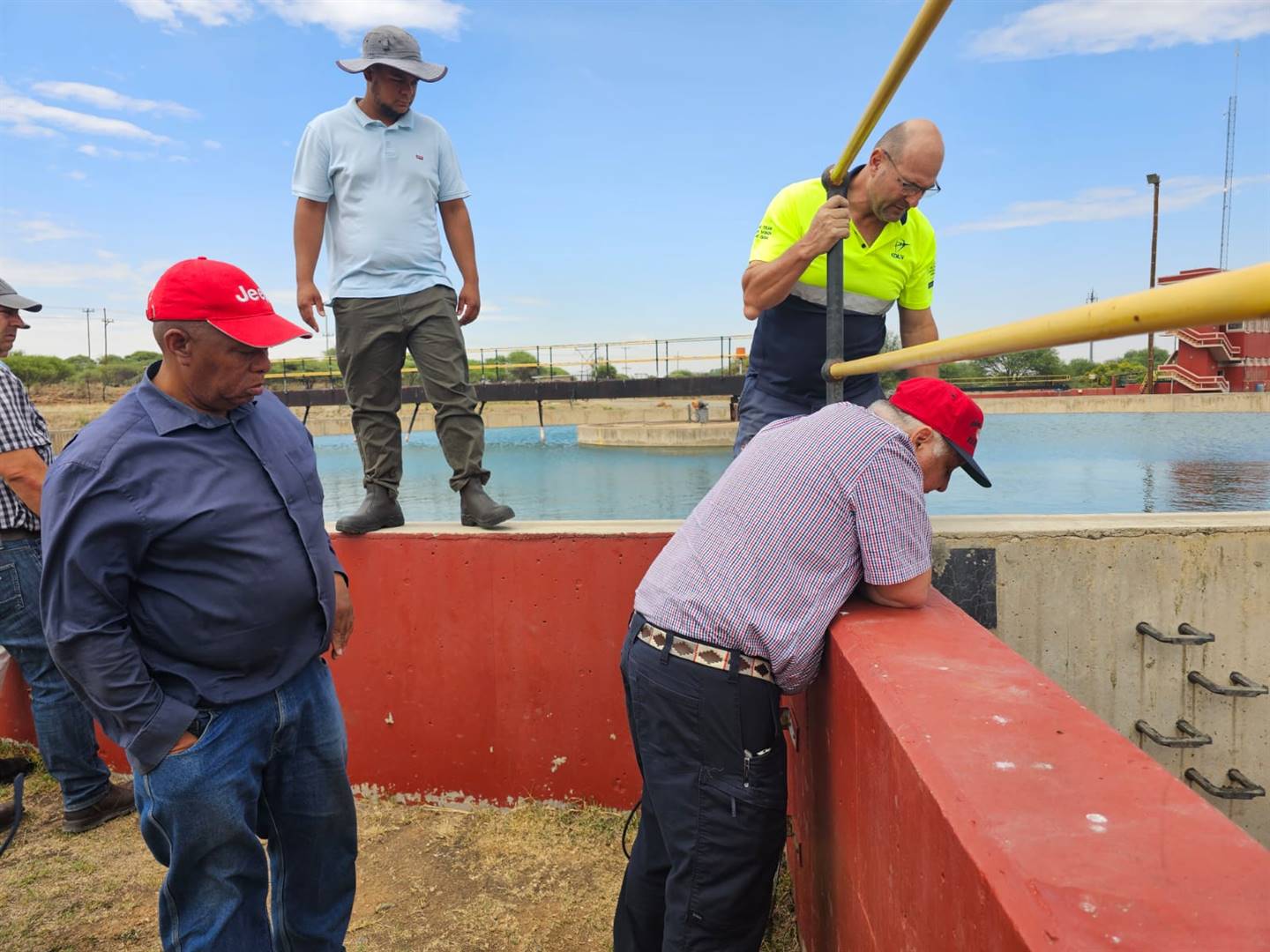
The clarifiers at the Riverton water purification site were desludged some weeks ago. The recent weekend operation entailed three filter media being replaced.
It was noticed that the raw water turbidity levels picked up. Pre-chlorination water treatment is being employed to mitigate turbidity levels. After treatment on site, laboratory analyses would indicate if the turbidity levels are within the correct quality guidelines.
Further final analyses are carried out at a scientific services laboratory for chemical and bacteriological tests in determining the status of the water for human consumption.
Should the quality of water treatment be compromised based on a laboratory analysis, the Riverton water purification site will be informed on time to improve treatment, the municipality stated.

The Riverton water purification site remains focused to produce quality water for human consumption and deal effectively with green algae threats.
The municipality further stated that it has appointed a leading chemical engineering company that will implement a three-month plan on the production of quality water from Riverton.
“We are confident that we will in the nearest future report on our achievements in guaranteeing water security and in meeting all provisions of the National Water Act,” concluded Thabo Mothibi of the municipality’s communications unit.