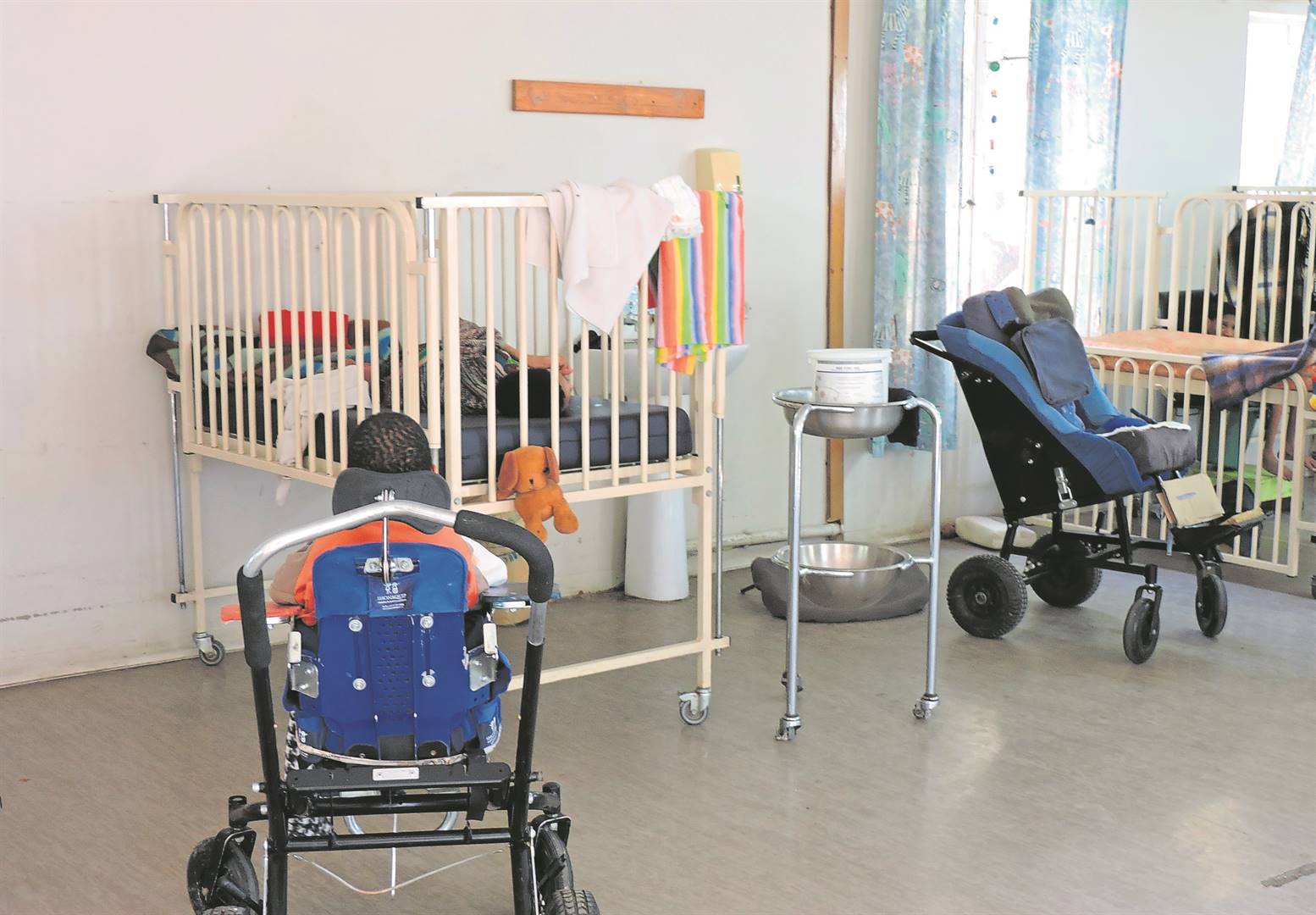


The non-payment of salaries since June to staff members of the Helen Bishop Home in Kimberley resulted in most of them not going to work, which left the constant care and assistance of the 60 children with severe disabilities in the hands of a few staff members and volunteers.
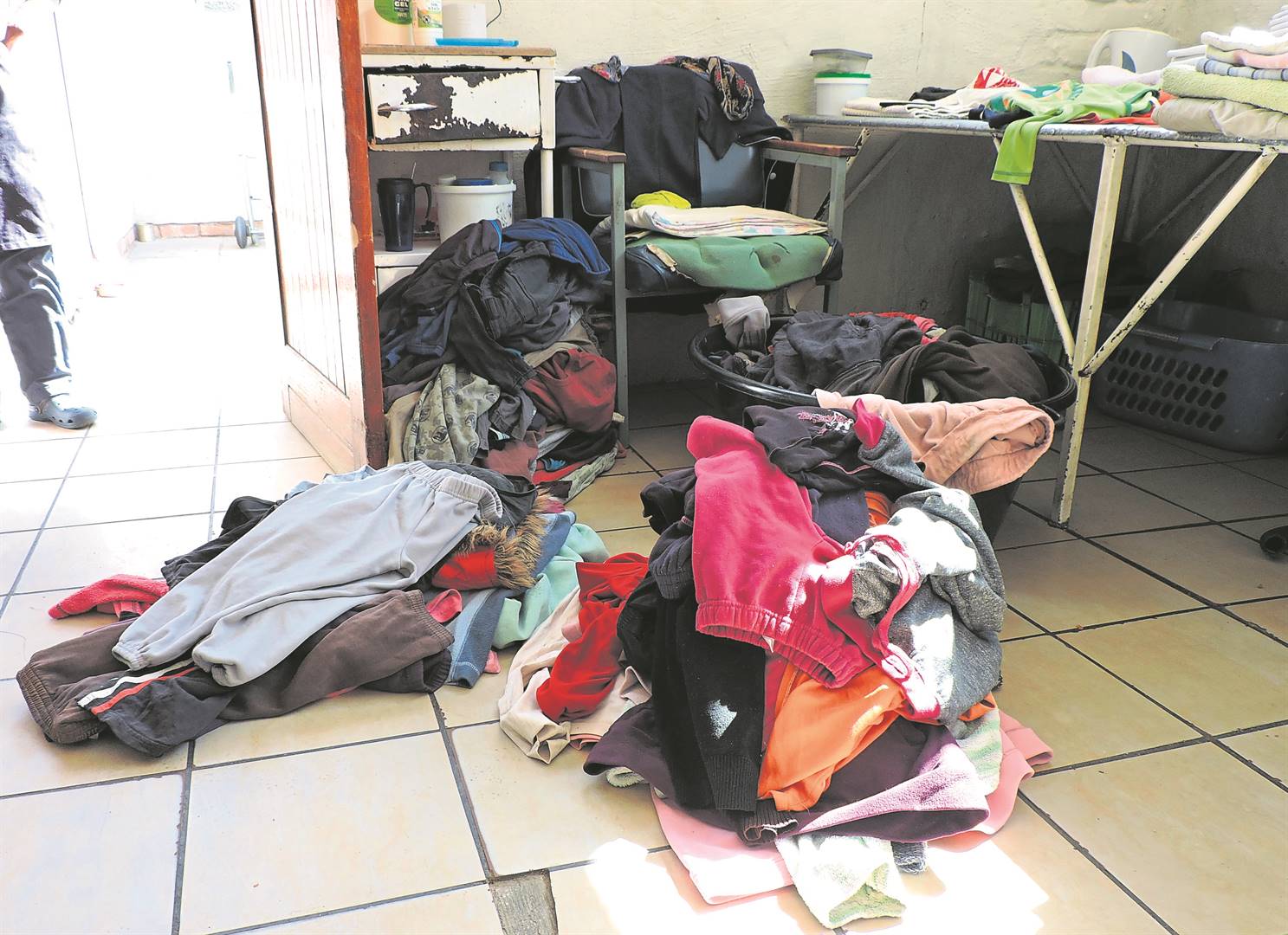
The few willing hands had to feed the children three times a day, change diapers, move them onto and off their beds, change the bedding, tend to the heap of daily laundry, including the cloth diapers, move them in their wheelchairs, prepare meals, wash the children and clean the home.
The children (most with cerebral palsy, and also spina bifida) cannot be sent home, as many were placed in the Helen Bishop Orthopaedic Aftercare Home after a reference from welfare workers, or doctors and clinics as their families do not have the ability or means to look after them.
Non-payment of monthly subsidy stopped without warning
The non-payment of staff was a result of the monthly subsidy from the Northern Cape Department of Health (DOH) to this non-profitable organisation (NPO) not being paid since May, with the payment being stopped without warning.
At a recent meeting with the DOH a senior official apparently said, “Helen Bishop Home did nothing wrong. We, the Department of Health, failed you.”
A memorandum of understanding (MOU) has existed between the home and DOH for many years, and due to this the department monthly pays a subsidy for staff support and administrative needs. Helen Bishop also gets a subsidy from the Department of Social Development (DSD) for the children.
On 13 November, correspondence was sent to the DOH, extending an invitation to meet with the new management committee to improve relations, and to get a better understanding of what was expected of Helen Bishop as an NPO benefitting from the subsidy. It was also stated that the MOU was to expire in March.

A subsidy increase was requested to assist the staff with salary raises. Previously, the subsidy was not enough, and private funds had to be used to fill the gap, Chrissie Damon, manager at Helen Bishop, explains.
In February, the DOH was informed that no feedback was yet received, with information regarding the above, salary scales and the appointment of a registered nurse still awaiting. By March, still no feedback was received, with the subsidy still being paid.
In May, the subsidy was not paid, as was the case for June and July. In May, Helen Bishop was able to pay the staff with other available funds, which was not the case in June and July.
Only on 18 July, eight months after the initial correspondence on the MOU was sent, were board members invited for a meeting where the DOH undertook to make a subsidy payment for six months – for the three outstanding months and an extra three months.
The DOH gave Helen Bishop six months to meet their demands, which were the opening of a separate banking account into which the subsidy can be paid, and to appoint a registered nurse.
Since last year, a registered nurse was not available at Helen Bishop.
A bank account was opened, and interviews arranged with four candidates to appoint a registered nurse. However, the DOH could not provide a salary scale for the post and the candidates could not be provided with this crucial information.
Also, the DOH indicated which staff members must get what portion of the subsidy calculated on a basic salary.
Overtime of staff, night-duty and a birthday month bonus according to contracts were not kept in mind. Also, six staff of the 49 were not on the list from the DOH, some in specialised posts, says Damon.
After an enquiry it was said payment had been processed on 6 August, to reflect in the bank account on 12 August.
In January, staff members joined a workers’ union as some blame the management of Helen Bishop for the non-payment of salaries. A case against the home was laid at the Commission for Conciliation, Mediation and Arbitration (CCMA).
On 6 August an agreement was reached that Helen Bishop must pay the staff before 2 September.
Lisa Schickerling, DA-LP, said the party accepts and appreciates stringent regulations in respect of government funding that require strict compliance by organisations.
“However, poor planning and the delayed scheduling of engagements with the home, after the expiry of the agreement, cannot justify the interruption of quality health care to residents, nor the non-payment of salaries to critical caregivers,” she said.
The comment of the DOH will be published once received.
- It was not the first time that subsidies were not paid.
- On Tuesday, Damon confirmed that Helen Bishop had received an amount the previous day, equal to the basic salary for 43 staff members for June and July. This was paid to staff straight away.