


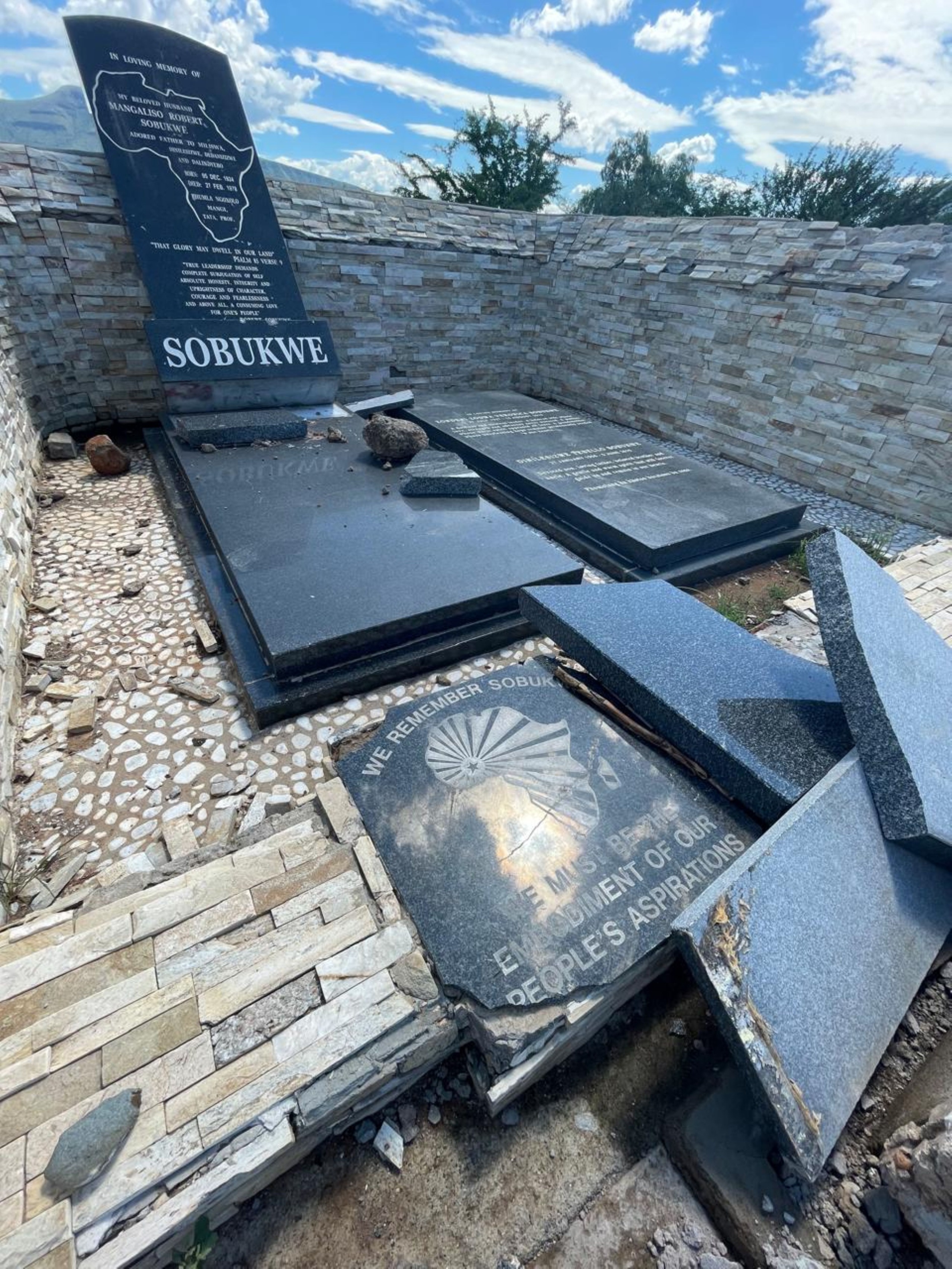
GRAAFF-REINET – Shock and grief have swept through the country following the discovery of serious vandalism at the grave of anti-apartheid leader Robert Sobukwe in Graaff-Reinet, just days after a march advocating for the town to be renamed in his honour that took place on Saturday, 14 March.
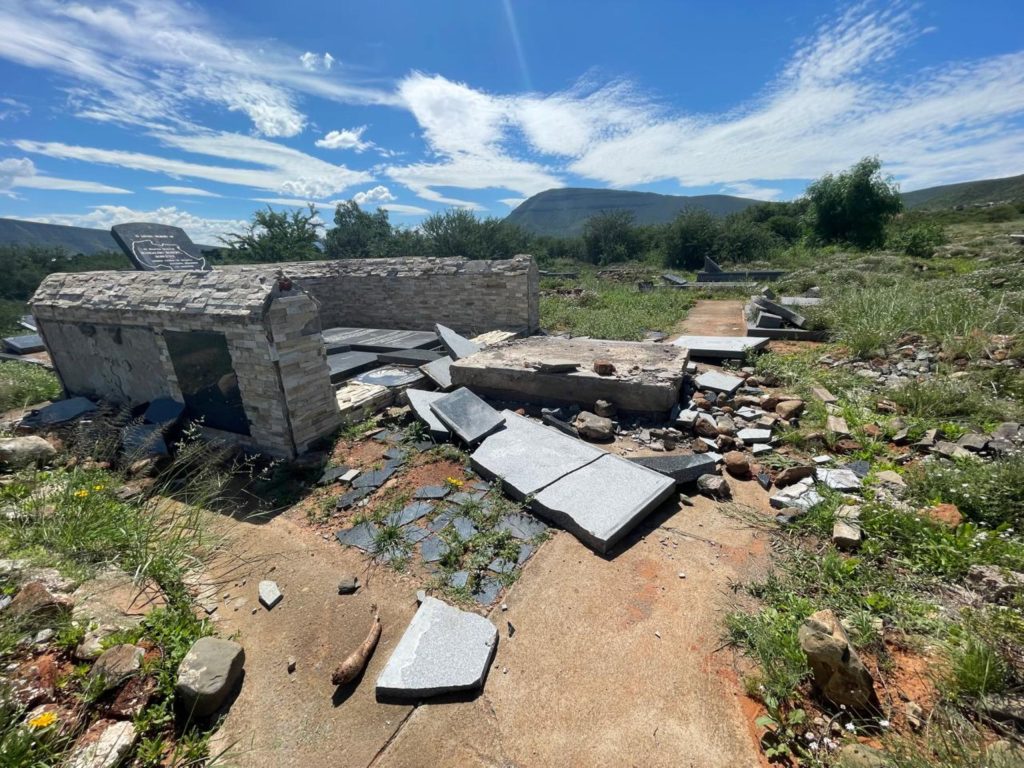
The destruction has been met with widespread condemnation, not only for the structural harm caused, but also for the disrespect it represents to South Africa’s heritage and the memory of those who fought for equality.
The timing of the desecration, immediately after the public demonstration celebrating Sobukwe’s legacy, has raised concerns about possible motives.
The Pan Africanist Congress of Azania (PAC) confirmed that a criminal case has been lodged in connection with the incident, and under South African law, anyone found guilty of this offence – desecrating a grave – can face imprisonment of up to five years.
Sobukwe’s grave has endured repeated violations for decades.
In 2001, it was discovered in a heavily damaged state, with its commemorative plaque missing, railings destroyed or removed, and the tombstone scratched and chipped.
By around 2010, repeated acts of vandalism had already taken place, reportedly on at least three separate occasions, causing ongoing harm to the grave and its fixtures.
Efforts to restore the site were undertaken in 2011, when the National Heritage Council, in partnership with the Department of Arts and Culture, carried out repairs.
The work addressed structural damage, replaced missing elements, and aimed to restore the dignity of the gravesite.
Despite these interventions, the site remained vulnerable, and reports in the following years highlighted continued neglect and physical damage.
The grave suffered from minimal maintenance, while structural elements continued to deteriorate.
In addition, the surrounding area was reportedly used both as a shelter by homeless people and as a hiding place by individuals involved in criminal activity.
In December 2023, another attempted act of vandalism was reported.
While Sobukwe’s grave itself was largely unharmed, several nearby graves, particularly those belonging to the Azanian People’s Liberation Army (APLA) cadres, were damaged, demonstrating the ongoing risk to the site.
This latest attack on Sobukwe’s resting place is part of a disturbing pattern that strikes at the very heart of the principle of human dignity he tirelessly stood for.
It is a direct affront to his legacy and a stark reminder of the urgent need to strengthen protection measures for heritage sites of national importance.
ALSO READ: Historic South African town in uproar over renaming after anti-apartheid icon






You must be logged in to post a comment.