

KIMBERLEY – Two decades of partnerships between government, communities and private landowners have transformed biodiversity stewardship into one of South Africa’s most powerful tools for expanding conservation – and the stakes are rising.
South Africa has secured a staggering 2.76 million hectares across 469 sites through its biodiversity stewardship programme over the past 20 years, accounting for about 90% of the country’s protected-area expansion under the Protected Areas Act.
With 36% of terrestrial ecosystems and 65% of inland aquatic ecosystems already threatened, protecting the country’s remaining natural assets is becoming increasingly critical to water security, climate resilience, jobs and economic growth.
The figures were revealed in a 20-year assessment of the programme launched at the 4th National Biodiversity Stewardship Conference in Kimberley.
Unlike traditional conservation models centred largely on state-owned land, biodiversity stewardship brings private and communal landowners directly into conservation partnerships.
The approach has helped protect strategic water source areas, wetlands, ecological corridors and intact landscapes while creating opportunities in tourism, agriculture, natural resource management and ecological restoration.
SANBI CEO Shonisani Munzhedzi says the programme has shown that conservation and economic development do not have to be opposing forces.
Protecting nature can go hand in hand with creating jobs, securing water resources and building climate resilience
WWF South Africa CEO Dr Morné du Plessis described the model as both inclusive and cost-effective, arguing that giving private and communal landowners responsibility for conservation can significantly expand South Africa’s protected areas.
The economic implications are substantial. Ecosystem services provided by protected landscapes – including freshwater, carbon storage, soil protection and pollination – are estimated to be worth hundreds of billions of rand annually.
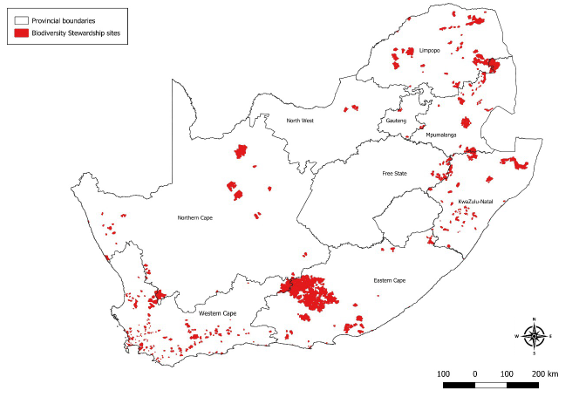
The programme has also helped attract major conservation investment. NGOs have leveraged more than R1.3 billion for biodiversity conservation initiatives in South Africa, with significant investment linked to stewardship projects.
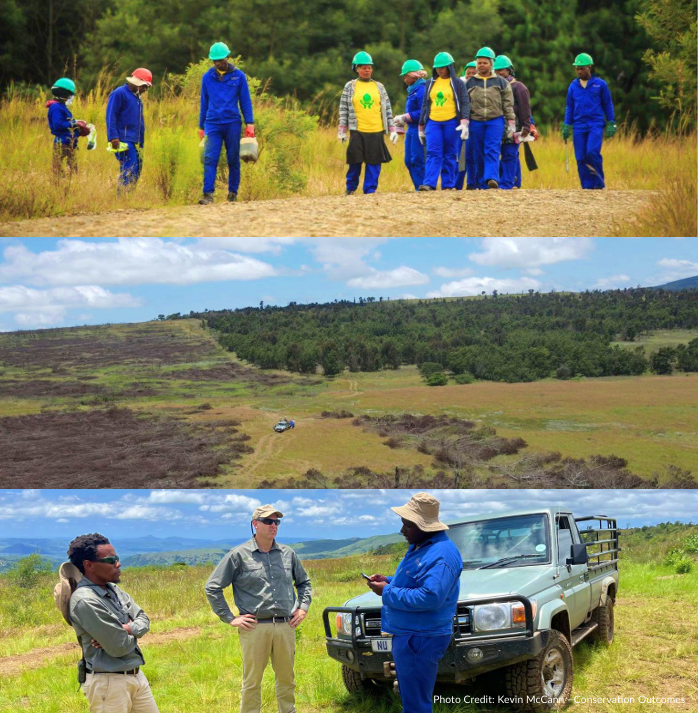
From the Nambiti Private Game Reserve, where conservation has helped create more than 220 jobs, to Babanango Game Reserve, where more than 1,500 hectares of invasive vegetation have been cleared and local residents trained and employed, the model is producing tangible benefits on the ground.
The Maloti Thaba Tsa Metsi, Mabola, Mgundeni and Kwamandlangampisi protected environments provide further examples of communities, landowners, government and conservation organisations working together to protect critical ecosystems.
The programme is also helping South Africa pursue international biodiversity targets, including the Kunming-Montreal Global Biodiversity Framework.
After 20 years, biodiversity stewardship is no longer simply an alternative conservation approach.
It has become a central pillar of South Africa’s strategy to protect its natural resources while ensuring that the people living alongside those resources can benefit from them.


You must be logged in to post a comment.