
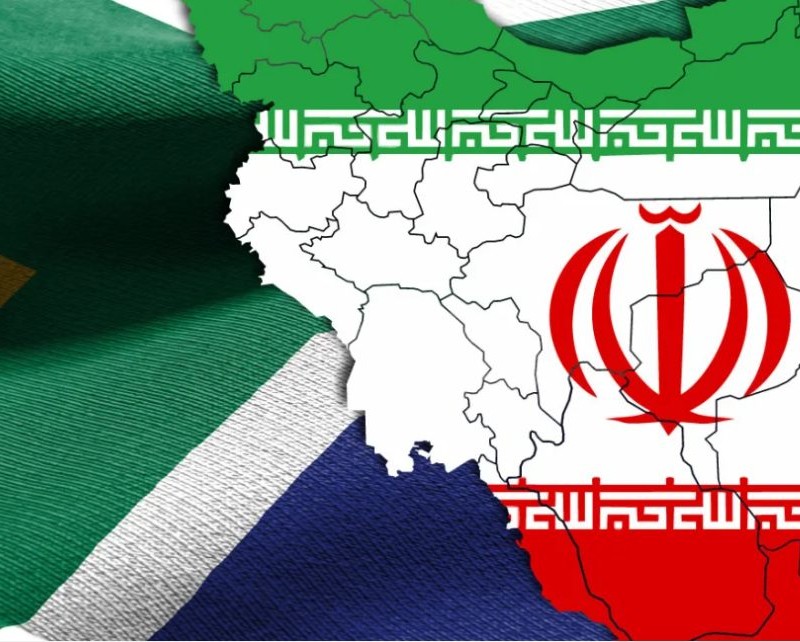
Following the launch of Operation Midnight Fury on 28 February, escalating conflict in the Middle East has triggered global market turbulence with immediate consequences for South Africa. As oil prices surge, capital retreats to safe havens, and geopolitical tensions deepen, the country faces renewed economic pressure – compounded by strained relations with Washington and rising sovereign corporate risk.
The price of alignment: South Africa in the crosshairs of the US
The global geopolitical landscape underwent a seismic shift on 28 February 2026. With the launch of Operation Midnight Fury, the United States and its allies have transitioned from diplomatic posturing to active kinetic engagement against Iranian interests. While the theatre of war is the Middle East, the economic fallout is landing squarely on South African shores. For an economy already grappling with a “fragile recovery” narrative, the intersection of our government’s ideological alignments and Washington’s renewed “America First” assertiveness has created a perfect storm of sovereign and corporate risk.
The global shock: The Hormuz bottleneck
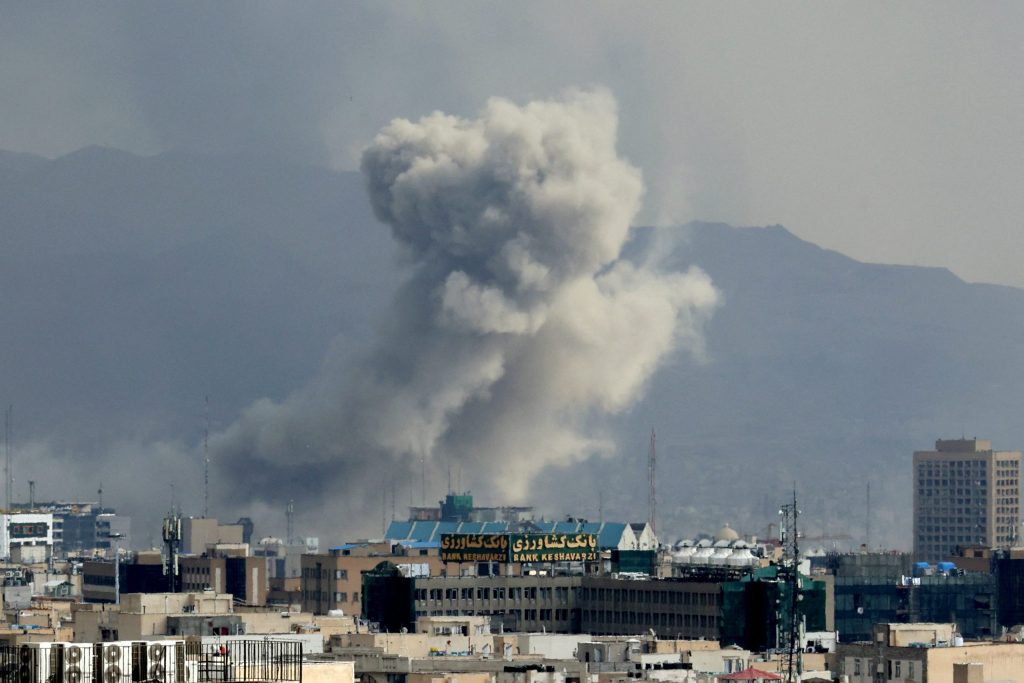
The immediate economic transmission is, predictably, energy. The Strait of Hormuz—the jugular vein of global energy through which 20% of the world’s petroleum flows—is now a live combat zone. Brent Crude has surged over 13% in 48 hours, testing the $85 per barrel mark. Analysts warn that should retaliatory strikes hit Iranian infrastructure or a sustained blockade occur, we are looking at $110 oil.
This has triggered a classic “risk-off” pivot. Global capital is fleeing emerging markets in a “safe-haven sprint” toward US Treasuries and Gold, the latter of which has hit staggering record highs of over $5,400/oz. For South Africa, the local impact was instantaneous: the Rand weakened from R15.98 to R16.15 in early morning trade today.
The domestic squeeze: A reversal of fortune
Prior to “Midnight Fury,” South Africa was enjoying a rare moment of cautious optimism. Inflation had cooled to 3.5% in January, and the South African Reserve Bank (SARB) was widely expected to initiate a rate-cutting cycle on 26 March. That thesis is now under severe threat.
The “inflation holiday” could be over. Higher international oil prices, combined with a depreciating Rand, will exert massive upward pressure on the domestic fuel price. It is highly probable that the SARB will be forced to hold the repo rate steady at 6.75% to anchor inflation expectations and defend the currency. For the South African consumer, this means higher debt-servicing costs and a drain on disposable income just as the cost of living spikes.
The ideological bill comes due
The current crisis highlights a more uncomfortable reality: the mounting tension between Pretoria and the Trump administration. Since 2024, the relationship has frayed over the South African refugee saga, the naval exercises conducted with BRICS countries, which included Iran, at Simon’s Town in January 2026, and the government’s decision to take Israel to the ICJ.
However, the deepest fracture lies in our historical and corporate ties to Tehran. The MTN Iran Saga—and specifically “Project Snooker”—has moved from the back pages of business journals to the centre of US national security concerns. The allegations are grave: that in 2004/2005, MTN secured its Iranian operating licence by promising South African support for Iran’s nuclear program at the IAEA and facilitating the delivery of defence equipment, code-named “The Fish.”
The fact that our current President, Cyril Ramaphosa, served as MTN’s Non-Executive Chairman during this pivotal era (2001–2013) has not gone unnoticed in Washington. The recent US refusal to grant a diplomatic visa to Mcebisi Jonas—MTN’s current Chairman—in his capacity as a Special Envoy confirms that the US no longer distinguishes between South African corporate interests and state policy.
The “death penalty” risk: The anti-terrorism act
The legal jeopardy is escalating. MTN is currently facing litigation under the US Anti-Terrorism Act (ATA). A finding of liability would be a “black swan” event for the JSE. Under the ATA, damages are automatically tripled—potentially reaching $5 billion (R80bn).
More lethally, a “guilty” verdict could trigger the “USD Death Penalty,” where MTN is severed from the US financial system. Given the “sovereign-corporate loop,” such a blow to our largest multinational would likely trigger a credit rating downgrade and provide the US Congress with the “smoking gun” needed to terminate South Africa’s AGOA trade benefits, jeopardising R60 billion in annual exports.

Conclusion: A shift to resilience
The arrest of Nicholas Maduro and the onset of “Midnight Fury” signal a US administration that will fiercely protect its interests. Countries aiding adversarial forces can expect retribution—if not military, then certainly economic.
For the South African investor, “blind optimism” is no longer a strategy. We have entered a “resilience” market. In this climate, protecting wealth requires a pivot toward hard assets like gold and energy-hedged industrials. The geopolitical “gravity” has changed; those who fail to adjust their portfolios to this new reality risk being swept away by the tide.
ALSO READ: The impact of the Israel-Iran conflict on South Africa’s economy




You must be logged in to post a comment.